 The reason most of us go to a hair stylist is to either have them style our hair, color our hair, or trim our hair. But sometimes saving money, especially during the holidays, seems a lot more appealing. The reality is that hair can be expensive, especially more for women. When your hair is damaged you know the solution is to get a hair cut or trim, but the last thing you want to do is spend a ton of money. By the end of this article, you'll learn on how to cut split ends on your own!
No one likes damaged hair, especially if your hair is looking rather unappealing at the ends. The symptoms of split ends is the following: your hair breaks easily, you have a bad case of the "frizzies", split ends, your hair has lost its shine or luster, and your hair has rough spots or feels rough all over.
If you are experiencing these symptoms and your damaged hair is annoying you, it's probably really hard to style your hair because you're not pleased with it. You wish you could make an appointment but you're afraid that you'll get sucked into a highlight and complete style. Then the ending price will end up being a whopping $100 or more.
The good news is that we have a solution to your dilemma if you want to cut back on the costs.
Did you know that with a little bit of practice you can cut your own split ends?
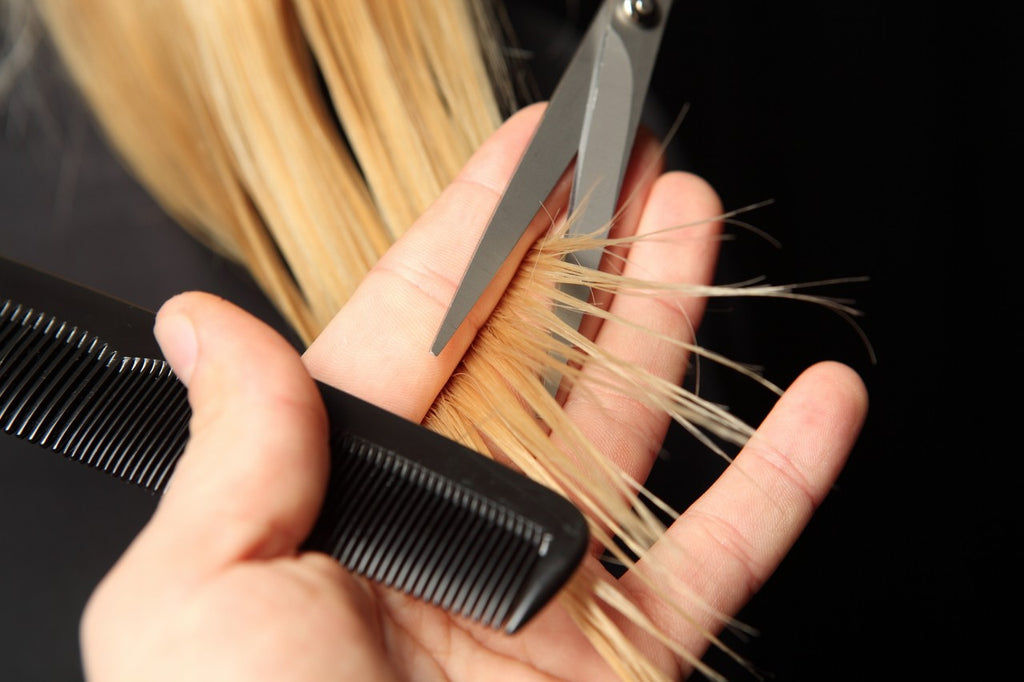
Easy Steps to Trim Split Ends For Beginners
1. Purchase a pair of hair shears. You can find them at a local beauty supply store or online. Do not use normal scissors because you will damage your hair even more.
2. Cut perpendicular to the hair strand. This will keep the end of your hairs stronger than a slanted cut would.
3. Make the cut about 1/4” above the split ends to create healthy ends again.
4. Trim your hair against a light background if you have dark hair and a light background if you have light colored hair.
What Causes Split Ends?
Numerous factors, such as excessive use of heat styling tools like flat irons, curling irons, and blow dryers, can result in split ends because they deplete the hair's natural moisture, making it more prone to breakage and split ends.
Chemical treatments like coloring and bleaching can weaken the hair structure, leading to the loss of cuticle protection. Also, washing the hair too frequently or using harsh shampoos that strip away natural oils can leave the hair dry and more prone to split ends. But this is not the end; there are some things you can do to prevent split ends.
How to Prevent Split Ends
Preventing split ends involves following good hair care practices and reducing factors that contribute to hair damage. Schedule regular trims every 6–8 weeks to remove any existing split ends and prevent them from traveling up the hair shaft.
Be gentle when handling your hair, especially when it's wet, as it is more prone to breakage. Minimize the use of heat styling tools such as flat irons, curling irons, and blow dryers. If you must use them, apply a heat protectant spray to minimize damage.
Reduce the frequency of chemical treatments like perming, relaxing, and coloring, as these processes can weaken the hair structure and lead to split ends. Use hair care products that are suitable for your hair type. Choose shampoos and conditioners that hydrate and strengthen your hair.
The Importance of Trimming Split Ends
- Regular trims help prevent the splitting from progressing, keeping your hair healthier.
- Trimming removes damaged, weakened, or frayed ends, allowing your hair to maintain its strength and integrity. This promotes overall hair health and reduces the risk of breakage.
- Split ends can lead to tangling and knots in the hair, making it more difficult to manage, and trimming helps minimize tangling, allowing for smoother combing and styling.
- Regular trims can actually help preserve your hair length in the long run. By preventing split ends, you reduce the need for more significant cuts later on.
- While trimming doesn't directly promote hair growth, it creates a healthier environment for the hair to grow.
- Split ends can make the hair appear dull and lifeless. Regular trims maintain the hair's natural shine, giving it a healthier and more vibrant look.
Conclusion
By following these steps, you can carefully cut split ends on your own, even if you are a beginner. Practice makes perfect, so don't be afraid of mistakes. Now that you have successfully learned how to trim your hair, don't worry about the split ends. Save some money and go shopping instead!
How to Trim Split Ends at Home: A Step-by-Step Guide
Trimming split ends yourself is more achievable than most people think - but technique matters. Here's how to do it correctly.
"The most important thing about trimming your own split ends is using the right scissors and not trying to cut too much at once. Sharp hair scissors make a clean cut that seals the end. Dull scissors - or worse, paper scissors - create a jagged edge that splits again almost immediately. If you're going to do this at home, invest in a decent pair of shears."
- Priyanka Swamy, Founder of Perfect Locks
Get the right tools
You need sharp hair shears - not kitchen scissors, not paper scissors, not nail scissors. Dull or non-hair scissors create ragged cuts that split again almost immediately. A decent pair of hair shears costs $15-30 and makes an enormous difference to the result. Keep them exclusively for hair and don't use them on anything else.
Start with clean, dry, straight hair
Wash and blow dry your hair straight before trimming. Split ends are much easier to see and target on straight hair than on curly or wavy textures. If your hair is naturally very textured, do a light blowout on low heat - you don't need it perfectly smooth, just straight enough to see the ends clearly.
Work in small sections
Divide your hair into 1-inch sections and twist each section tightly. The split ends will stick out from the twisted section, making them easy to identify and cut. This "twist and snip" method is the most effective home technique for targeting split ends without removing significant length.
Cut above the split, not at it
When you see a split end, cut approximately 1/4 inch above the split - not at the split itself. Cutting at the split leaves a weakened point that will split again quickly. Cutting above it removes the damage and leaves a clean, sealed end. Resist the urge to remove more length than necessary.
Check your work and deep condition
After trimming all sections, shake your hair out and look at the overall shape and length. Touch up any uneven areas if needed. Follow with a deep conditioning treatment - your ends just went through a trimming process and need moisture to seal the new cut edges and prevent immediate re-splitting.
How to Prevent Split Ends from Forming
Trimming addresses existing split ends but prevention reduces how often you need to trim. The main causes of split ends:
Heat without protection: Every use of a flat iron, curling iron, or blow dryer without heat protection damages the cuticle layer and creates the conditions for splitting. Apply heat protection every single time.
Rough handling when wet: Hair is most fragile when wet. Rubbing with a terry cloth towel, brushing roughly, or aggressively detangling wet hair all cause breakage at the ends. Use a microfiber towel and wide-tooth comb on wet hair.
Sleeping on cotton: Cotton pillowcases create friction that roughens the cuticle overnight, particularly on the ends. A silk or satin pillowcase dramatically reduces this friction and is one of the highest-value habit changes for end health.
Dry hair: Well-moisturized hair is elastic and resilient. Dry hair is brittle and breaks. Regular deep conditioning and a leave-in conditioner on the ends keeps them from becoming the brittle, weakened ends that split.
When to See a Stylist Instead
At-home trimming is best for maintenance between salon visits - targeting split ends while preserving length. If your ends are extensively damaged throughout, or if you want a shape change or significant length removed, a professional stylist will give you a cleaner, more even result. Use the home method to extend the time between salon visits, not to replace them entirely.
Frequently Asked Questions
How do you trim your own split ends without losing length?
Use the twist and snip method - twist 1-inch sections tightly so split ends stick out, then cut just above each split (about 1/4 inch above, not at the split itself). This targets only the damaged ends rather than cutting across the full width of the section, which preserves length while still removing the damage.
How often should you trim split ends?
Every 8-12 weeks is the general guideline, though this varies based on how quickly your ends damage. Women who heat style frequently, sleep on cotton pillowcases, or have naturally dry or fine hair may need to trim every 6-8 weeks. Women who air dry, use heat protectant religiously, and sleep on silk may go 12-16 weeks between trims.
Can you trim split ends on hair extensions?
Yes - human hair extensions can be trimmed just like natural hair. Use sharp hair shears and cut small amounts at a time. Trimming extensions that have developed split ends from heat styling or wear extends their lifespan significantly. The same technique applies - small sections, cut above the split, follow with conditioning.
Does trimming split ends make hair grow faster?
Trimming doesn't affect the rate of hair growth, which happens at the follicle level in your scalp. What trimming does do is prevent existing splits from traveling further up the hair shaft, which causes breakage that makes your hair appear not to grow. By removing splits before they travel, you retain the length your hair actually grows.

Author and Founder of Perfect Locks LLC
Priyanka Swamy, the visionary founder of Perfect Locks LLC, is a passionate advocate for empowering women and promoting cultural diversity. With an unwavering commitment to ethical sourcing and quality craftsmanship, she redefined the hair extension market and created a supportive community that celebrates individuality.
Priyanka's dedication to sustainability and social responsibility continues to inspire positive change within the industry. Her journey with Perfect Locks remains an inspiration, unlocking the true potential and confidence of countless individuals worldwide.