Hair Extensions Glossary
Your complete guide to hair extension terminology - from extension methods to care tips. Understanding these terms helps you make confident decisions and get the best results from your extensions.
Extension Methods
Temporary hair extensions with small pressure-sensitive clips sewn onto wefts that attach to your natural hair. Clip-ins are the most beginner-friendly method - you can apply and remove them yourself in minutes without any professional help or damage to your natural hair.
Best for: Occasional wear, special events, or anyone wanting to test extensions before committing to a permanent method. Perfect for adding length or volume without salon visits.
Clip-in extensions featuring a thin, flat silicone or polyurethane (PU) base instead of a traditional fabric weft. The ultra-thin base lies flatter against the scalp, creating a more natural, undetectable look.
Best for: Fine or thin hair where traditional wefts might show through, or anyone wanting the most invisible clip-in option.
Semi-permanent extensions with medical-grade adhesive tape pre-applied to thin wefts. Two tape pieces sandwich a small section of your natural hair, lying completely flat against the scalp. Tape-ins typically last 6-8 weeks before needing repositioning.
Why stylists love them: One of the least damaging professional methods due to even weight distribution. Quick to install (under an hour for a full head) and easy to maintain.
Tape-in extensions with an ultra-thin, transparent base that virtually disappears against the scalp. The invisible band makes these ideal for styles where traditional tape-ins might show.
Best for: High ponytails, updos, or anyone with fine hair where standard tape-ins might be visible.
A polyurethane mono-mesh weft designed to mimic the appearance of skin. Skin wefts are typically used for tape-in applications and lie extremely flat against the scalp for an undetectable finish.
Also known as: PU weft, poly weft
Individual strand extensions attached using keratin protein bonds that are melted and fused to small sections of natural hair. Fusion extensions offer the most natural movement since each strand moves independently.
Types: Hot fusion (heat tool melts the bond) and cold fusion (ultrasonic waves or micro rings). Fusion extensions last 3-6 months with proper care.
Individual strand extensions with a small keratin tip shaped like the letter 'I' at the top. Each strand is attached to natural hair using tiny silicone-lined micro rings that are clamped shut - no heat or glue required.
Why choose I-tips: Completely damage-free installation, reusable hair, and easy removal. The micro ring method allows for adjustments without replacing the extensions.
Individual strand extensions with a U-shaped keratin bond at the tip. Using a heat fusion tool, the keratin is melted and wrapped around a small section of natural hair, creating a secure, long-lasting bond.
Also known as: Nail tips, K-tips, keratin bond extensions. U-tips typically last 3-6 months and require professional removal.
Individual strand extensions attached using small metal or silicone-lined beads (micro rings) that are clamped around both the extension and natural hair. No heat, glue, or chemicals are used in the installation.
Also known as: Micro ring extensions, micro bead extensions, cold fusion. This method is gentle on natural hair and allows for easy maintenance adjustments.
Premium weft extensions where each strand of hair is individually hand-knotted onto a thin thread, creating an extremely flat, flexible weft. Hand-tied wefts are the thinnest weft option available.
Why they're worth it: Lighter and more comfortable than machine wefts, move naturally with your hair, and virtually undetectable. Less likely to create bumps or visible lines under fine hair.
Weft extensions where hair is sewn onto a fabric track using industrial sewing machines. Machine wefts have a slightly thicker, more durable construction than hand-tied options and can be cut to customize width.
Best for: Sew-in installations, creating DIY clip-in sets, or anyone wanting a more affordable weft option with excellent durability.
Weft extensions combining hand-tied and machine-sewn construction. The top edge (return) is hand-tied for a thin, flexible finish that lies flat, while the body uses machine construction for added durability.
Best for: Anyone wanting the comfort of hand-tied with the durability and price point of machine wefts - a true best-of-both-worlds option.
A weft installation method where a horizontal row of silicone-lined beads is first attached to natural hair, then the weft is sewn onto this beaded foundation. This creates even weight distribution and minimal tension on natural hair.
Also known as: Beaded row extensions, NBR (Natural Beaded Rows). This method is popular because it's gentle on hair and allows for easy maintenance appointments.
A weft installation method where hair is first braided into cornrows close to the scalp, then wefts are sewn directly onto the braids using a needle and thread. Sew-ins are a popular protective style that can last 6-8 weeks.
Also known as: Weave, sewn-in weave. This method keeps natural hair protected underneath while allowing for versatile styling on top.
A single weft of hair attached to a thin, invisible wire (often called a miracle wire or fishing line) that sits on top of your head like a halo. Your natural hair covers the wire completely for a seamless blend.
Why halos are unique: The easiest extension method - simply place on your head and blend. Zero clips, tape, glue, or bonds means absolutely no damage or commitment. Remove in seconds.
Hair pieces designed specifically to create or enhance a ponytail. They typically attach by wrapping around your natural ponytail and securing with a clip, comb, drawstring, or velcro wrap.
Best for: Instant length and volume for updos without the commitment of full extensions. Perfect for events, everyday glam, or when your natural ponytail needs a boost.
Removable fringe pieces that clip onto your natural hairline to create instant bangs without cutting your hair. Available in various styles including blunt, side-swept, curtain, and wispy.
Best for: Testing out bangs before committing to a cut, or adding bangs for special occasions without the grow-out phase.
Partial hair pieces designed to cover the crown, part line, or areas of thinning hair. Unlike full wigs, toppers clip or tape onto your existing hair and blend naturally with your own.
Best for: Hair loss, thinning crowns, wide part lines, or adding volume to the top of the head. A less dramatic solution than a full wig while still providing coverage where you need it most.
A small lace or silk base hair piece (typically 4x4 or 5x5 inches) used to close off a weave or wig installation. Closures sit at the crown or part area, creating a natural-looking scalp where your wefts meet.
Why use a closure: Protects your natural hair completely - no leave-out required. Creates a realistic part or crown area and allows for various parting options within the closure space.
A lace base hair piece that covers the entire front hairline, typically ear to ear (13x4 or 13x6 inches). Frontals create a completely natural-looking hairline and allow for versatile styling including pulling hair back.
Closure vs. frontal: Frontals offer more coverage and styling flexibility (full hairline) but require more maintenance. Closures are smaller and easier to maintain but limit parting options.
A full hairpiece that covers the entire head, available in various constructions including lace front, full lace, U-part, and traditional cap. Wigs offer complete coverage and instant transformation.
Also known as: Units. Modern lace wigs feature realistic hairlines that look like hair is growing from your scalp when properly installed.
Loose human hair that hasn't been sewn onto a weft or attached to any base. The hair is bundled together but remains unprocessed into a final product form.
Best for: Professionals creating custom pieces, adding hair to braids, making wigs from scratch, or hair replacement systems. Bulk hair offers maximum versatility for skilled stylists.
Hair Quality & Types
Human hair with the cuticle layer intact and all strands aligned in the same direction, from root to tip. This cuticle alignment mimics how hair naturally grows on your head, which is the key to preventing tangling and matting.
Why it matters: Remy hair is softer, shinier, and lasts significantly longer than non-Remy hair (where cuticles face different directions and catch on each other). All Perfect Locks extensions are 100% Remy human hair.
Human hair that has never been chemically processed - no coloring, perming, bleaching, relaxing, or chemical treatments of any kind. Virgin hair is collected in its completely natural state from a single donor.
Why it's premium: Because it's never been altered, virgin hair is the most durable and versatile option. You can color, bleach, or chemically treat it yourself since it's starting from a clean slate.
Hair that retains its natural outer protective layer (cuticle). The cuticle consists of overlapping scales - like shingles on a roof - that protect the inner hair shaft, provide shine, and lock in moisture.
Why it matters: Non-Remy hair often has cuticles stripped through acid baths to prevent tangling, but this leaves hair dull and prone to dryness. Cuticle-intact hair looks healthier and lasts much longer.
Hair collected from a donor that contains a natural mix of different strand lengths - just like hair grows naturally on your head. Single-drawn extensions have full thickness at the top that gradually tapers toward the ends.
The look: Natural and wispy at the ends, similar to how virgin hair naturally grows. More affordable than double-drawn but with less density at the bottom.
Hair that has been hand-processed to remove shorter strands, leaving only full-length hairs from root to tip. This creates consistent thickness throughout - no tapering at the ends.
Why it's premium: Double-drawn hair delivers maximum fullness and volume, especially at the ends where single-drawn hair thins out. It's more labor-intensive to produce, which is reflected in the price, but delivers a fuller, more glamorous result.
Man-made fibers designed to look like human hair, typically made from various plastics and polymers. Synthetic hair is pre-styled and holds its shape well, but generally cannot be heat-styled without damage.
Human hair vs. synthetic: Human hair extensions can be washed, heat-styled, colored, and treated like your own hair. Synthetic is more affordable but less versatile. Perfect Locks exclusively offers 100% human hair extensions.
Hair collected from voluntary donors who are fairly compensated for their hair. Ethical sourcing ensures no exploitation, coercion, or unfair labor practices anywhere in the supply chain.
Our commitment: Perfect Locks works directly with suppliers who follow fair trade principles. We visit our sources regularly and ensure donors are treated with respect and paid fairly for their hair.
Hair Textures
Hair with no wave or curl pattern that falls smoothly from root to tip. Straight extensions are available in different finishes: silky straight (natural sheen with slight movement) and bone straight (pin-straight with minimal texture).
Styling versatility: Straight hair can be curled or waved with heat tools, making it the most versatile starting point if you like to switch up your style.
A loose, soft wave pattern forming gentle S-shaped curves throughout the hair. Body wave adds natural-looking volume and movement without tight or defined curls.
Why it's popular: One of our best-selling textures because it blends well with many natural hair types, holds its pattern with minimal maintenance, and looks effortlessly glamorous.
A relaxed wave pattern falling between straight and body wave. Loose wave has gentle bends and movement without a defined curl structure - think beachy, effortless waves.
Best for: Anyone wanting subtle texture and movement that looks natural and requires minimal styling to maintain.
A tighter, more defined wave pattern than body wave, creating deep, consistent S-shaped waves throughout the hair. Deep wave adds dramatic volume and glamorous texture.
Best for: Making a statement with voluminous, textured hair, or blending with naturally wavy to curly hair types.
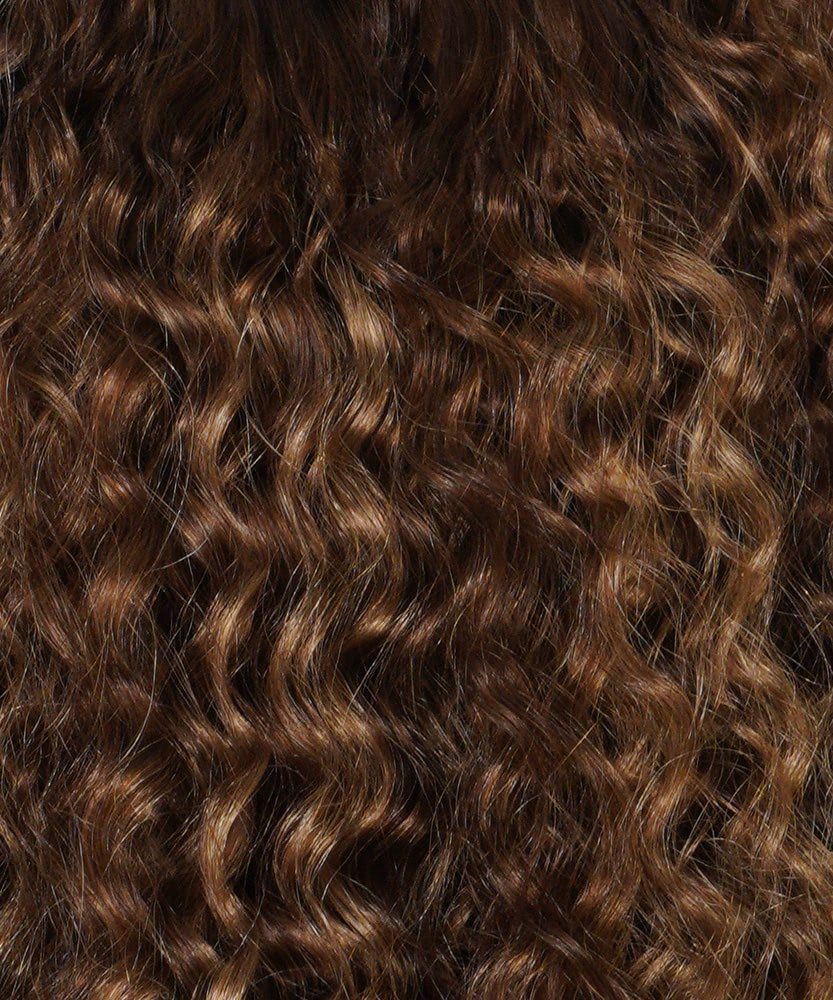
Hair with defined spiral or ringlet curl patterns, ranging from loose curls to tight coils. Curly extensions add volume and bounce while blending with naturally curly hair.
Care tip: Curly extensions require more moisture than straight textures. Use hydrating products and avoid brushing dry - detangle gently when wet with conditioner.
Textured straight hair that mimics the look of relaxed or blown-out African American hair. Kinky straight has a subtle coarseness and natural matte finish rather than the shiny, silky look of traditional straight extensions.
Best for: Blending seamlessly with chemically relaxed hair, heat-straightened natural hair, or type 4 hair that's been blown out. The texture match is key for an undetectable blend.
Tightly coiled hair that matches type 4 natural hair textures (4A-4C). Kinky curly extensions have a dense, springy curl pattern that blends with natural afro-textured hair.
Styling notes: This texture requires consistent moisture and gentle detangling from ends to roots. Expect significant shrinkage when dry - the hair will appear much shorter than its actual stretched length.
Hair with very tight, spring-like curls that form Z or S patterns close to the scalp. Coily hair (types 4A, 4B, 4C) has the most shrinkage of all textures - often appearing 50-75% shorter than its actual length when dry.
Best for: Blending with type 4 natural hair. When shopping, remember to account for shrinkage - if you want 16 inches of visible length, you may need 20+ inches of coily hair.
A classification system for natural hair texture, ranging from Type 1 (straight) to Type 4 (coily):
Type 1: Straight - no curl pattern
Type 2: Wavy - S-shaped waves (2A loose, 2B defined, 2C deep)
Type 3: Curly - springy curls (3A loose, 3B bouncy, 3C tight)
Type 4: Coily - tight coils/kinks (4A S-pattern, 4B Z-pattern, 4C tight zigzag)
Knowing your curl pattern helps you select extensions that blend naturally with your hair.
Color & Shades
A hair coloring technique where highlights are hand-painted onto the hair, creating a graduated, natural-looking blend from darker roots to lighter ends. The word comes from the French 'balayer' meaning 'to sweep.'
Balayage extensions: Pre-colored to mimic the sun-kissed, dimensional look without you needing to color them. The transition is softer and more natural than traditional foil highlights.
A two-tone color style where hair transitions from one color at the roots to a distinctly different color at the ends. Unlike balayage, ombre typically has a more defined line where the colors meet.
Classic ombre: Dark roots to light ends. Reverse ombre goes light to dark. The dramatic contrast makes a bold statement.
Extensions with darker color at the top (root area) that gradually blends into a lighter shade. Rooted extensions mimic the natural look of grown-out color - what your hair looks like a few weeks after a salon visit.
Why rooted works: Eliminates the harsh line where extensions meet your scalp and creates a more natural appearance, especially as your own roots grow in between appointments.
A color technique alternating two colors throughout the weft, creating horizontal stripes of alternating shades - like the black and white keys on a piano.
Best for: Adding dimension and helping extensions blend with highlighted or multi-tonal natural hair. The alternating colors create depth and movement.
Highlights: Strands lighter than your base color, adding dimension and brightness.
Lowlights: Strands darker than your base color, adding depth and richness.
Many extension colors incorporate both for a multi-dimensional, natural look that mimics salon-colored hair.
The process of selecting extension shades that blend seamlessly with your natural hair. Proper color matching considers your root color, mid-lengths, ends, and any highlights or lowlights.
Tips for matching: Photograph your hair in natural daylight (not bathroom lighting), include roots and ends in the photo, and show hair both up and down. Our color specialists can help you find your perfect shade.
A physical collection of hair samples showing available shades. Color rings let you hold actual hair against your own in different lighting conditions - much more accurate than digital photos on a screen.
Why order swatches: Monitor and camera settings vary wildly. What looks perfect online may not match in person. Swatches eliminate the guesswork and reduce returns.
Components & Tools
A horizontal strip or curtain of hair attached to a track (sewn or bonded edge) at the top. Wefts are the foundation for most extension methods including clip-ins, tape-ins, sew-ins, and halo extensions.
Also known as: Track, hair curtain. Wefts come in various widths and can be trimmed to fit different head sizes and placement areas.
The manufactured top edge of a weft where the hair is attached. The track is typically the point where extensions connect to natural hair - whether sewn onto braids, clipped in, or taped.
Track types: Machine-sewn tracks are thicker and more durable. Hand-tied tracks are thinner and more flexible. The track quality affects how flat the extensions lie.
The top edge of a weft where hair is folded back and secured, creating a finished, clean edge. A thin, flat return lies closer to the scalp and is less detectable than a bulky one.
Why it matters: The return quality determines how natural the weft looks when installed. Hand-tied wefts typically have the thinnest, flattest returns.
The attachment point on individual strand extensions (I-tips, U-tips, flat tips) made from keratin protein - the same protein found naturally in hair and nails. When heated, keratin softens and molds around natural hair to create a secure bond.
Removal: Keratin bonds are dissolved using a professional bond remover solution, then gently slid off the hair. Never pull or cut bonds without proper removal product.
A tiny metal or silicone-lined ring used to attach I-tip extensions without heat or glue. Natural hair and the extension strand are threaded through the ring, which is then clamped flat with special pliers.
Benefits: No heat damage, no chemicals, reusable hair, and easy adjustments. The silicone lining protects natural hair from the metal clamp.
Specialized tools used in extension installation and removal. Different pliers serve different purposes: micro ring pliers clamp beads shut, removal pliers open beads or crush keratin bonds, and tape extension pliers help with placement.
Important: Using the wrong tools can damage both extensions and natural hair. Always use professional-grade tools designed for the specific extension method.
An electric tool used to melt keratin bonds during fusion extension installation. The heat connector has a clamp that heats to a specific temperature, softening the keratin so it can be molded around natural hair.
Temperature matters: Professional heat connectors have adjustable temperature settings. Too hot damages hair; too cool won't bond properly. Most keratin bonds melt at 180-200°C.
A solvent solution used to dissolve keratin bonds or break down tape adhesive for safe extension removal. Bond remover softens the attachment point so extensions slide off without pulling or damaging natural hair.
Also known as: Extension release spray, tape remover. Always use remover designed for your specific extension type - tape remover won't work on keratin bonds and vice versa.
Pre-cut adhesive strips used to reattach tape-in extensions during maintenance appointments. After the original tape is removed and hair is washed, fresh tape tabs restore the adhesive for another 6-8 weeks of wear.
Quality matters: Medical-grade tape creates a secure hold without damaging hair. Cheap tape may slip, leave residue, or pull hair when removed.
Installation & Placement
The top/back area of the head - the highest point of your skull. This is often where hair naturally swirls or parts, and is a common area for thinning or volume loss.
For extensions: The crown is where toppers and closures are placed. Clip-ins and other extensions typically avoid the very top of the crown to stay hidden under your natural hair.
The back of the neck where your hairline ends - the lowest point where hair grows. Nape hair is often finer and grows in a different direction than hair elsewhere on the head.
For extensions: Professional installations typically start at the nape and work upward. The lowest weft should be placed above the nape hairline so it stays hidden when hair moves.
The outer edge of your hairline around the entire head - including the front hairline, temples, sideburns, and nape. This is the visible frame of your hair.
For extensions: Extensions are always placed inside the perimeter, never at the hairline itself. Your natural perimeter hair covers the attachment points for a seamless blend.
How much hair is present in a given area - essentially how thick or thin your hair appears. Density is different from texture (fine vs. coarse strands) - you can have fine hair that's dense or coarse hair that's thin.
Why it matters: Your natural density determines how many extension pieces you need. Thicker hair needs more extensions to blend proportionally; fine hair needs fewer to avoid looking overdone.
A complete extension set providing coverage for the entire head, delivering maximum length and volume. What constitutes a 'full head' varies by method:
Clip-ins: 7-10 wefts, typically 120-220 grams total
Tape-ins: 40-60 pieces (20-30 sandwiches)
Fusion: 100-200 individual strands
Wefts: 2-4 bundles depending on desired fullness
A hairstyle that tucks away and protects the ends of natural hair, reducing manipulation and environmental damage. Braids, twists, locs, and sew-in weaves are common protective styles.
How extensions help: Sew-ins and wig installations protect your natural hair underneath while allowing you to style the extensions freely. Your hair gets a break from daily heat and manipulation.
A section of natural hair left unbraid or uncovered during a sew-in installation, used to cover and blend with the top of the extensions. Leave-out typically sits at the crown, part line, or perimeter.
Pros and cons: Leave-out creates a natural blend but exposes some natural hair to heat styling. Using a closure or frontal eliminates the need for leave-out entirely.
A salon visit to maintain semi-permanent extensions, typically scheduled every 6-8 weeks. During maintenance, extensions are removed, your natural hair is washed and treated, and extensions are reinstalled higher up to account for hair growth.
Why it's essential: As your hair grows, extensions move further from the scalp. Regular maintenance prevents matting at the roots and keeps extensions secure and comfortable.
Care & Maintenance
Hair products formulated without sulfates - harsh cleansing agents (like sodium lauryl sulfate) that can strip natural oils and cause dryness. Sulfates create that foamy lather but are too aggressive for extensions.
Why it matters for extensions: Sulfates dry out hair that doesn't receive scalp oils, break down tape adhesive, and can loosen keratin bonds. Always use sulfate-free shampoo with any type of extensions.
A cleansing method using conditioner instead of shampoo. Co-washing gently removes dirt and light buildup while adding moisture - no stripping or harsh detergents.
Best for: Curly, textured, or dry extensions that need maximum moisture retention. Co-washing between regular washes helps maintain softness without over-cleansing.
An intensive moisturizing treatment left on hair for 10-30 minutes (sometimes with heat) to restore hydration, repair damage, and improve elasticity. Deep conditioners penetrate further than regular conditioners.
For extensions: Weekly deep conditioning is essential since extensions don't receive natural scalp oils. Focus on mid-lengths and ends - avoid getting heavy products on bonds, tape, or wefts.
A styling product that creates a protective barrier between hair and heat tools. Heat protectants coat the hair shaft and help prevent moisture loss, dryness, and damage from flat irons, curling irons, and blow dryers.
For extensions: Always apply before heat styling. Keep temperatures below 350°F (180°C) for longest extension life. Higher heat = faster damage, even with protectant.
When hair strands wrap around each other, creating knots. All hair tangles to some degree, but excessive tangling in extensions typically signals an issue.
Common causes: Dryness (most common), rough handling, sleeping with loose hair, low-quality hair with unaligned cuticles, or product buildup. Prevent tangling by keeping extensions moisturized and brushing gently 2-3 times daily.
Severe tangling where hair becomes densely knotted together, often at the nape, behind the ears, or near attachment points. Matting is tangling that has progressed to the point where hair is locked together.
Prevention: Never sleep with wet hair, brush extensions before bed, keep hair moisturized, and don't skip maintenance appointments. Severe matting may require cutting out the affected section.
Individual hairs falling out from the weft, bond, or track over time. Some shedding is normal - even your natural hair sheds 50-100 strands daily. Excessive shedding indicates a quality or handling issue.
Minimize shedding: Detangle gently from ends up, use a soft-bristle brush or wide-tooth comb, avoid pulling on wefts, and don't sleep with loose tangled hair.
When tape-in extensions begin sliding down or separating from natural hair before their expected lifespan. Slippage means the adhesive bond is failing.
Common causes: Oil-based products near the tape, applying conditioner to roots, not cleansing the scalp before installation, or naturally oily scalp. Avoid any oils, serums, or heavy conditioners near tape bonds.
A brush specifically designed for hair extensions, featuring soft, flexible bristles that glide through hair without pulling on bonds or wefts. Loop brushes are especially popular because the looped bristles can't snag attachment points.
Why it matters: Regular brushes can catch on micro rings, pull out tape-ins, or rip through wefts. An extension-safe brush protects your investment and makes detangling pain-free.
The routine for protecting extensions while you sleep. Movement during sleep causes friction that leads to tangling and matting - especially at the nape where your head meets the pillow.
Best practices: Braid hair loosely or put in a low ponytail, sleep on a silk or satin pillowcase (reduces friction), never sleep with wet hair, and brush thoroughly before bed.
No terms found. Try a different search.
Ready to Find Your Perfect Extensions?
Now that you know the terminology, let us help you find extensions that match your hair type, lifestyle, and goals.
Take the Hair Quiz