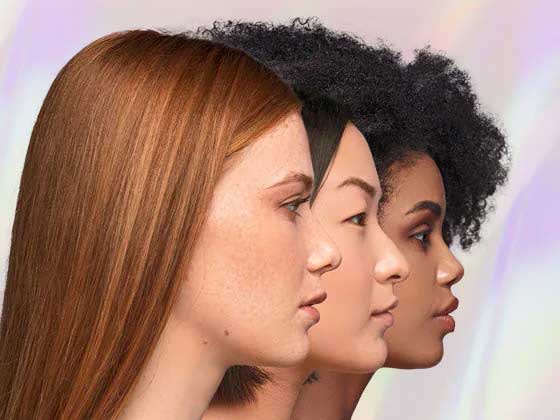
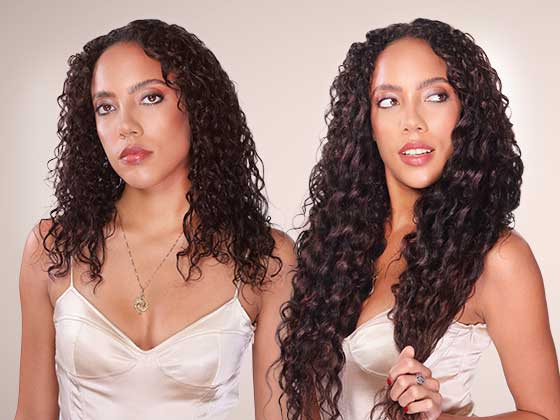
When most people think about hair weaves and hair extensions, they think of long, flowing locks. Hair extensions are supposed to extend the hair, right? Well, not exactly. There are plenty of reasons to get hair extensions, and not all of them have much to do with rocking down-to-there-hair. Many women get hair extensions because they want a hairstyle that they can’t or don’t want to achieve with their own natural tresses – and this can include short styles!
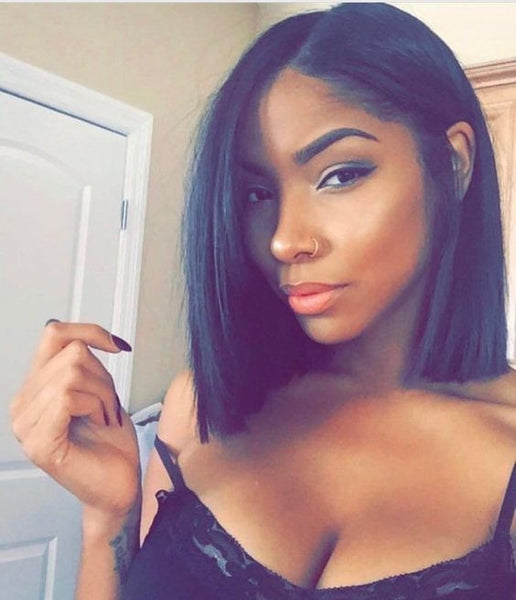
Just think: if you’ve always wanted to try a daring crop, but don’t want to cut your own locks, a short weave hairstyle is the perfect way to test-drive the look without being boxed in by pre-fabricated wigs. You can custom-fit the style to your needs!
First things first, though, make sure to invest in quality virgin hair weaves that are at least a few inches longer than the style you want. Try 10- or 12-inch hand-tied wefts of straight hair for super-short, buzzed cuts (hand-tied wefts are thinner, lie flatter, and thus create less bulk beneath your hairstyle), or consider machine wefts twelve to fourteen inches long for fuller looks like the one pictured on Kelly Rowland (above).
Even a crop this low can be done with a weave
Next, protect your own hair by braiding or wrapping it away. For tapered or shaved looks, try wrapping hair and using a thick net like a stocking cap to ensure that none of your own strands get clipped.
Once that’s done, you’re ready to install the hair extensions. Sew the tracks onto your braids or net as usual, making sure the hair lies as flat as possible. Use a closure piece up top if you plan to sport a style with bangs or other fullness up front, and make sure to clip the loose ends of your weaving thread before moving on.
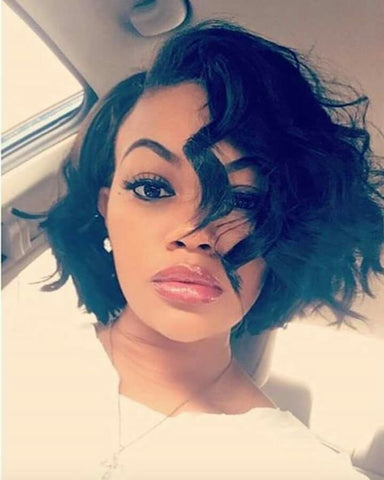
Now it’s time to cut. Since this is straight hair – wavy or curly hair extensions may give you styling headaches when cut short – wet your locks with a comb before snipping. Make sure to use super-sharp implements that will give you the utmost precision, like a razor, razor-comb, or clippers, to trim the hair to the desired length. Scissors are rarely ever as sharp or exact, so they will likely ruin your short haircut; stick to these three tools, which are better for the cuticle of your hair extensions, anyway. Use a razor or razor-comb for longer pieces of hair, and reserve the clippers for the shortest, most head-hugging cuts.
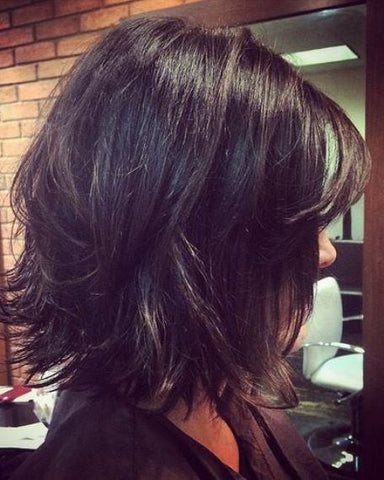
The shorter your final style, the more you can cut your hair extensions in large chunks, without worrying about sectioning off different areas. Simply bring it all down to about the length you want, and then start detailing different layers and levels with clippers or your razor comb. Make sure not to cut too low with your clippers, and voila! You’re office, office-party, and club ready with a style that suits your face shape and personality. Prepare to turn heads!
Best Short Weave Hairstyles to Try
If you're committed to trying a short weave style, here are some of the most flattering and wearable options - plus the hair type that works best for each.
The Classic Bob
The bob is the most popular short weave style for good reason. Whether chin-length, jaw-length, or slightly longer, a bob frames the face beautifully and looks completely natural with properly installed and cut extension hair. Straight or body wave weft hair in 10-12 inches gives you plenty of length to work with for the cut.
The Curly Short Weave
A short curly weave is one of the most voluminous, head-turning looks you can achieve with extensions. Curly hair extensions in 10-12 inches cut to jaw-length create a natural-looking full shape. The key with curly short weaves is matching the curl pattern to your natural hair texture so the edges blend seamlessly.
The Lob (Long Bob)
The lob sits right at collarbone length and is one of the most universally flattering styles. It's short enough to be a dramatic change but long enough to wear down or up, making it versatile for women who want the best of both worlds. Most 12-14 inch straight or wavy wefts work perfectly for a lob when cut after installation.
The Pixie-Inspired Weave
For the boldest short look, a pixie-inspired weave creates a dramatic close-cropped style without touching a single strand of your natural hair. This requires shorter wefts (8-10 inches), a skilled stylist, and typically a cap or net base for the most seamless result. The result, when done well, looks genuinely like a natural short haircut.
"Short weave styles are having a real moment, and I love seeing more women try them. The bravery it takes to go short - even temporarily - is always rewarded with how the style transforms the whole look and feel of the person wearing it."
- Priyanka Swamy, Founder of Perfect Locks
Short Weave Styling Tips for Everyday Wear
Once your short weave is installed and cut, maintaining the style day-to-day is relatively simple. Here's how to keep it looking fresh:
Frequently Asked Questions About Short Hair Weave Styles
Can you achieve a short hair weave at home?
For most short weave styles, professional installation is strongly recommended. The precision needed to braid the hair close to the scalp, install the tracks flat, and cut the hair after installation to achieve a seamless short look is difficult to replicate without experience. Some women successfully do their own installation with practice, but the final cut is usually best left to a stylist.
How long does a short weave take to install?
A short weave installation typically takes 2-4 hours depending on the style, the density of your natural hair, and the experience of your stylist. Styles requiring a closure or frontal at the top may take slightly longer. The cutting and styling after installation adds additional time.
What's the difference between a short weave and a wig for short hair?
A short weave is sewn directly to your braided natural hair and stays in for weeks. A short wig sits over your hair and is removed daily. Wigs offer more flexibility and zero installation time; weaves are more secure and stay in through physical activity and washing. Both are great options depending on your lifestyle and preferences.
Is a short weave good for people with thinning edges?
It depends. A short weave that keeps all the hair braided and protected underneath can actually be helpful for thinning edges if installed correctly - the edges aren't pulled or stressed. However, if the braiding is too tight near the hairline, it can worsen the problem. If thinning edges are a concern, consider discussing protective styling options designed specifically for this with your stylist.
What weave texture looks most natural for short styles?
The most natural-looking short weave texture is the one that most closely matches your own natural hair texture. For women with naturally straight hair, straight or body wave extension hair blends best. For women with natural texture, a kinky-curly or tight-curl extension hair at the edges will blend most naturally with the natural hair at the nape and hairline.
Short styles are bold, beautiful, and completely achievable with the right hair and technique. If you're thinking about making the leap, our team is here to help you explore options and find the perfect match for your look.

Author and Founder of Perfect Locks LLC
Priyanka Swamy, the visionary founder of Perfect Locks LLC, is a passionate advocate for empowering women and promoting cultural diversity. With an unwavering commitment to ethical sourcing and quality craftsmanship, she redefined the hair extension market and created a supportive community that celebrates individuality.
Priyanka's dedication to sustainability and social responsibility continues to inspire positive change within the industry. Her journey with Perfect Locks remains an inspiration, unlocking the true potential and confidence of countless individuals worldwide.