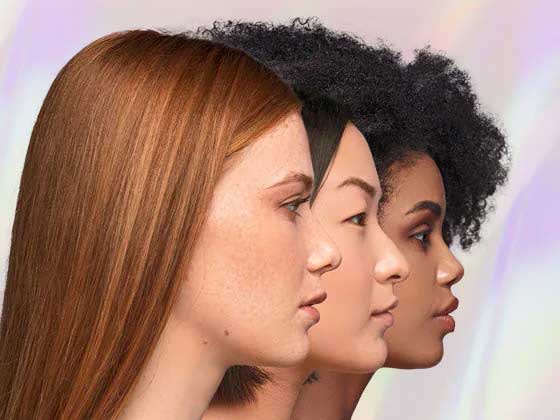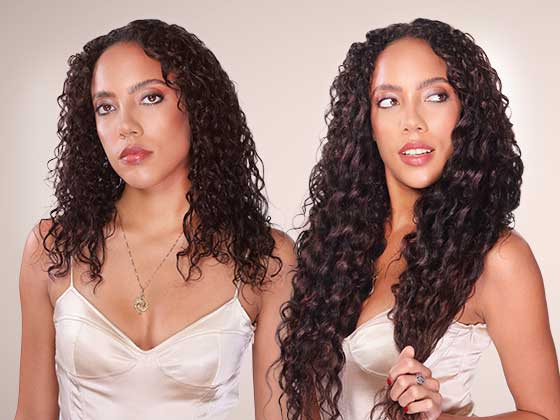
Every year over 18 million devotees visit the Venkateshwara Temple, at Tirumala in the south Indian State of Andhra Pradesh. For those devotees who make the journey to pay their respects to an incarnation of Vishnu, nothing could be more sacred or give them more joy. Every day, 12,000 of these pilgrims offer their hair as a sacred act to Vishnu, an act of thanks to be blessed by the deity who above all protects and sustains all that is good in society. At temples all over India, this hair is lovingly gathered and becomes the greatest, most beautiful hair in extensions, weaves and hairpieces to give confidence to women the world over. The return? The proceeds paid to the temples are reinvested into the community… Helping to fund schools, offer nutritional services and even to open medical clinics. This hair is sourced ethically. A gift of love… And of thanks.
THIS is the hair that Perfect Locks sources. 100% real. 100% ethical.
But in a booming global market, the big business of hair extensions has created an equaling booming black market. Hair unethically sourced, even marketed as “Indian”, but in fact originating in China or Russia... Hair that is often mixed with synthetic hair or even animal hair! This hair often found cheaply online…found on Craigslist and eBay…even beauty supply stores is sourced from China, Russia, Ukraine, Peru and Brazil. The origin is grim...
Here are 3 ways YOU can identify if the hair you wear is ethical, legitimate and TRULY virgin hair...
1: The Smell of Cheap Hair is Obvious
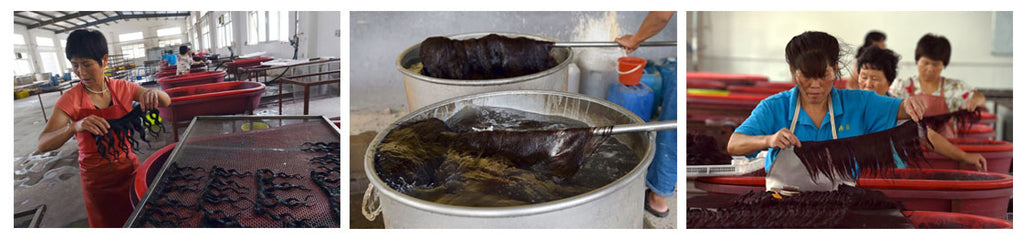
 China, not India is now in the 21st century the largest exporter of human hair in the world. There, black market goods peddled as the authentic thing and resold to the United States is BIG business. China imports fallen hair, also referred to as non-Remy hair, from India. Fallen hair is dead hair that naturally sheds and is collected from hair salons and hairbrushes. Because the hair’s quality has been jeopardized and matting is likely to occur, non-Remy hair is less desirable in the extension industry. But China collects this hair, cleans it and mislabels it as being from a higher-quality hair extension source like Brazil, Russia or India. If you’re shopping for extensions, and they say they’re shipped from China, it’s probably Chinese hair masquerading as something else. How to tell? Pay attention to the smell: fallen hair has a smell of acid and silicone that’s easily recognizable.
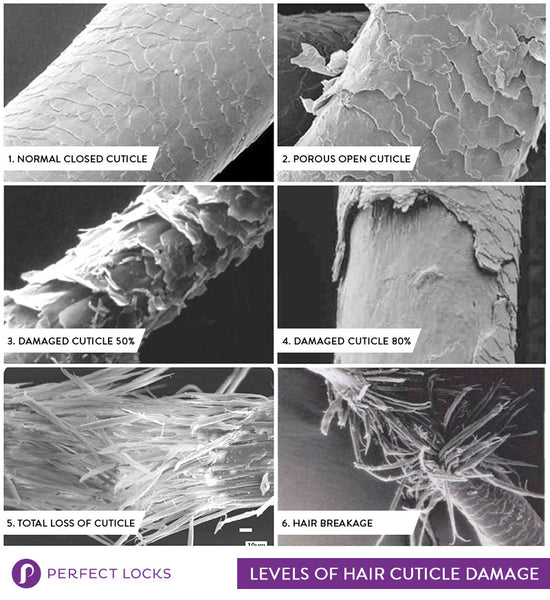
2: Does the Hair Have the Cuticle Intact?
Virgin Indian hair is not chemically processed, and by definition must have the cuticles present on the hair. If you check for cuticles and the cuticles are not present, know that the cuticles have been stripped from the hair usually from an acid bath. How to tell? The feel test! Run your fingers up and down the hair shaft. The hair strand should feel smooth going downwards towards the direction of hair growth, however you should feel some resistance as you move your fingers in the opposite direction. This resistance signifies the cuticle is present and has not been stripped.
3: If It Acts Like Fake Hair... It Is Fake Hair
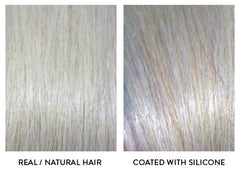
Remember that REAL human hair has the same properties as your own. For some unscrupulous dealers, synthetic hair is mixed in with real hair to save costs and maximize profit. There’s an easy way to tell…simply observe how the hair reacts. If you are styling your hair with a flat iron and notice a burning plastic smell… There is synthetic hair mixed in. Likewise, if you wet curly or kinky hair extensions they should acts the same way real hair will. Wet them…see if the curls and kinks come back fully when dried. If they don’t… Fake hair is mixed in. The last way is simply by observing the shine. Real human hair is shiny… But it never shines so much that it looks plastic. The look should be a pearlescent shine... Not a mirror reflective one. If the strands look more like fishing line than your own hair… It’s fake.

Remember, that YOU control the industry. Every time you choose to support ethically sourced extensions and say NO to unethical ones you help put a stop to this market of exploitation.
Why Ethical Sourcing Matters More Than You Think
Choosing ethically sourced hair extensions isn't just a moral decision - it directly affects the quality of what you're buying. Here's why the two are inseparable.
"We've been sourcing from Indian temples for over 20 years, and I can tell you that the relationship between ethical sourcing and quality is not a coincidence. Hair collected voluntarily through a sacred practice, handled carefully through a transparent supply chain, and never chemically processed produces hair that simply behaves differently. The cuticle is intact, the texture is natural, and the hair lasts. Ethics and quality are the same thing here."
- Priyanka Swamy, Founder of Perfect Locks
The Problem with Unverified Hair Sourcing
The global hair trade is largely unregulated. Hair sold under geographic labels like "Brazilian," "Peruvian," or "Malaysian" doesn't legally need to come from those places - these are marketing terms, not geographic guarantees. Much of what's sold under these labels is Chinese-processed hair that's been chemically treated to mimic different textures.
Beyond the mislabeling issue, unverified hair sourcing raises serious ethical questions. Hair has been collected from vulnerable populations, from people who didn't fully understand what their hair would be used for, or through supply chains with no accountability for how donors were treated. For women who care about fair trade and ethical supply chains in other areas of their life - food, clothing, cosmetics - hair extensions deserve the same scrutiny.
The Indian Temple System: Why It Works
The Tirumala Venkateswara Temple in Andhra Pradesh alone processes the hair of 12,000 devotees daily. The donation is completely voluntary - an act of devotion called Tonsure. The temple collects and auctions the hair through a transparent process, with proceeds funding hospitals, schools, and charitable programs serving millions of people annually.
This system has several key characteristics that make it genuinely ethical:
Full donor consent: Donors come specifically to make this offering as part of their religious practice. There is no deception about what will happen to their hair.
Community benefit: The proceeds directly fund programs that serve the same communities the donors come from. The hair donation creates real, documented charitable impact.
Supply chain transparency: The temple auction system is documented and verifiable. Perfect Locks can trace our hair from the temple collection through to the finished product. This traceability is rare in the hair industry.
How to Identify Ethically Sourced Extensions
Ask the questions that most brands can't answer: Where exactly does your hair come from? Can you name the specific source? What was the collection process? Were donors compensated or participating voluntarily? What happens to the proceeds?
Vague answers like "ethically sourced premium hair" without specifics are a red flag. Genuine ethical sourcing has specifics - locations, processes, and documentation.
Our human hair extensions come from Hindu temples across India through a process we've maintained transparently for over 20 years. We've visited these temples, we know the process, and we can answer every question about our supply chain.
Frequently Asked Questions
What does ethically sourced hair extensions mean?
Ethically sourced hair means the donors voluntarily gave their hair with full understanding of how it would be used, in circumstances that weren't coercive or exploitative. The strongest example is Indian temple hair, where donors offer their hair as a voluntary religious act, the temples manage transparent collection and auction, and proceeds fund charitable programs. This is meaningfully different from hair collected through brokers with no accountability for donor consent.
Is Brazilian hair ethically sourced?
The term "Brazilian hair" is not a geographic or ethical guarantee - it's a marketing label. The vast majority of hair sold as Brazilian is actually Chinese-processed hair, often with unverifiable sourcing. There are some genuinely Brazilian-sourced hair suppliers, but verifying this requires the same supply chain transparency questions: where specifically does it come from, and what was the collection process?
Why is Indian temple hair considered the best?
Indian temple hair combines ethical transparency with exceptional physical quality. The voluntary donation process means the hair is collected carefully without processing. The cuticle remains intact and aligned, giving the hair natural movement and longevity. The texture is naturally versatile, blending with a wide range of hair types. The combination of ethical sourcing and high inherent quality makes it the benchmark for the industry.

Author and Founder of Perfect Locks LLC
Priyanka Swamy, the visionary founder of Perfect Locks LLC, is a passionate advocate for empowering women and promoting cultural diversity. With an unwavering commitment to ethical sourcing and quality craftsmanship, she redefined the hair extension market and created a supportive community that celebrates individuality.
Priyanka's dedication to sustainability and social responsibility continues to inspire positive change within the industry. Her journey with Perfect Locks remains an inspiration, unlocking the true potential and confidence of countless individuals worldwide.