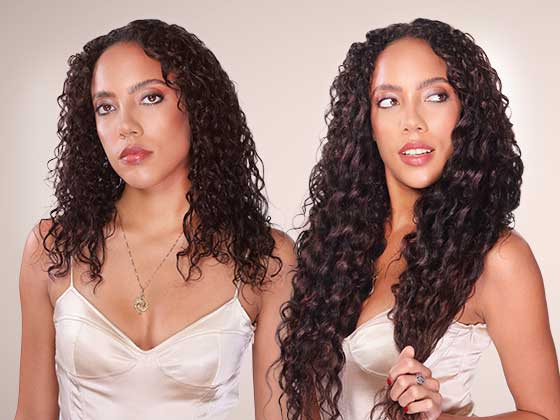
Summer has come and gone…fall awaits and with it, the changeover in trends and style that mimics the changing of the seasons. As both celebrities and salon goer’s alike shift from summery beach blonde to fall warm hair tones, the one dominant trend in hair for 2016 is still reigning supreme: long hair. From shoulder length to Kim Kardashian’s mermaid-like waist length hair, throwback long hair hasn’t had such a moment since the 1970’s.

Because of how “in” long hair has been, if you’ve been rocking more hair than you were born with (or even cheated time a little bit), you want to get the most of your gorgeous weaves, clip-ins and hair pieces. To give you a head start, we rounded up our top 6 best hair extensions hacks to keep your long hair extensions looking great between now and the holidays and beyond.
1: Find the perfect storage for your hair:
There is nothing more frustrating than trying to untangle matted and knotted clip-ins that have been tossed around. To keep add-on hair gorgeous, you need to show it the same love you would your own natural hair to keep it looking best. Pick a dresser drawer to organize your clip-ins. If you have more than 1 set, we recommend using our hair extension storage pouch or purchasing a few silk pillowcases to line the bottom and to sandwich your extensions in layers. The silk fibers are fine enough not to cause the hair to tangle or damage the cuticles. Best of all, the drawer can also be used to re-curl your clip-ins every day! Simply put the clip end in the drawer, close it and then gently re-curl them with a styling wand. Way easier than trying to re-curl them when they are on your head.
2: Don’t forget to wash them regularly.
While you are rocking them, don’t forget that even clip-ins need to be shampooed and conditioned from time to time to keep them looking great. Dust, pollen, oils, styling products…all of it builds up in your hair extensions in the same way it does your natural hair. The result? Dull, flat looking add-on hair. What to do? Clip them in once a week while showering and shampoo and condition as if they were your own hair. But remember…not any haircare will do. Perfect Locks INSPIRE Shampoo and Conditioner are sulfate & salt-free to not harm the hair.
3: What about wefts while showering?
Unlike clip-ins, sew-in wefts and even bonded extensions need to be treated gently…but still cleansed and conditioned from time to time. Remember, the key to long lasting wear is not stressing the bond…so HOW you cleanse your hair in the shower needs to be gentle. Shampoo and conditioner thoroughly, combing your hands through your hair from weft to ends, keeping the hair as straight and smooth as possible. Never “ball and lather” the hair, as ultimately this puts strain on the bond and also leads to a tangled mess.

4: Air dry that hair…NEVER blow dry.
Blow dryers even for natural hair may speed up morning routines, but more often than not the heat essentially microwaves the hair, causing the cuticles to flake or not sit flat. Allowing your hair extensions (and even your own hair) to air dry, allows the cuticles in the hair that swell and rise to gently return to normal temperature. You’ll be amazed at how shinier the hair is using this method as opposed to speeding things along with a blow dryer. If you still want to use a curling iron or wand, wait until they are 100% dry.

So there you have it, a handful of our favorite hair extension hacks, so you can get the most out of your gorgeous faux hair all fall long!
Long Hair Extension Hacks That Actually Work
"Long extension hair is beautiful but it requires knowing a few tricks to maintain it well. The longer the hair, the more care the ends need, the more protective sleeping becomes, and the more important detangling technique is. These aren't difficult adjustments - they just need to become habits."
- Priyanka Swamy, Founder of Perfect Locks
4 Hacks for Long Hair Extensions
1. The overnight oil treatment: Apply a small amount of argan oil to the lengths and ends of clip-in extensions before storing them overnight. The oil absorbs through the night, and by the next time you wear them the hair has a natural softness and shine that's noticeably better than untreated extension hair. Use just a few drops - too much and the hair is greasy when you install them the next day.
2. Braid before bed for semi-permanent wearers: Long extension hair worn in tape-ins or sew-ins tangles significantly more overnight than shorter hair simply because there's more surface area to catch on pillowcases and itself. A loose braid at the nape before sleeping contains the length and prevents the morning detangling session that damages extension hair.
3. Section-and-clip when styling: When heat styling long extensions, work in the same horizontal sections you'd use when installing. Clip up the sections you're not currently working on. This prevents the lower sections from being accidentally heat-styled multiple times while you work on the upper sections.
4. Trim the ends regularly: Long extension hair ends are the oldest, most-worn part of the set. Trimming or dusting just the tips every 6-8 weeks removes split ends before they travel up the shaft and maintains the overall quality of the set for significantly longer. Use sharp hair shears, twist small sections, and trim just the protruding damaged tips.
Frequently Asked Questions
How do you maintain long hair extensions?
The four key habits for long extension care: regular end trimming or dusting every 6-8 weeks, overnight braiding for semi-permanent wearers, overnight oil treatment for stored clip-ins, and sectioned styling to prevent repeated heat exposure on the same sections. Long extensions need more end attention and protective habits than shorter sets because the ends are older and have experienced more wear.
How do you keep long extensions from tangling?
Braid before sleep (the most impactful single change), detangle from ends upward daily with a loop brush, apply a leave-in detangling spray before brushing, keep the hair consistently moisturized (dry hair tangles significantly more than moisturized hair), and avoid styles that create friction at the mid-lengths (scarves over bare long hair, for example).