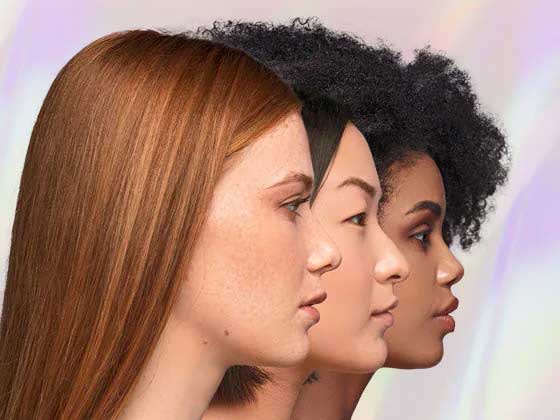
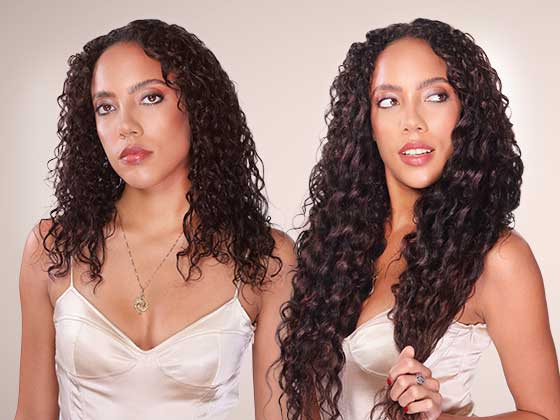
Hair loss or dealing with challenging thinning hair be it progressive and permanent or merely temporary due to post COVID stress to the body, surgeries, pregnancy or hormone therapy. While crown hair toppers are amazing in that these wiglets are fast and easy to clip on and give you thickness and density at the scalp, you might struggle for style. Properly blended into your natural hair you can actually do quite a bit if your stylist works to custom cut and shape it into a hairstyle that is as fun as it is trendy!
The 90’s Bixie Haircut
Retro fashion hair is still a dominant trend going into next year and one of the most iconic styles of the era was the bixie. What is it? In between a bob and a pixie, essentially a shaggy bob with layers to add dimension, but it’s not as long as the modern shag or “wolf cut”. This style is fantastic for crown hair toppers because when properly cut to give the topper and your hair texture, all you need is some mousse to scrunch it or a working hairspray.
Classic “Boy Cut”
The 1960s ushered in a whole wave of bold women striking out in daring fashion and even more daring haircuts. But it was Twiggy, the face of the 60’s who popularized the “boy cut” a short clipped haircut that looked amazing with her angular facial features. This style works particularly well for crown hair toppers as you need little more than to keep it sculpted with hairspray and a good hair oil with a clean part to look great. Case in point: model Kaia Gerber who loves her short hair and rocked it on the Valentino runway.
Rowan Blanchard also sported a slightly longer version with a clean side part.
Even actress Scarlett Johansson has sported this short cut during the Red Carpet premiere of her movie “Rough Night”
The Blunt Bob
Blunt bobs when styled, shined and flat ironed can be simply stunning. This could be why it’s been the go-to hairstyle for the who’s who of Hollywood including Taraji P. Henson from Empire. With some hair oil and time flat ironing this is definitely a statement style.
You can also switch it up for a center part style, curling the ends slightly under the chin in a way that flatters the face, just like Karlie Kloss’ hair.
No matter what style you choose we offer multiple types of Crown Hair Toppers for you to discretely conceal your thinning hair at the crown area.
SHOP THE TOPPER COLLECTION
Styling Crown Hair Toppers: Beyond the Basics
Crown hair toppers solve the coverage problem, but the styling question is where most women feel stuck. Here's how to get the most out of your topper across different looks and occasions.
"Crown toppers changed the game for so many of our customers dealing with thinning at the top. The most common thing we hear after someone finds their first topper is that they wish they'd discovered them sooner. The right topper - properly matched to your hair color and texture - is genuinely undetectable."
- Priyanka Swamy, Founder of Perfect Locks
How to Style a Crown Hair Topper for Volume
The blowout look: Clip your crown topper in first, then blow dry your natural hair and the topper hair together using a round brush. This blends the two seamlessly and creates unified volume from root to length. Finish with a light-hold spray to set the lift at the crown.
Soft waves: After clipping in your topper, use a large-barrel curling iron on both your natural hair and the topper hair together. Loose waves camouflage the integration point beautifully and give the overall look effortless volume. This is one of the most flattering styles for crown toppers.
The sleek look: Blow dry everything smooth using a paddle brush. Apply a light smoothing serum to unify the texture between your natural hair and the topper. This works best when your topper is color-matched precisely to your natural hair.
Hairstyles That Work Especially Well with Crown Toppers
Half-up half-down: Pull the top section - including the topper hair - into a loose half-updo. Leave the remaining hair down. This style naturally incorporates the topper at the crown where it sits and creates beautiful volume at the top.
Low ponytail or bun: Gather everything into a low ponytail or bun at the nape. The topper adds fullness at the crown area that gives the ponytail a polished, thick appearance that thinning hair alone can't achieve.
Side-swept styles: Toppers work beautifully with side-parted styles that sweep hair across the crown. The topper provides the density at the part line that makes the style look full and intentional rather than drawn across to cover thinning.
Textured updo: For formal occasions, a loose, textured updo uses the topper's volume as the foundation of the style. Gather hair into a low or mid chignon, pulling pieces loose around the face for softness. The topper's added density makes the updo look full without needing extensive teasing or padding.
Choosing the Right Crown Topper for Your Hair Type
The most important factor in a natural-looking topper result is the match - not just color, but texture and density.
Base size: Toppers come in different base sizes to cover different areas of thinning. Measure your thinning area (or have someone help you) to choose a base that covers the affected area without extending unnecessarily into healthy hair zones.
Hair texture: Match your natural hair's texture as closely as possible. A straight topper on wavy natural hair creates a visible line where the two textures meet. Our team can help you identify the right texture match during a free consultation.
Density: Choose a topper density that matches your natural hair. A very dense topper on fine natural hair looks obviously different at the integration point. When in doubt, go slightly lighter in density - you can always style for more volume, but you can't reduce density once the topper is in.
Caring for Your Crown Topper
Crown toppers made from human hair are cared for similarly to clip-in extensions. Wash every 15-20 wears with sulfate-free shampoo. Air dry flat on a clean towel. Brush with a loop brush starting from the ends. Store on a topper stand or wig head when not in use to maintain the base shape.
Frequently Asked Questions
What is a crown hair topper?
A crown hair topper is a hairpiece designed to add coverage, volume, and density specifically at the top of the head. Unlike a full wig, it clips into your existing hair and blends with your natural hair around the perimeter. Toppers are designed for women experiencing thinning or hair loss at the crown area specifically.
How do you style a hair topper to look natural?
The key is styling your natural hair and the topper hair together rather than separately. Blow dry, curl, or wave everything as one unified piece after clipping in. Choose a topper that matches your natural hair color and texture as closely as possible. Avoid styles that expose the base of the topper - half-up styles, waves, and loose updos all conceal the integration point naturally.
Can you put a crown topper in a ponytail?
Yes - a low ponytail works well with most crown toppers because it pulls the topper hair back along with your natural hair and the base sits at the crown where it's naturally covered. High ponytails are trickier as they can expose the base clips. If you frequently wear high ponytails, look for toppers with a monofilament base that allows for more styling versatility.
How do I know what size crown topper to get?
Measure the area of thinning on your scalp - the length front-to-back and the width side-to-side. Choose a base size that covers this area comfortably with a small margin of overlap into healthy hair zones. If you're between sizes, go slightly larger - you can always position a larger base further back, but a base that's too small won't provide full coverage.
How long do crown hair toppers last?
Human hair crown toppers typically last 12-18 months with proper care. Synthetic toppers last 3-6 months. The factors that most affect longevity are heat styling frequency (always use heat protection), washing technique (sulfate-free shampoo, gentle handling), and storage (always stored on a stand when not worn).

Author and Founder of Perfect Locks LLC
Priyanka Swamy, the visionary founder of Perfect Locks LLC, is a passionate advocate for empowering women and promoting cultural diversity. With an unwavering commitment to ethical sourcing and quality craftsmanship, she redefined the hair extension market and created a supportive community that celebrates individuality.
Priyanka's dedication to sustainability and social responsibility continues to inspire positive change within the industry. Her journey with Perfect Locks remains an inspiration, unlocking the true potential and confidence of countless individuals worldwide.