Last month on July 1st, a cargo freighter arrived at the Port of New York and New Jersey and immediately on docking at the port were descended upon by US Customers and Border Protection officers. As the officer reviewed the ships logs and manifest with the captain crew, another detachment of officers began open cargo containers to find them packed bundles of hair extensions. While international shipments of hair from China, Brazil and India happen almost every day in the United States as part of a $10 billion dollar industry, what made this hair of particular interest to officers was where it came from.

This hair, part of 13 tons of hair products had been shipped from Xinjian, China and was confiscated as part of a Federal seizure order on goods shipped from one company. What made this company a target for CBP officers was that their goods were made or originated from millions of Uigher Muslins and other minorities held in detention centers. This hair, harvested unethically is bit the tip of the ice burg when it comes to hair originating from China and Japan where human riots violations are sadly all too common. China, in fact is the biggest importer and exporter of human hair and unfortunately there is no regulatory body that ensures ethics in the harvesting of human hair. Beyond the questionable origin of where cheap hair often comes from, “standard hair” is often collected and processed that is left behind from salon floors, and combs for processing in many poorer countries. This hair eventually makes it’s way to processing factories in China and Myanmar before ending up as cheap and affordable wigs and hair extensions here in the United States. In fact, some of that hair is shipped into Brazil before being reshipped to the United States as “Brazilian Hair”, when it is in fact, anything but.
All of this begs the question, what is the difference between our hair, Indian Remy Hair and Asian hair?
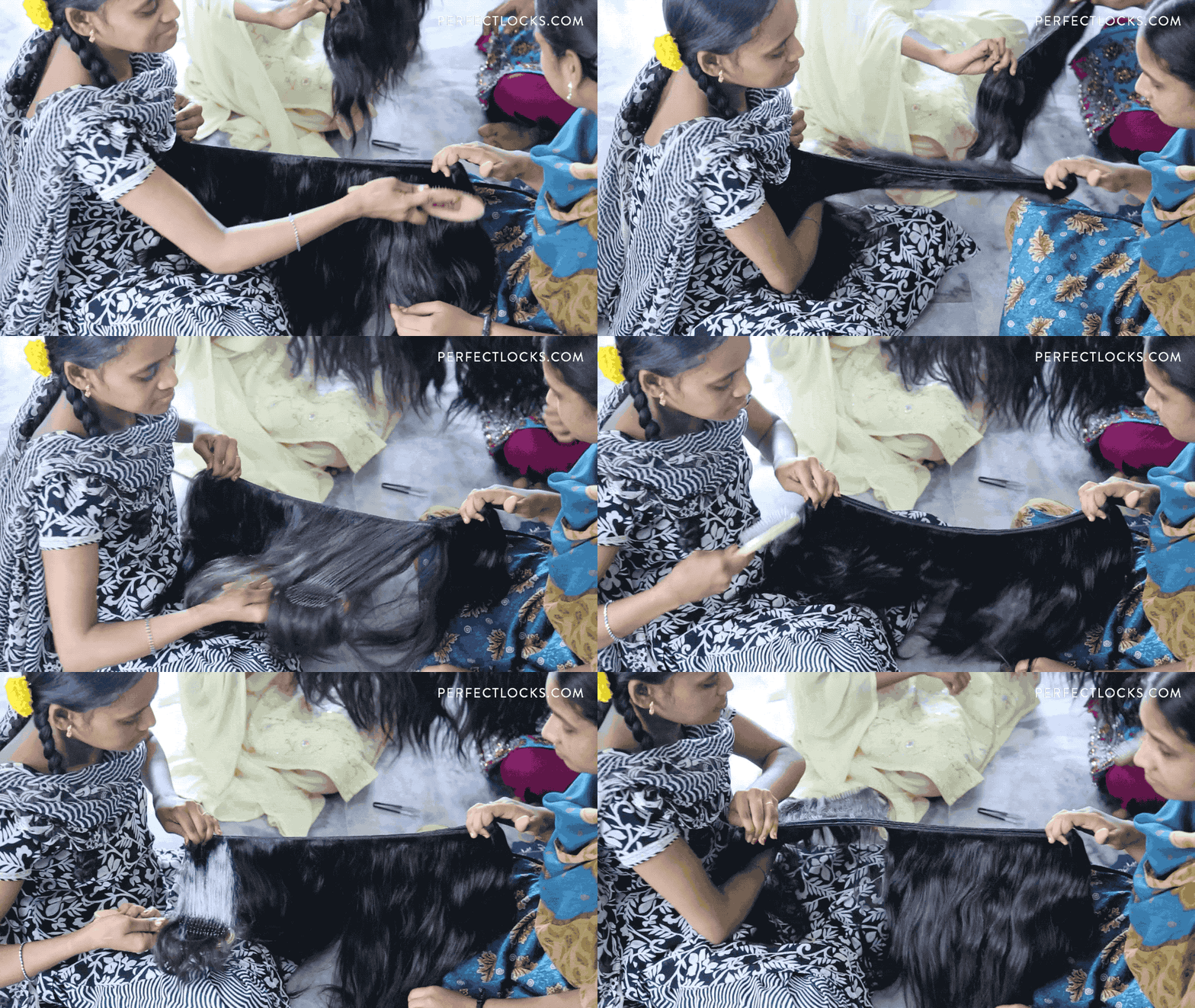
INDIAN HAIR IS:
- 100% Remy Hair (used in all Perfect Locks products), meaning that the cuticle is intact and all of the hair is sorted and bundled in the same direction.
- Gathered direct from temples in India ethically during the ritual of tonsure by our buyer, who selects some of the best quality hair available.
- It is naturally wavy, light and airy and moves easily with a lot of bounce
- It is tangle-resistant and easy to style
- It is the strongest hair and holds up to coloring and chemical processing
- Naturally being a dark brown, it blends ins with virtually all hair types, especially African American
ASIAN HAIR IS:
- Generally considered to be of low quality and often harvested unethically. If it is harvested ethically, it is often processed and the cuticle is destroyed which impacts the lengths of wear.
- Since it is often not sorted, the cuticles are mixed together in opposite directions, leading to tangling.
- “Brazilian” hair is often Chinese hair that has been counterfeited, dyed and process to make it look like Brazilian hair.
- Asian hair is round in structure, making it coarser than Caucasian hair and stick straight. To soften it and make it finer, it is bathed in an acid and then treated with silicones to make it feel soft and add shine in place of the ruined cuticle. The results don’t last long.
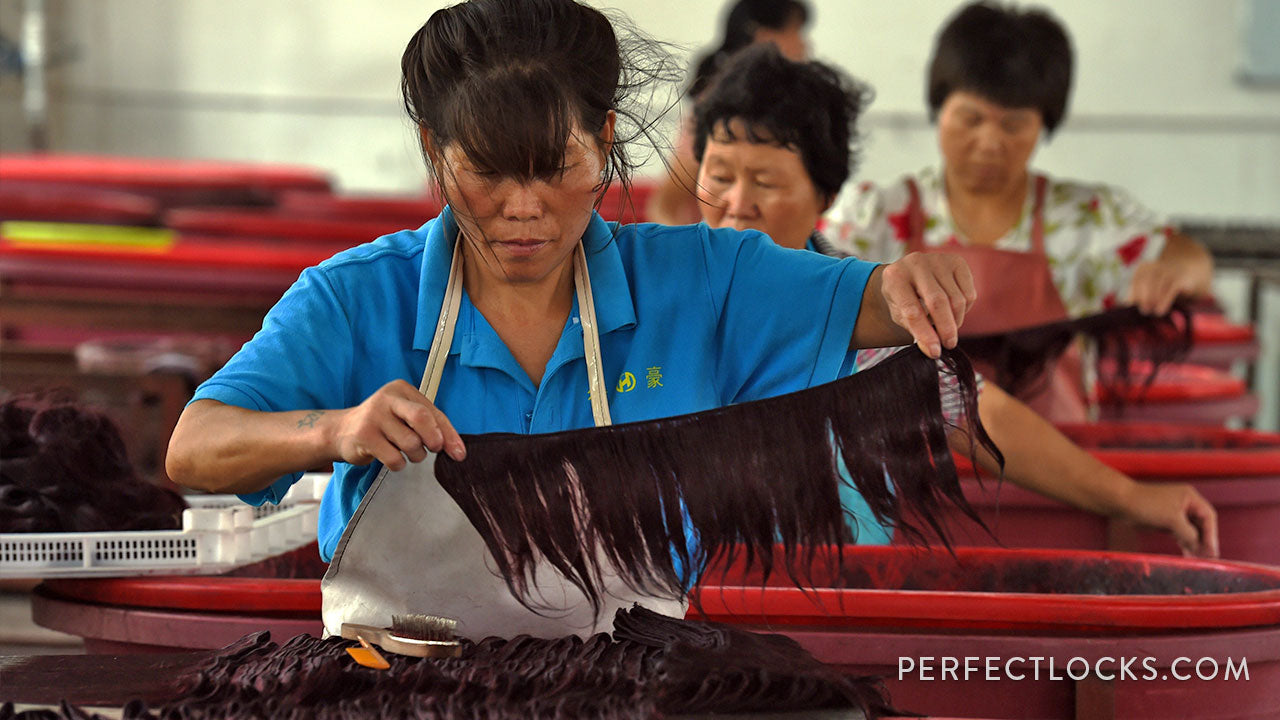
Beyond how the hair feels, the ethics involved should give you pause. Anything cheap in life often comes at a cost, in this case, it comes at the cost of people…so bear that in mind and KNOW where the hair in your extensions and wigs come from. Beauty should never come at a cost.
References:
- https://www.businessinsider.com/cbp-seize-human-hair-extensions-made-in-xinjiang-uighur-labor-2020-7?fbclid=IwAR2EGK40rhG6pLLP8JdNSz20YyUxbZrwbI1pB6OiDIl6qMHFA6k3MnSEFSA
- https://www.cbp.gov/newsroom/national-media-release/cbp-issues-detention-order-hair-products-manufactured-forced-labor-0
- https://www.bbc.com/news/magazine-37781147
Why Indian Temple Hair Is Considered the Gold Standard
The story of Indian temple hair begins with a centuries-old Hindu practice called Tonsure (Mudigiven) at temples across India - most notably the Tirumala Venkateswara Temple in Andhra Pradesh, one of the most visited religious sites in the world. Devotees voluntarily shave their heads as an act of devotion, surrendering their hair as an offering. The temples collect this hair and auction it, using the proceeds to fund charitable programs including free meals, hospitals, and schools that serve millions of people annually.
This is ethically sourced hair in the most literal sense of the term - voluntary, purposeful, and directly beneficial to the communities involved.
"When I started Perfect Locks over 20 years ago, I made a commitment to source only from Indian temples where I could verify the entire supply chain. I've visited these temples. I know where the hair comes from and how it's collected. That transparency is something we've never compromised on, and it's the foundation of every product we sell."
- Priyanka Swamy, Founder of Perfect Locks
Why Is Indian Hair So Good?
Beyond the ethical sourcing story, Indian temple hair has specific physical characteristics that make it exceptional for extensions:
Natural texture and movement: Indian hair has a naturally slight wave and a softness that blends beautifully with a wide range of natural hair types. It's neither as fine as some East Asian hair textures nor as coarse as some African hair textures - it sits in a range that works with most clients.
Cuticle integrity: Because temple hair is collected in bulk and handled carefully through the supply chain, the cuticle - the outer protective layer of each strand - remains intact and aligned root-to-tip. This is the defining characteristic of true Remy hair and the reason it doesn't tangle, has natural movement, and responds to styling tools like your own hair.
Natural color versatility: Indian hair's natural color is typically a deep brown-black that takes color processing predictably and evenly. It can be lightened, toned, and colored in ways that non-Remy or chemically processed hair often can't.
Longevity: With an intact cuticle and no pre-processing, Indian temple Remy hair consistently outlasts alternatives. Well-cared-for sets regularly last 12-18 months or longer.
How to Identify Quality Indian Hair vs. Inferior Alternatives
The hair market is unfortunately full of mislabeled and misrepresented products. Here's how to evaluate what you're actually buying:
The smoothness test: Run a small section of hair between your fingers from root to tip, then tip to root. Quality Remy hair feels smooth root-to-tip and slightly rough tip-to-root. This roughness is the cuticle you're feeling - a sign it's intact. Hair that's been coated with silicone feels uniformly smooth in both directions and loses this feel after a few washes.
The transparency test: Ask the supplier exactly where the hair comes from and how it was sourced. Vague answers like "ethically sourced premium hair" without specifics are a red flag. We can tell you specifically that our hair comes from Hindu temples in India, the approximate region, and how the collection and auction process works.
The water test: Wet a small section and let it dry naturally. Quality Remy hair dries without tangling or excessive frizz. Silicone-coated hair often reveals its true texture after getting wet for the first time.
The shed test: Run your fingers through a new weft firmly. Some shedding is normal. Excessive shedding from a brand new set is a sign of poor weft construction or lower quality hair that will only get worse with regular use and washing.
Frequently Asked Questions
Why is Indian hair considered the best for extensions?
Indian temple hair is valued for its naturally intact cuticle (which gives it its longevity and natural movement), its texture versatility (it blends with a wide range of natural hair types), and its ethical sourcing through the Hindu temple donation system. The combination of quality and traceable ethical sourcing is what sets authentic Indian temple hair apart from most alternatives on the market.
What is the difference between Indian hair and Chinese hair?
Chinese hair (often used as the base for hair sold as "Brazilian" or other origin labels) tends to be finer and straighter than Indian hair, and is typically processed and chemically treated to achieve desired textures. Indian temple hair retains its natural texture and cuticle, giving it a more realistic look and significantly longer lifespan. Chinese hair is also frequently coated with silicone to mimic the feel of quality hair, which wears off after washing.
What does ethically sourced hair mean?
Ethically sourced hair means the donors voluntarily offered their hair with full knowledge of how it would be used, in circumstances that were not coercive or exploitative. In the case of Indian temple hair, donors give their hair as a religious act, the temples manage the collection and auction process transparently, and the proceeds fund charitable programs that serve the local community. This is a meaningfully different supply chain from hair collected through brokers with no accountability for donor treatment or consent.
How can you tell if hair extensions are real human hair?
The most reliable test is the burn test: take a few strands, hold them over a flame, and observe. Real human hair singes and crumbles to ash, smelling faintly like burned hair. Synthetic hair melts, beads up, and smells like burning plastic. For quality assessment, the smoothness test (running fingers root-to-tip vs tip-to-root) and the water test (wetting and observing natural drying behavior) are reliable indicators of cuticle quality.

Author and Founder of Perfect Locks LLC
Priyanka Swamy, the visionary founder of Perfect Locks LLC, is a passionate advocate for empowering women and promoting cultural diversity. With an unwavering commitment to ethical sourcing and quality craftsmanship, she redefined the hair extension market and created a supportive community that celebrates individuality.
Priyanka's dedication to sustainability and social responsibility continues to inspire positive change within the industry. Her journey with Perfect Locks remains an inspiration, unlocking the true potential and confidence of countless individuals worldwide.