Your hair part is something that can become almost as intrinsic to your life as your name. Many men and women have been parting their hair the same way since they were old enough to comb their hair. It’s time to add a little pizzazz to your part and try something new. Dramatic parts were a big part of the runways this season and will stick around for a while. Changing your hair part will revolutionize your look. Best of all, there are also some great options that use human hair extensions for styling your part wherever you move it. Here are a few options for moving that hair part.
Middle Part
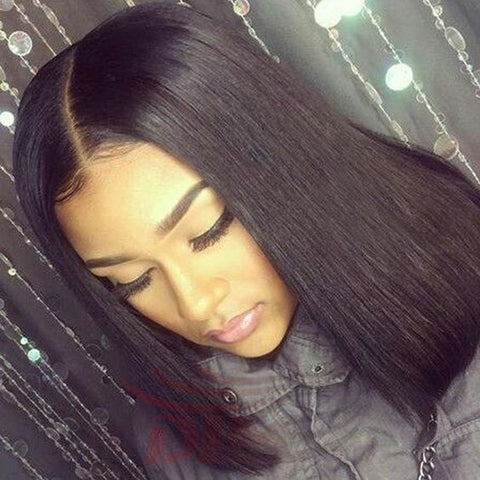
Many women don’t think they can rock the middle part, because they associate it with outdated styles from the 1960s and 1970s. The middle part, however, is quite chic and modern with the right hairstyle and an updated outfit. Heart-shaped faces wear the middle part well if hair is long. Individuals with an oval face or a high forehead also benefit from this part, as it brings out their best features. If you use hair extensions, a u-part wig works well for using your natural hair to create the middle part. This closwigure allows your natural hair to be exposed at the part line, and it is also versatile with other parts.
Deep Side Part
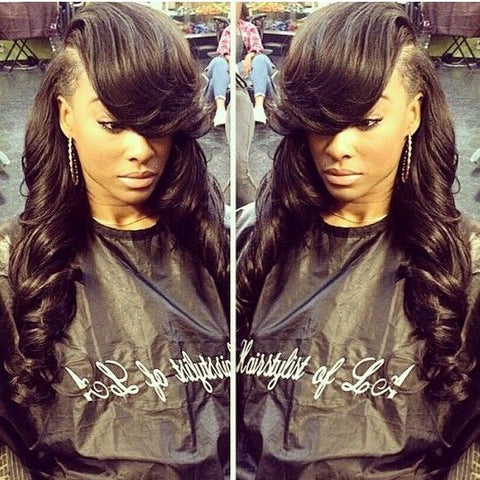
A deep side part works best with square or oval faces. Make sure you showcase your best side. Unlike a standard side hair part, a deep side part angles more dramatically to one side and is usually accompanied by side swept bangs that go across the forehead. This part is especially good if you have an angular face, because it will help soften the angles. Swiss lace closures works well with the deep side part, because its versatility allows you to part your hair in any direction.
Messy Part
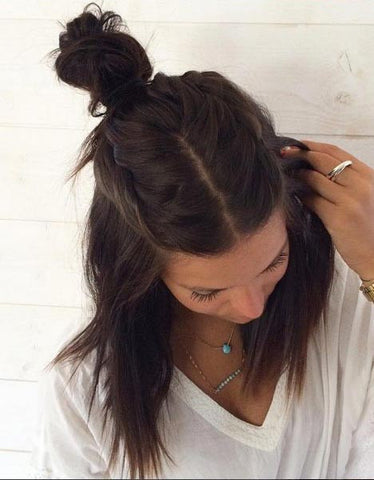
Sexy, beachy waves are an effortlessly chic element of summer, and often a not-so-perfect part is the best top for this style. Damp bamboo curlers or braids in damp hair can create these beachy waves, or use a flat iron to create shape before brushing and using product. Use the thin end of a comb with a handle to play around with your normal part, moving pieces of hair from side to side until you reach the perfect level of effortlessness. Silk base closures offer versatility for extensions.
Using Closure Pieces for Natural-Looking Parts
The right closure piece makes a dramatic difference to how natural a sew-in or wig install looks. Here's everything you need to know to choose and wear one correctly.
"A good closure piece is the finishing touch that makes a sew-in look completely undetectable. Without one, there's always a visible track at the top or a harsh edge. With the right closure, properly customized, you can part the hair anywhere and it just looks like it's growing from your scalp."
- Priyanka Swamy, Founder of Perfect Locks
Types of Closure Pieces
Lace closure (4x4 or 5x5): The most common type. A sheer lace base with hair tied to it that sits at the crown of a sew-in install. The lace is glued or sewn to the braided hair beneath and creates the appearance of a natural part. Available in a range of part styles - center, side, or free part.
Silk base closure: Similar to lace but with a silk base that more closely mimics the appearance of the scalp. The hair appears to grow directly from the skin, with no visible knots through the base. More expensive but creates the most natural-looking result.
Frontal: Covers the entire front hairline from ear to ear rather than just the top section. Allows for parting anywhere across the top of the head. More versatile than a closure but requires more maintenance and careful application.
Customizing Your Closure for a Natural Part
Straight from the package, closures look too uniform and dense to be realistic. Two customization steps make a significant difference:
Bleach the knots: The dark dots visible through the lace are the knots where hair is tied. Bleaching them lightens the knots to near-invisible, creating the illusion that hair grows from the scalp rather than from a lace base.
Pluck the hairline: Factory closures have maximum density right to the edge. Natural hair has a gradual density decrease toward the hairline. Pluck individual hairs from the perimeter to create that natural gradient - more plucking at the very edge, gradually less as you move back.
For our full customization guide, see our separate post on how to customize your frontal or closure.
Matching Your Closure to Your Extension Hair
The closure must match both the color and texture of your extension hair. A closure that's slightly lighter, darker, or different in texture than the weft hair it's paired with creates an obvious visual discontinuity at the top of the install.
Our closures and frontals are made from the same 100% Remy Indian hair as our extension wefts. When you order matching products from the same collection in the same color, you get a guaranteed texture and color match.
Frequently Asked Questions
What is a hair closure piece?
A hair closure is a small hairpiece (typically 4x4 or 5x5 inches) with hair attached to a lace or silk base. It's placed at the crown of a sew-in weave installation to close off the top, creating a natural-looking part line. Without a closure, the braided natural hair at the top is exposed.
How do you make a closure part look natural?
Bleach the knots to make the lace invisible against the skin, pluck the hairline to create a natural density gradient, apply foundation or concealer over the lace, and style baby hairs at the edges. These four steps transform a factory-fresh closure into one that looks like a real hairline.
What is the difference between a 4x4 and 5x5 closure?
The numbers refer to the dimensions of the lace base in inches. A 4x4 closure provides a parting space of 4 inches across by 4 inches deep. A 5x5 provides slightly more coverage and parting flexibility. The 5x5 is increasingly popular because the extra inch allows for more natural-looking part placement, especially for side parts.

Author and Founder of Perfect Locks LLC
Priyanka Swamy, the visionary founder of Perfect Locks LLC, is a passionate advocate for empowering women and promoting cultural diversity. With an unwavering commitment to ethical sourcing and quality craftsmanship, she redefined the hair extension market and created a supportive community that celebrates individuality.
Priyanka's dedication to sustainability and social responsibility continues to inspire positive change within the industry. Her journey with Perfect Locks remains an inspiration, unlocking the true potential and confidence of countless individuals worldwide.