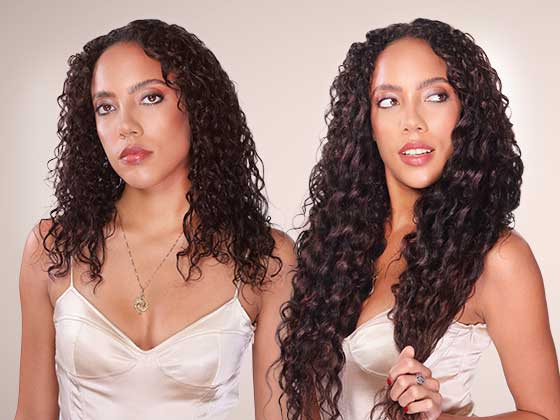
The most exciting thing about getting extensions is how amazing they look after you put them in for the first time. Whether it’s a more semi-permanent install with beads or a weave or something temporary like tape-ins, you look in the mirror and you have a full, luscious head of hair enough for you to say, “hello gorgeous” to yourself.
But then, weeks go by and all of a sudden you’re dealing with knots, frizz and tangles or worse...pieces falling out where the bonds just broke. So what happened? It might surprise you to know that the majority of extension damage happens at home and the culprit is you! Remember that no matter what type of extensions you have, the best quality ones (like ours) are made with real human hair extensions, BUT unlike your own real hair it’s not attached to the scalp. The base of our hair follicles imparts oils that travel down the length of our hair keeping it healthy, shiny and protected. Your extensions need to have some of that oil both from your hair and scalp and also often some extra helpful oils such as our Perfect Locks Argan Oil.
Brushing your hair and extensions does a few things:
- It helps redistribute oil throughout the hair and helps impart it to your extensions
- It detangles the hair, preventing knots and frizz from friction
The problem when it comes to the damage we talked about earlier starts with your brush. Most brushes tend to be coarse and stiff, adding rough friction (almost if you were scraping extensions already lacking natural oil with sandpaper). Over time this dulls them, damages the cuticle...leading to frizz and tangles. So when it comes to brushing, not just any brush will do!
Loop Brushes
Loop Brushes look like your typical brush until you look at the bristles and find not bristles, but loops! Since bristles can tug on your hair and weaken your bonds over time, loops allow the brush to slide and glide through the hair without creating friction. The hair just slides around the loops, eliminating tangles and knots as it goes. It's the perfect brush for hair extensions, it works on all types and textures and is simple enough for anyone to use.
Travel Brushes
The saying goes that your hair looks too good to stay in on a Friday night, and frankly we couldn’t agree more. We created a compact size travel brush that you can carry with you on the go during the day or even while traveling. It has gentle-tipped bristles that will allow you to gently brush your hair as needed as well as a built-in travel mirror so you can check your hair and even more makeup.
The Right Brush Matters
Once you have the RIGHT brush that won’t wreck your lovely hair, it’s important to remember the technique matters.
- Start from the END of your hair first, which might sound out, but you want to address tangles in your hair first so it won’t tug on your bonds. Simply separate the hair into horizontal sections and brush each section at a time.
- Finish by gently brushing from the root of your scalp to the ends in long, fluid gentle motions to really help distribute the natural oils of your scalp and real hair into your extensions. Continue until your hair looks smooth, shiny and stunning!
The Best Brushes for Hair Extensions: A Complete Guide
The brush you use on hair extensions matters more than most people realize. Regular brushes designed for natural hair often have bristle tips or spacing that snags on extension wefts, causes shedding, and breaks down the weft construction faster than normal wear would. Here's what to use instead - and why it makes a difference.
"We hear from customers constantly who are experiencing shedding and tangling and assume the extensions are low quality - but when we ask about their brush, it's almost always a regular paddle brush or round brush with ball-tipped bristles. The right brush eliminates probably 80% of extension-related shedding issues. It's that impactful."
- Priyanka Swamy, Founder of Perfect Locks
Why Regular Brushes Damage Extensions
Most brushes have rigid bristles with ball-shaped tips. On natural hair, these bristles slide through the hair and the balls prevent scalp scratching. On extension hair, these ball tips catch on the fine threads of the weft base, pulling on individual hairs and over time weakening the weft construction. The result is shedding that looks like the extension hair is falling out - and it is, but from damage rather than low quality.
A second problem: regular paddle brushes create a lot of tension at the roots when you try to brush from top to bottom. This tension is amplified at attachment points (clips, tape bonds, beads), creating stress that shortens the lifespan of any extension method.
The Best Brushes for Hair Extensions
The loop brush (flex brush): The gold standard for extension care. Instead of bristles, a loop brush has looped metal filaments that flex as they move through the hair. These loops glide through extension hair and over weft threads without catching, creating zero shedding. The flexibility also allows them to work through tangles gradually rather than forcing through. Every extension wearer should own a loop brush.
Boar bristle brush: Best for finishing and smoothing the top layer of hair. Boar bristles are very fine and packed closely together, which smooths the cuticle and adds shine without creating the snagging that ball-tipped bristles cause. Use for final smoothing after detangling with a loop brush, or for laying edges. Not suitable as a primary detangling brush for extension hair.
Wide-tooth comb: Essential for detangling extension hair when it's wet or heavily conditioned. Wide-tooth combs create very little tension and work through tangles gently when used starting from the ends. Use in the shower after applying conditioner, or when detangling before washing.
Denman brush: Popular with curly extension wearers. The Denman's rubber base and widely-spaced flexible bristles work well on curly and wavy extension textures, helping to define curl patterns without causing shedding. Not recommended for straight extension hair, where a loop brush is still superior.
How to Brush Hair Extensions Correctly
The technique matters as much as the tool. The correct way to brush any extension - regardless of brush type:
Start at the ends. Always. Hold the hair with one hand below where you're brushing to prevent tension from pulling at the roots or attachment points. Work through any knots at the ends first, then gradually move upward - mid-lengths, then upper lengths, then roots. Never drag from root to tip in one stroke. This bottom-to-top technique prevents the small tangles at the ends from being pushed upward into larger knots during brushing.
Frequently Asked Questions
What is the best brush for hair extensions?
A loop brush (also called a flex brush) is the best brush for extension hair. The looped metal filaments glide through extension hair and over weft threads without snagging, which eliminates the shedding that ball-tipped bristle brushes cause. Follow with a boar bristle brush for final smoothing and shine. These two brushes cover all your detangling and finishing needs for extension hair.
Can you use a regular brush on hair extensions?
Technically yes, but it's not recommended. Regular paddle brushes with ball-tipped bristles snag on extension wefts and cause shedding that looks like the extension hair is falling out. Over time, this breaks down the weft construction and significantly shortens the extension's lifespan. A loop brush costs very little and eliminates this problem entirely.
How often should you brush hair extensions?
Brush morning and night as a minimum. Additional brushing throughout the day as needed to manage any tangles that form during daily activity. The key is always starting from the ends and working upward, and never forcing through knots. Consistent gentle brushing prevents the small tangles that accumulate into larger problems if left unaddressed.
Should you brush hair extensions when wet?
Use a wide-tooth comb rather than a brush on wet extension hair. Wet hair is more elastic and prone to stretching and breaking under brush tension. A wide-tooth comb glides through conditioner-coated wet hair with minimal tension. After the hair is mostly dry, switch to your loop brush for detangling and finishing.

Author and Founder of Perfect Locks LLC
Priyanka Swamy, the visionary founder of Perfect Locks LLC, is a passionate advocate for empowering women and promoting cultural diversity. With an unwavering commitment to ethical sourcing and quality craftsmanship, she redefined the hair extension market and created a supportive community that celebrates individuality.
Priyanka's dedication to sustainability and social responsibility continues to inspire positive change within the industry. Her journey with Perfect Locks remains an inspiration, unlocking the true potential and confidence of countless individuals worldwide.