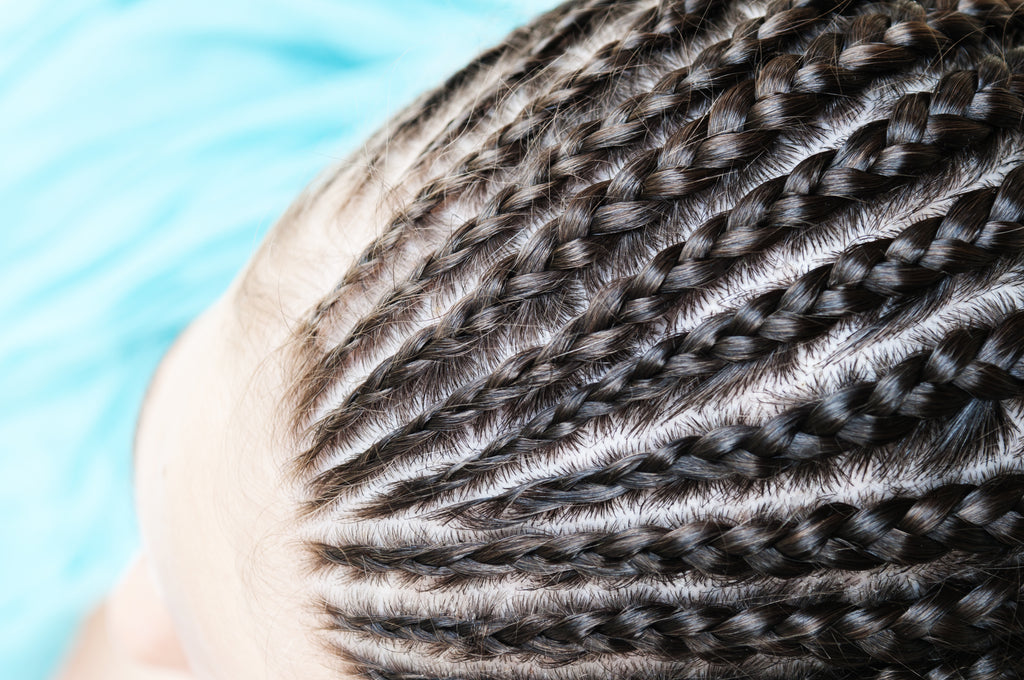
Braids are beautiful. Whether you prefer tiny microbraids, larger box braids, medium box braids, cornrows, or tree braids, a plaited style can bring out the natural beauty of your face and provide you with a pretty, low-maintenance hairstyle. So when it's time to take down those braids, you may hesitate...and for good reason! Removing braided hair extensions, especially with smaller braids, can be time consuming and even damaging to your mane, if you don't know how to do it right. Fortunately, these few tips can help save you hair loss, hassle, and damage while taking down your braided hair extensions.
5 Important Tips
Tip 1: Rotate regularly. Don't leave braids - especially microbraids - in for too long, as this leaves time for the hair to grow "comfortable" with the braids and latch onto the hair extensions. This is particularly important for women with curlier Type 3c and Type 4 locks, as coarse hair tends to loc together quickly, making it very hard to separate all the strands and remove the extensions hair without cutting. Try not to wear the same braids for more than 6 weeks, and aim for four, just to be safe
Tip 2: Wash carefully. As noted above, coarser hair types tend to loc together over time and when washed and dried in a certain pattern. For this reason, women with kinky or kinky-curly hair should avoid washing or conditioning braids with any product that dries the strands and encourages locing. Oil-based products and waterless shampoos that give the locks "slippage" will keep each strand healthy and separated from the others. Consider high quality sulfate-free hair care products made for hair extensions.
Women with oilier scalps and finer or straighter locks should rinse braids with water and cleanse the scalp with a cotton ball or swab dipped in an astringent. This will prevent hair odor, keep the scalp healthy and clean, stop hair oils from gumming strands together, and even help control fine flyaways.
Tip 3: Prep hair with natural oils before removing braids. Natural oils will lubricate the hair and help you slip the hair extensions out more easily. Try a lightweight oil like carrot, sunflower, Vitamin E, or coconut, or one of the all-natural blends available in beauty supply stores.
Tip 4: Snip hair extensions at the ends only, and unravel the braids - DON'T yank them. Use hair scissors or shears to cut off the ends of your braids. For best results, cut away as much of the extension hair (whether free-flowing, as in tree or microbraids, or sealed shut, as with synthetic hair) as you can before snipping your natural lengths. Then put the scissors away; attempting to cut out snarls or tangles in the hair extensions once you've started unbraiding your own hair will only lead to trouble.
Instead, unravel each braid down to the scalp, using your fingers to work out any snags you encounter. While this process can be lengthy, resist the urge to get impatient and try to pull the braids out from the top. You will cause more tangles and put more stress and friction on the hair than needed.
Tip 5: Brush hair with a natural-bristle brush after all braids have been removed. This will catch any leftover strands of extension hair that you didn't remove with your fingers. A boar-bristle brush will also help smooth the your natural hair's cuticles and restore shine. Then you'll be ready to wash, condition and style as you like - even if that means more braids later!
Step-by-Step: How to Remove Box Braids Safely
The specific technique matters as much as the products you use. Here's the approach we recommend:
"The takedown is where so many women accidentally undo weeks of healthy hair growth. Rushing through braid removal causes breakage that negates the protective benefit of wearing the braids in the first place. Give yourself a full afternoon. Put on a show you've been wanting to watch. The hair will thank you."
- Priyanka Swamy, Founder of Perfect Locks
Apply detangling oil or conditioner first
Before cutting or unraveling anything, saturate each braid with a generous amount of detangling oil, coconut oil, or diluted conditioner. Focus especially on the roots where your natural hair meets the braiding hair - this is where the most tangling accumulates during wear. Let it sit for 10-15 minutes to soften and lubricate the hair before you start.
Cut the extension hair carefully
Using sharp scissors, cut each braid below the point where your natural hair ends. You'll feel a slightly different texture where your natural hair transitions to the braiding hair - cut just below this point. Cutting the extension hair away significantly reduces how much you have to unravel, which in turn reduces the risk of tangling your natural hair in the process.
Unravel from the bottom up
Start at the very end of each braid and unravel upward, holding the root gently with your other hand to prevent pulling. Never yank. If you hit resistance, add more oil and work slowly through the knot rather than pulling against it. Work in sections of 4-6 braids at a time rather than trying to take the whole head down at once.
Finger detangle each section after unraveling
Once a section of braids is unraveled, use your fingers to gently separate the strands before moving on. This removes the shed hair that accumulated during the wear period (completely normal - you lose 50-100 hairs per day, and all of that accumulates while in braids) and prevents it from creating a large tangle when you wash.
Deep condition and wash after full removal
Once all braids are removed and all sections are finger-detangled, apply a generous deep conditioning mask to your natural hair before washing. The conditioner helps manage any remaining shed hair during the shampoo rinse. Wash gently in downward motions, follow with a rinse-out conditioner, and let hair air dry or dry with low heat before any heat styling.
What to Do After Braid Removal
Your natural hair has been in a compressed, low-manipulation state for weeks. Give it a proper recovery period:
Assess the condition of your hair after washing and drying. Note any areas of breakage or thinning, especially at the edges where tension is highest. If edges look sparse, give them at least 2-4 weeks of gentle care with a scalp oil before putting any tension on them again.
Resist reinstalling immediately. We recommend at least 1-2 weeks of open hair care - moisturizing, light detangling, and low-manipulation styles - before going back into braids or any other extension method. This rest period allows the hair follicles to recover from weeks of tension.
If you want to put something in during the transition, clip-in extensions are a good option - they add length and fullness with zero tension on your scalp and come out at night.
Frequently Asked Questions
How do you remove box braids without breakage?
Apply a generous amount of detangling oil to each braid before starting. Cut the extension hair below where your natural hair ends to reduce what you need to unravel. Unravel from the bottom up, holding the root to prevent pulling. Finger detangle each section before washing. Give yourself adequate time - rushing causes the breakage that careful technique prevents.
How long does it take to remove box braids?
Removal time depends heavily on braid size and how many braids you have. Micro braids can take 4-8 hours for full removal. Medium box braids typically take 2-4 hours. Jumbo braids may take only 1-2 hours. Factor in an additional hour for washing and conditioning after removal.
Is it normal to lose a lot of hair when removing braids?
Yes - the shed hair that accumulates during weeks of wearing braids comes out all at once during removal, which can look alarming. As long as the hair is coming from the length of the braid and not pulling from the root with resistance, this is normal accumulated shedding, not a sign of hair loss. The key is finger detangling after unraveling each section to remove shed hair gradually rather than letting it all accumulate into one large knot during washing.
What should you do to your hair after taking out braids?
After removing braids, apply a deep conditioning mask to dry or slightly damp hair for 20-30 minutes before washing. Wash gently and follow with a rich rinse-out conditioner. Assess your hair's condition - if it feels dry or brittle, do a light protein treatment followed by a moisture mask. Give your hair at least 1-2 weeks of low-manipulation care before reinstalling any protective style.

Author and Founder of Perfect Locks LLC
Priyanka Swamy, the visionary founder of Perfect Locks LLC, is a passionate advocate for empowering women and promoting cultural diversity. With an unwavering commitment to ethical sourcing and quality craftsmanship, she redefined the hair extension market and created a supportive community that celebrates individuality.
Priyanka's dedication to sustainability and social responsibility continues to inspire positive change within the industry. Her journey with Perfect Locks remains an inspiration, unlocking the true potential and confidence of countless individuals worldwide.