The Struggle
Alexia had always admired the beautiful curls that adorned her mother's hair. As a child, she would watch her mother twist hair into intricate braids and buns and long for the day her own hair would be long enough to wear the same way. When it finally grew in, she was ecstatic.
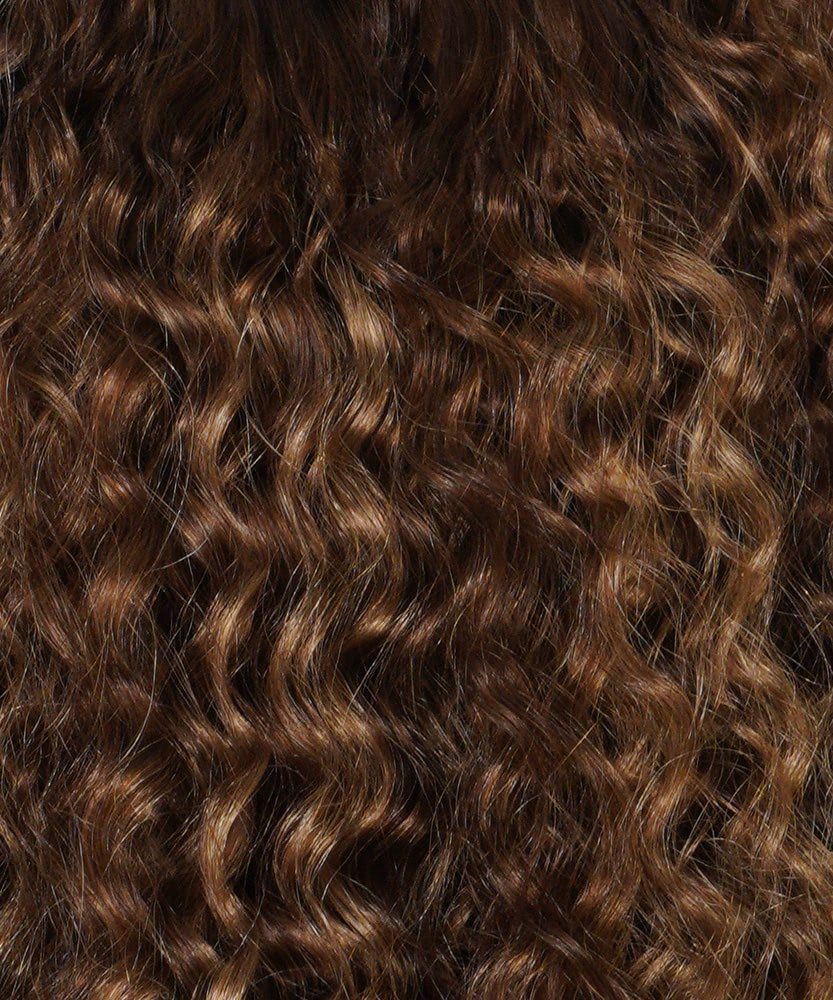
Her own curls weren't her mother's. They were wild, frizzed at the slightest humidity, and tangled if she looked at them wrong. She tried gels, creams, oils, sprays. Nothing settled. Some days her hair was too dry; others, too greasy. The curls would either fall flat or refuse to behave.
For years, she spent hours at the mirror trying to coax the look she wanted. The curls would drop within minutes of leaving the house. She started avoiding her hair entirely - tight buns, ponytails, anything to stop fighting it.
What Changed
One day, Alexia decided she'd had enough of fighting. She walked into a salon that specialized in curly hair and asked for help. The stylist trimmed off the damaged ends and showed her how to actually care for what she had. From there, she came to us looking for length and density - the dramatic sweep she'd pictured since she was a kid - in a way that wouldn't undo the work she'd put into her natural pattern.
Curls need moisture balance and a lot of it. Once I figured that out, everything changed.
Alexia's Curl Tip
Textured hair has a naturally open cuticle - the way curl forms means your hair behaves like an open window. Moisture bleeds out on dry days, and floods in on humid ones, causing frizz. Curls need moisture balance, and a lot of it, to stay healthy and resistant to breakage.
The other half of that equation: don't let heavy product build up. Layer after layer of cream and gel weighs hair down and clogs follicles. Wash regularly, condition deeply, and use only what your hair will absorb that day.
If you're a curly girl looking at extensions
Alexia's experience is one we hear from curly-haired customers regularly - years of feeling like extensions weren't made for them because the available textures didn't blend. That's the part we set out to fix.
Texture match matters more than color match. A perfect color won't save a wrong curl pattern. Wash your hair with no product, let it air dry completely, and look at your true pattern. Then match the extension texture to that - not to the texture you wish you had.
Tape-ins blend more seamlessly than clip-ins for curly hair because they sit flat against the head and move with your natural pattern. Our curly extension collection includes multiple curl patterns specifically because "curly" isn't one category - it's a range from loose wave to tight coil.
Apply curl product to both sets at once. When you're styling, treat your natural hair and the extensions as one. Same product, same scrunching, same drying. Separating them is what creates that "extensions on top of hair" look you're trying to avoid.
Frequently Asked Questions
Can you get hair extensions for naturally curly hair?
Yes - and the options have expanded significantly. The key is finding extensions with a curl pattern that matches your natural texture rather than choosing a generic curly option. Our collection includes multiple curl patterns (loose wave, spiral curl, tight curl, kinky) specifically to serve different natural curl types. Send us photos and we'll point you to the right match.
How do you blend curly extensions with natural hair?
Apply the same curl cream to both your natural hair and extension hair while both are damp. Scrunch upward on both. Diffuse or air dry without separating the two. The shared product application creates a unified curl pattern. Choose an extension curl texture that closely matches your natural pattern - this is the most important factor in seamless blending.
Will tape-in extensions damage curly hair?
Tape-ins are one of the gentler permanent methods when applied and removed correctly. The medical-grade adhesive doesn't pull on the hair shaft the way braided sew-ins can. The risk factor is the removal - using the right solvent and not yanking. We strongly recommend a stylist who works with curly textures specifically for both application and removal.
What length of extensions should I get if I have curly hair?
Curly hair shrinks - sometimes by 50% or more depending on your curl pattern. If you want the extensions to look like 18 inches stretched out, you'll likely need 22 inches of curly extension hair. Our team accounts for this in the consultation. Send a photo of your current length stretched and we'll calculate the right extension length for the result you're picturing.