


6 Trailblazing Women Who Shaped the Modern Beauty Industry
Originally published in 2021 - republished today in honor of International Women's Day, March 8.
Walk into any hair salon today and you'll find something so ordinary it barely registers: women cutting, styling, and coloring other women's hair. But visit a salon in the early 1900s and the scene would look very different. Your hair would be "dressed" by a man - never a woman.
As women's empowerment gained momentum throughout the 20th century, the beauty industry became one of the first fields where women could carve out real power. The six women profiled here didn't just style hair - they invented techniques, built national brands, and became formidable businesswomen at a time when that was almost unheard of.
"These women built entire industries from scratch - often without recognition, funding, or permission. Every time I think about what it takes to build something new in beauty, I think about the shoulders we're standing on."
- Priyanka Swamy, Founder of Perfect Locks
Martha Matilda Harper: Inventor of the Modern Salon

Born in Ontario, Canada in 1857, Martha Matilda Harper didn't just open a hair salon - she reinvented the entire concept. At a time when women groomed their hair at home with the help of domestic workers or visiting hairdressers, Harper envisioned a dedicated space where women could come for professional care. She also developed something the business world wouldn't formally recognize for decades: the franchise model.
In 1882, Harper moved to New York and began formulating a hair tonic based on natural ingredients - a sharp contrast to the harsh, often toxic solutions that dominated the market. With her first savings of $360, she launched a career built on marketing savvy and genuine innovation. Her first salon opened in Rochester, New York under the slogan "Health is Beauty," reframing beauty care as a matter of wellness rather than vanity.

Harper understood something that modern marketers preach constantly: authenticity sells. She grew her hair to legendary floor-length, kept it immaculately clean and shiny, and featured photographs of her striking mane in her advertising. She also invented the reclining shampoo chair - a fixture in every salon to this day.
When other women wanted to replicate her success, Harper didn't see competitors - she saw opportunity. She created a franchise contract that included purchasing agreements, staff training standards, and a dedicated training program called "Harper's Method." By the turn of the century, 200 salons operated across the United States. By 1928, 500 Harper salons were running worldwide, with locations across the U.S., Germany, and Scotland.
The Real Origin of the Franchise - how a servant girl invented modern business franchising (TED-Ed, Sir Harold Evans)
Harper passed away in 1950, just as the salon industry she helped create was about to explode - with beauty shops popping up on nearly every street corner throughout the 1950s.
Valeria Zimmer: The First Mail-Order Extensions Company

If you wanted hair extensions shipped to your door over 130 years ago, there was one name to know: Mrs. Valeria Zimmer.
An extension enthusiast herself, Zimmer grew frustrated with the inflated prices and inconsistent stock of "hair switches" - the era's term for extension pieces. In 1891, she founded a mail-order business out of Auburn, Indiana with an ingenious model: women could clip, save, and mail in their own hair combings and cut hair. For roughly $1.50, Zimmer's team would assemble the hair into braids, chignons, and other custom designs, then ship the finished pieces back.
The business reached its peak at the 1910 DeKalb County Fair, where it garnered national attention. By 1915, Zimmer sold the company - which became the Zimmer Hair Bazaar - and it expanded to include full salon and spa services. The business thrived until the 1920s, when the Sears Roebuck catalogue gained dominance and pre-made extensions became widely available at lower prices.
Zimmer's story is just one chapter in the remarkable evolution of hair extensions. If you're curious about how extensions developed from those hand-assembled pieces to the clip-ins and tape-ins we carry today, we've put together a full history of hair extensions that traces the whole journey.
Jeanne Devereux: The First Licensed Female Stylist in NYC

By the 1920s, female hairdressers were becoming more common across the country. But New York City - already one of the most competitive markets for hair - remained a male stronghold. That changed in 1927 when Jeanne Devereux became the Big Apple's first licensed female hair stylist.
While women had been a common presence in European barber shops and beauty parlors for years, the American industry - particularly in major cities - was slow to open its doors. Devereux battled her way into the business and proved that women could thrive in even the most demanding market. She is photographed here with her very first client - a quiet but powerful image of a barrier being broken.
The Rahvis Sisters: Innovative Hair & Fashion Designers
It's almost unthinkable today, but both the hair and fashion industries were once firmly male-dominated. Recognition came slowly - it was only in 2012 that the Academy Awards finally created a category for Best Makeup and Hairstyling.
By the 1950s, however, a seismic shift was underway. Women emerging from the post-war era were more empowered than ever to forge their own paths, and the Rahvis Sisters were among those leading the charge in hair and fashion design. This rare footage captures a glimpse into that world - a time when women were still fighting for recognition in industries they were actively transforming:
Rare footage of 1950s women hair and fashion designers, including the Rahvis Sisters
Among the rising stars of this era was a woman whose influence would ripple through generations of hairdressing: Rose Evansky.
Rose Evansky: The Woman Who Invented the Blow-Dry
Rose Canaan's early life reads like a novel. Born in Germany in 1922 to a Jewish family, she was one of the last children to board the Kindertransport - the rescue effort that helped children escape Nazi Germany. After arriving in England, she survived the London Blitz. But amid the darkness, there was light: she met and married hairdresser Albert Evansky on Valentine's Day, 1943.
After the war, the couple opened Evansky's in London's prestigious Mayfair district. Rose became renowned for her skill in crafting human hair wigs and custom wefts, creating bespoke styles for a high-end clientele.
Rose Evansky demonstrates her pioneering blow-dry technique in her Mayfair salon
By the 1960s, Mayfair was the epicenter of British hairdressing, and Rose had two particular frustrations: the bulbous overhead hood dryers and the rigidly permed styles they produced. Then one Wednesday in 1962, she walked past a barbershop on Brook Street and saw something that changed everything - a barber drying the front of a man's hair using a brush and a handheld dryer.
The thought struck her instantly: Why can't I finish and shape women's hair the same way?
By Friday she had found a willing client and started experimenting. As fate would have it, Lady Clare Rendlesham - editor of Vogue and a champion of 1960s style - walked in mid-session and shouted, "What are you DOING, Rose!?" before rushing out. Rose assumed her career was over.
It wasn't. Rendlesham returned minutes later with Barbara Griggs of the Evening Standard newspaper. Then she disappeared again - and started bringing people in off the street to witness what they'd never seen before.
By the next day, the "blow wave technique" was in every newspaper in London. Rose was the talk of the town. Her husband Albert, however, wasn't entirely thrilled - he ended up throwing out the 20 brand-new hood dryers they'd just purchased.
Rose's legacy went far beyond the technique she invented. She trained and inspired some of the biggest names in hairdressing history - a chain of influence that shaped an entire era of British style:
She passed away at age 94 on November 21, 2016 - followed shortly after by her greatest student, Leonard Lewis.
Grazia De Rossi: Hairdresser to the Stars

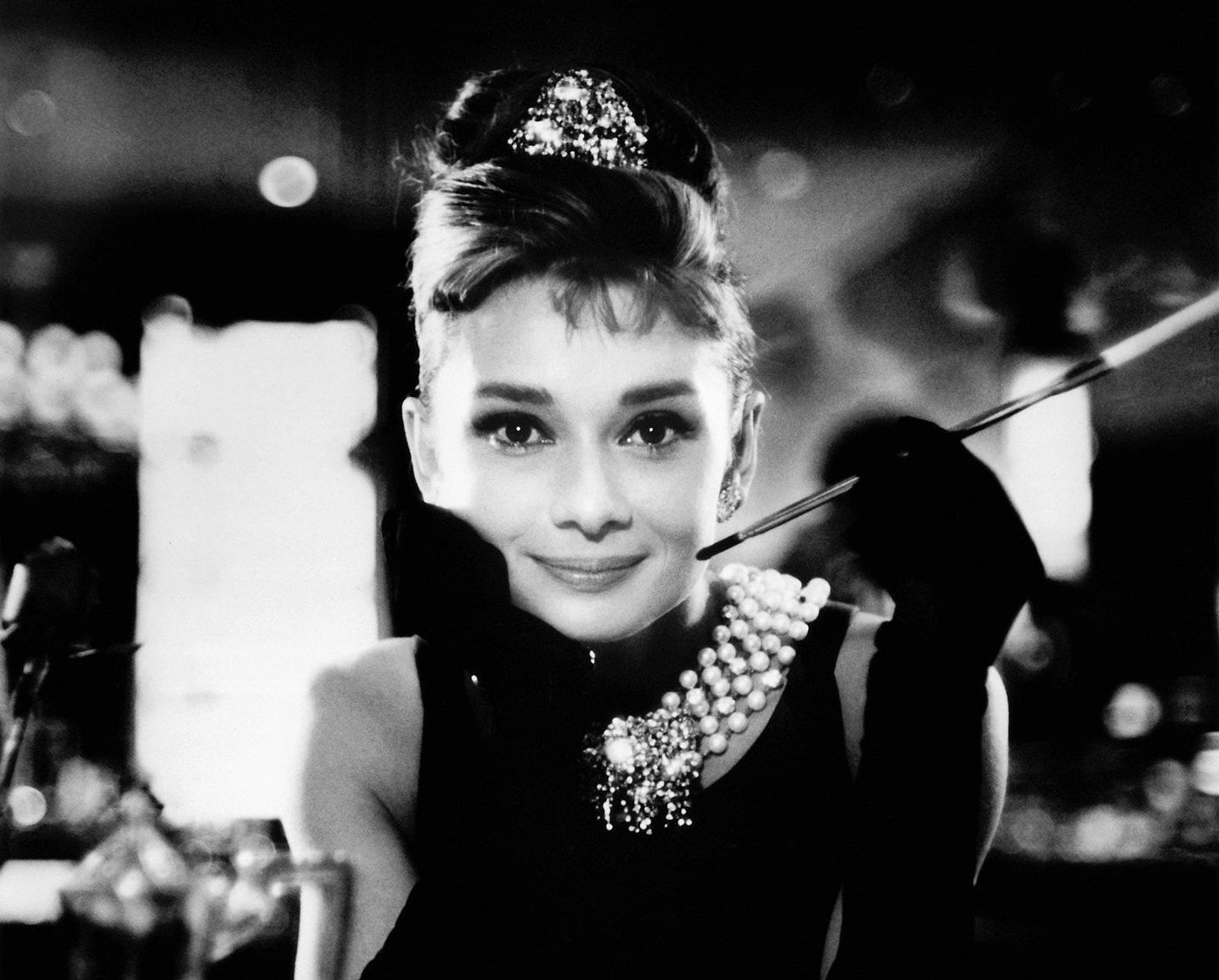
While Rose Evansky was making history in London, Grazia De Rossi and her husband Albert were building a reputation in Hollywood. Their big moment came in 1961 when Paramount Pictures adapted Truman Capote's novella Breakfast at Tiffany's and cast Audrey Hepburn as the eccentric Holly Golightly.
De Rossi was brought in to create Holly's look, and what she envisioned was striking: a full, backcombed bouffant enhanced with hair extension pieces known at the time as "flashes," along with light blonde streaks through Hepburn's dark brunette hair. The streaking technique was virtually unheard of in 1961 - and it caused a sensation.
The style became the definitive look for weddings, proms, and special occasions for decades. It remains a timeless classic that's still referenced and recreated today. And the makeup artist who completed Hepburn's transformation? That was Albert, Grazia's husband - making it a true family affair behind one of cinema's most memorable characters.
A Legacy Worth Remembering
These six women didn't just participate in the beauty industry - they built it. From Harper's franchise empire to Evansky's blow-dry revolution to De Rossi's Hollywood glamour, their innovations became so deeply embedded in the industry that we've largely forgotten who created them. Now you know.
At Perfect Locks, we're proud to carry that legacy forward. We're a women-founded company - built by Priyanka Swamy in 2007 on the belief that professional-quality hair shouldn't require a salon appointment or a stylist's chair. That spirit of making great hair accessible to every woman is something we share with every pioneer on this list.
Not Sure Which Extensions Are Right for You?
Take our quick quiz to get a personalized recommendation based on your hair type, lifestyle, and styling preferences.
Take the QuizFrequently Asked Questions
Who invented the modern hair salon?
Martha Matilda Harper is credited with inventing the modern hair salon. In 1882 she opened her first professional salon in Rochester, New York, and went on to create the first salon franchise system, with 500 locations running worldwide by 1928. She also invented the reclining shampoo chair still used in salons today.
Who invented the blow-dry technique?
Rose Evansky, a hairdresser working in London's Mayfair district, is widely credited with inventing the blow-dry technique in 1962. After seeing a barber use a handheld dryer on a client's hair, she adapted the method for women's styling. The technique was reported across London newspapers within days and quickly became the standard finishing method in salons worldwide.
Who was the first licensed female hair stylist in New York City?
Jeanne Devereux became New York City's first licensed female hair stylist in 1927, breaking into a market that had remained almost entirely male-dominated despite women having made inroads into the industry in other parts of the country and in Europe.
What role did hair extensions play in classic Hollywood?
Hair extensions - then called "flashes" - were used in Hollywood as far back as 1961, when stylist Grazia De Rossi used extension pieces to create Audrey Hepburn's iconic bouffant updo for Breakfast at Tiffany's. De Rossi also pioneered a subtle blonde streaking technique through Hepburn's dark hair, a method that was virtually unheard of at the time.
When was the first hair extensions mail-order business founded?
Valeria Zimmer founded the first mail-order hair extensions business in 1891 in Auburn, Indiana. Her model allowed women to send in their own cut hair, which her team would assemble into braids, chignons, and other custom pieces and ship back. The business later became the Zimmer Hair Bazaar and expanded to include full salon services before closing in the 1920s.






