The internet is great for many things. Unfortunately, one of those things is being a rumor mill. Anyone with a computer can put information online, which has resulted in “fake news” actually being a thing. Sadly, human hair extensions aren’t exempt from the rumor mill and there are many misconceptions floating around the web. The good news is, we’re here to clear the air hair and get down to the real facts on human hair extensions.
MISCONCEPTION #1
Human hair extensions are obtained through violent means
If you’ve ever wondered how companies get human hair to make hair extensions, your mind has probably gone to some crazy places. The internet has brought some really awful and unethical practices within several different industries into limelight which is great, but it has also resulted in many of us always expecting the worse.
Have no fear over here. Our virgin Indian hair is ethically sourced at the Venkateshwara Temple located in the South Indian state of Andhra Pradesh. Over 18 million people offer their hair in a sacred act called Tonsure to the God, Vishnu. The sacrificed hair is then gathered to make hair extensions for women and men across the globe. In return, the proceeds paid to the temple are reinvested into the community.
MISCONCEPTION #2
Human hair extensions are rough, dry, and smell bad
This human hair extension misconception isn’t as farfetched as some of the other ones floating around the internet. After all, hair can be rough, dry, and smelly. However, it’s all about the quality of the hair extensions and hair company. No reputable company is going to sell rough and dry hair.
Instead, they’re going to find the finest, most luscious strands of virgin Indian hair and prewash them before turning them into human hair extensions. Better yet, single-drawn hair ensures all of the hair in the bundle comes from one person, so the quality and characteristics of each strand will be consistent. And of course, that’s what you get from Perfect Locks!
MISCONCEPTION #3
Human hair extensions are infested with lice
Some believe that human hair extensions are infested with lice. While we can’t speak for other companies, we can say that we double triple check our virgin human hair to ensure lice remains a misconception.
MISCONCEPTION #4
Virgin Indian hair extensions only come in black
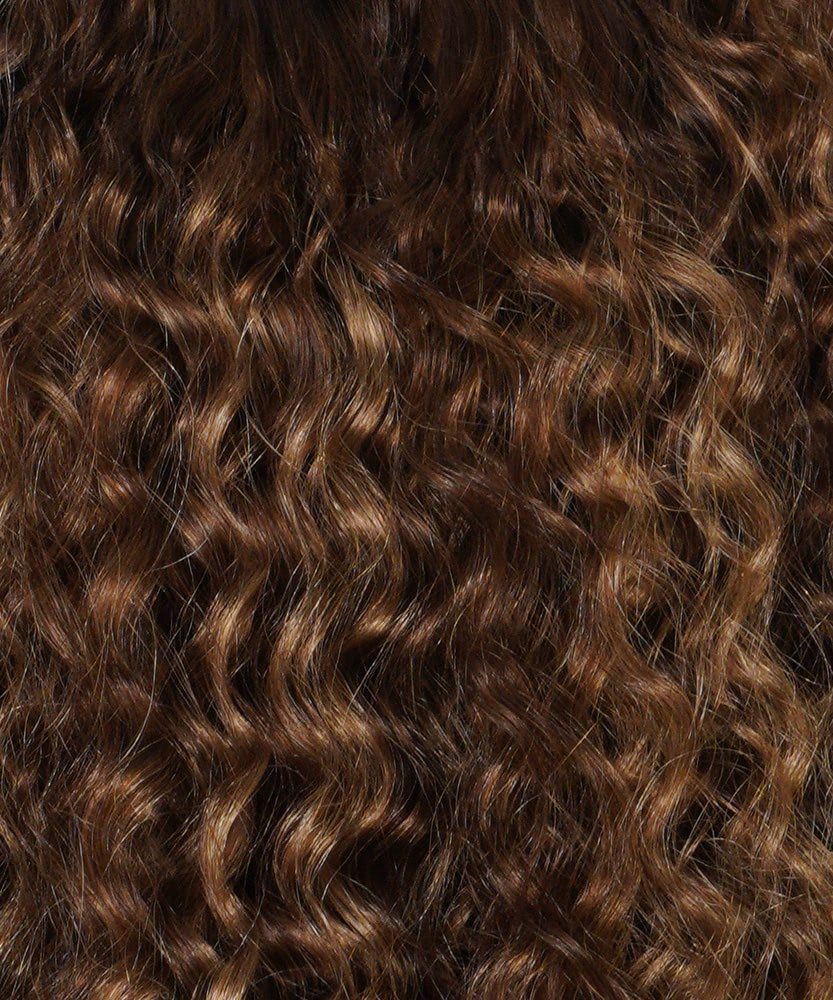
Another common hair extension misconception is Virgin Indian hair extensions are only available in black. Although some extensions appear black, they aren’t, they are a natural brown hair color usually classified as 1B. As you know, human hair can be turned into every hue under the sun. If you want pink hair, it can be done; blue hair – not a problem; blonde, brown, red – you name it. Saying human hair extensions only come in black is like saying your hair will never and can never be changed to a different color. It’s simply not true.
MISCONCEPTION #5
Human hair extensions can’t be colored easily
Just as the prior reads, hair can be changed to every color imaginable. There is no need to believe otherwise. While it may be a little more difficult to dye synthetic hair extensions, the same can’t be said about human hair extensions because they have the same properties as your own hair. Even the average person can dye virgin indian hair to a few shades lighter. To go more than a few shades might require bleaching and more technical expertise, but with the proper training coloring hair extensions is easy breezy!
MISCONCEPTION #6
Virgin Indian hair extensions are as good as other types of hair
Virgin Indian hair extensions are the best of the best. Although there may be authentic European hair extensions available for purchase, the pricing will empty your life savings. Most overseas companies market exotic textures like Brazilian hair and Malaysian hair, but the fact is those hair types are simply chemically processed textures from China, which simply won't last. You simply don't women in Brazilian donating hair! It's a clever marketing ploy that has dominated the market for several years. We are now seeing the trend sway back to quality because consumers like yourself are more educated now. Kudos! Virgin Indian hair is affordable, provides a variety of textures, and is perfect for a wider audience!
So, if you're ready to dress up your tresses with added length and lusciousness, it's time to shop Perfect Locks.
The Truth About Indian Virgin Hair Extensions
"We've been sourcing from Indian temples for over 20 years, and I still hear misconceptions about our hair every week. Most of them come from confusion between different products being sold under similar labels. Real Indian temple hair and chemically processed 'Indian-style' hair are completely different products - understanding the difference helps you make better purchasing decisions."
- Priyanka Swamy, Founder of Perfect Locks
6 Misconceptions Addressed
1. "Virgin hair doesn't need conditioning." False. Virgin hair has an intact cuticle - which is exactly why it needs proper conditioning. An intact cuticle means the hair can absorb and retain moisture more effectively than stripped hair, but it still needs the moisture. Unwashed and unconditioned virgin hair becomes dry and brittle just like any human hair that isn't cared for.
2. "All Indian hair extensions are the same." Not close. True Indian temple hair (collected through voluntary religious donation and unprocessed) is completely different from hair marketed as "Indian" that's been chemically processed, stripped of its cuticle, and coated in silicone. The products may appear similar in the package but behave very differently after washing.
3. "Virgin hair can't be colored." It can. The intact cuticle that characterizes virgin hair actually accepts color very well - better than processed hair. Color takes more evenly and lasts longer on cuticle-intact hair. Professional coloring is recommended, particularly for significant lightening.
4. "Shedding means the hair is low quality." Some shedding is normal in any human hair product. The relevant question is the quantity - a few strands during washing or combing is normal. Significant shedding in handfuls during gentle handling indicates either a weft construction issue or processing damage.
5. "All Remy hair is the same quality." Remy indicates cuticle direction (aligned root-to-tip) but not the source quality, processing method, or silicone coating. Remy is a category descriptor, not a quality guarantee. Single-donor Remy from an intact cuticle source like temple hair is very different from Remy hair that's been chemically processed and labeled Remy because the cuticles were realigned.
6. "Expensive always means better." Price is a proxy for quality but not a guarantee. Very high-priced extensions can still be processed, silicone-coated, or of questionable sourcing. The indicators that matter are specific sourcing information, intact cuticle structure, and washable behavior (no dramatic texture change after the first wash).
Our Indian temple hair extensions are sourced directly through the temple donation system we've maintained for over 20 years - and we can answer any question about where they come from.
Frequently Asked Questions
What is virgin Indian hair?
Virgin Indian hair is human hair from Indian donors that has never been chemically processed (no coloring, perming, relaxing, or bleaching). The cuticle is intact and aligned root-to-tip. Sourced primarily through temple donations in southern India, it's considered one of the highest quality extension hair types because the natural texture is preserved and the cuticle structure is uncompromised.
How do you know if Indian hair is real?
Real virgin Indian hair passes the cuticle direction test (slightly rough running against the grain, smooth with the grain), doesn't dramatically change texture or feel after washing, has minimal shedding during gentle handling, and comes from a supplier who can name their specific sourcing process. If the hair becomes significantly rougher or drier after the first wash, it's likely coated in silicone that was masking a lower-quality base product.