Hair Extensions & Wigs for Hair Loss: The Complete Guide
Hair Extensions and Wigs for Hair Loss: What Actually Works
Losing your hair - whether from chemotherapy, alopecia, postpartum shedding, or hormonal changes - is one of the most emotionally difficult experiences a woman can go through. It's not vanity. Hair is tied to identity, to how we feel when we walk into a room, to the version of ourselves we recognize in the mirror. When that changes, it matters deeply, and you deserve honest guidance about your options.
Hair extensions and wigs can genuinely help - but not every product is right for every situation, and not every company is equipped to help you navigate the difference. At Perfect Locks, we've been working with women experiencing hair loss since we founded this company in 2007, and we've learned that the right solution depends entirely on how much hair you have, what caused the loss, and where you are in your journey.
"Some of our most meaningful conversations have been with women going through chemotherapy or dealing with alopecia. We don't just want to sell them something - we want to find them something that actually works and makes them feel like themselves again. That's always been the heart of what we do."
- Priyanka Swamy, Founder of Perfect Locks
This guide covers the most common causes of significant hair loss, the products that work best for each stage, and honest advice about what to expect - including when extensions aren't the right fit and a wig is the better answer. If you want a personalized starting point before reading further, take our free quiz or reach out for a consultation. We look at every request personally.
Understanding Your Type of Hair Loss
The right solution depends on what's causing your hair loss and how much you've lost. These aren't all the same situation, and they don't all have the same answer.
Chemotherapy-Related Hair Loss
Chemotherapy targets rapidly dividing cells throughout the body, which is why hair follicles - some of the fastest-growing cells we have - are so commonly affected. Hair loss typically begins two to four weeks after treatment starts and can range from significant thinning to complete loss depending on the type and dosage of treatment. The good news is that for most people, hair begins to regrow within a few months of completing treatment.
During active treatment, a full human hair wig or a lace front wig is usually the most comfortable and natural-looking option. Extensions require hair to attach to - if loss is significant, there simply isn't enough to work with. As hair begins to regrow, hair toppers become a valuable bridge solution, covering thinning areas at the crown and part line while your natural hair catches up.
Alopecia
Alopecia is an umbrella term covering several distinct conditions - each with different patterns, causes, and implications for which hair solutions will actually work. Understanding which type you have matters before choosing a product.
Alopecia areata causes patchy hair loss in specific areas as the immune system mistakenly attacks hair follicles. The patches are typically smooth and round. Hair may regrow on its own, and for many people the condition cycles between periods of loss and regrowth. For patchy alopecia areata, toppers and halo extensions can cover affected areas without adding any stress to surrounding hair.
Alopecia totalis results in complete scalp hair loss, while alopecia universalis affects the entire body including eyebrows and lashes. For either of these, a full human hair wig is almost always the most practical and confidence-building solution. Extensions and toppers require hair to attach to or blend with - when that isn't available, a well-fitted wig is the right call.
Androgenetic alopecia (female pattern hair loss) is the most common form of hair loss in women overall. It typically presents as diffuse thinning at the part line and crown rather than patchy loss, and is gradual and progressive. Because the hair loss is spread across the top of the scalp, toppers are particularly well suited here - they provide targeted coverage exactly where it's needed without requiring a full wig. As density decreases over time, transitioning to a larger-base topper or eventually a full wig remains an option.
Traction alopecia develops over time from hairstyles that place repeated tension on the hairline - tight braids, weaves, high ponytails, and buns. It typically presents as a receding or thinning hairline at the front and temples. Importantly, tight attachment methods will worsen this condition, so clip-in extensions, tape-ins, and any method that creates tension at the hairline need to be avoided. Halo extensions are the safest extension option here because they place no tension on the hairline at all. For more significant traction alopecia, a lace front wig provides full hairline coverage with no attachment stress on the affected area.
Postpartum Hair Loss
Postpartum hair loss - sometimes called postpartum telogen effluvium - typically begins two to four months after giving birth and can last for several months. It happens because the hormonal surge during pregnancy keeps hair in a growth phase longer than usual, and the drop after delivery triggers a shedding phase all at once. It's extremely common, almost always temporary, and can still feel alarming when you're watching it happen.
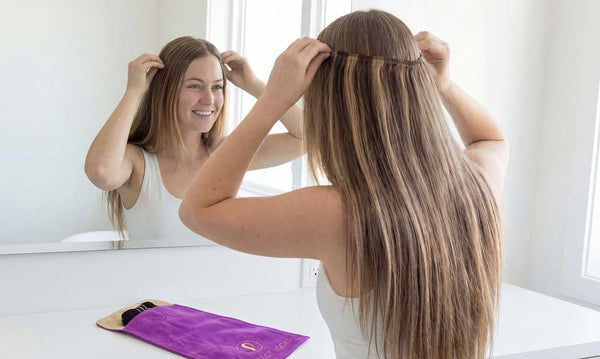
Because postpartum hair loss is temporary and the hair underneath is healthy, halo extensions and seamless clip-ins are usually ideal - they add volume and coverage without any attachment that could put stress on already vulnerable strands. This is exactly the situation where zero-damage methods matter most.
Thyroid and Hormonal Hair Loss
Both hypothyroidism (underactive thyroid) and hyperthyroidism (overactive thyroid) can cause diffuse hair shedding. When the thyroid isn't functioning correctly, the hair growth cycle is disrupted - follicles spend more time in the resting phase and less time actively growing. The result is overall thinning rather than patchy loss, and it often improves significantly once the underlying thyroid condition is properly managed with medication.
Similar patterns of diffuse thinning are associated with PCOS, perimenopause, menopause, and adrenal imbalances. The hair that remains is often fine and fragile. Because the thinning is typically distributed evenly, halo extensions and seamless clip-ins can be very effective for adding volume and coverage. If thinning is concentrated at the crown or part line, a topper provides more targeted coverage.
If you're dealing with this type of thinning and not sure whether extensions or a topper is the right direction, our full guide to extensions for thin hair goes deeper on product selection and weight considerations specifically for fragile hair.
Trichotillomania
Trichotillomania is a body-focused repetitive behavior involving compulsive hair pulling, which results in irregular patches of hair loss typically at the crown, temples, and eyebrows. Solutions here require particular care - we would only recommend methods that don't create additional tactile sensory engagement at the scalp. For that reason, full wigs and toppers are usually the most appropriate options, as they sit on top of the hair rather than attaching directly to it in ways that could trigger pulling. We always recommend working alongside a mental health professional for the behavioral component - hair coverage can support confidence, but it works best as part of a broader approach to care.
Not sure which category fits your situation? Send us a photo and a brief description of what you're experiencing - our team will give you an honest recommendation, even if that means pointing you toward a product we don't carry. Reach out through our consultation page and we'll get back to you personally.
Types to Consider

Lace Front Wigs Most Popular
Best for: Ideal for everyday wear, professional settings, or anyone wanting that celebrity-level hairline without the full lace investment.
- Wear Time
- Daily on/off or install up to 2 weeks
- Application
- 10-20 minutes
- Natural-looking hairline
- More durable than full lace

Halos Beginner Favorite
Best for: Perfect for extensions newcomers, special occasions, or anyone wanting instant glamour without commitment or damage.
- Wear Time
- Daily on/off
- Application
- Under 60 seconds
- No clips or adhesives
- Fastest application

Toppers
Best for: Perfect for those experiencing crown thinning, wanting targeted volume, or needing discreet coverage for specific areas.
- Wear Time
- Daily on/off
- Application
- 1-3 minutes
- Targets specific thinning areas
- Natural integration with existing hair
The Best Products for Hair Loss, by Stage
We think about hair loss solutions in terms of coverage stages - how much natural hair you have to work with determines which products will actually perform for you.
Stage 1 - Significant Thinning (50-80% density remaining)
You still have a good base of natural hair, but density is noticeably reduced and thinning may be concentrated at the crown or part line. This is where extensions can work beautifully, as long as the method is chosen carefully.
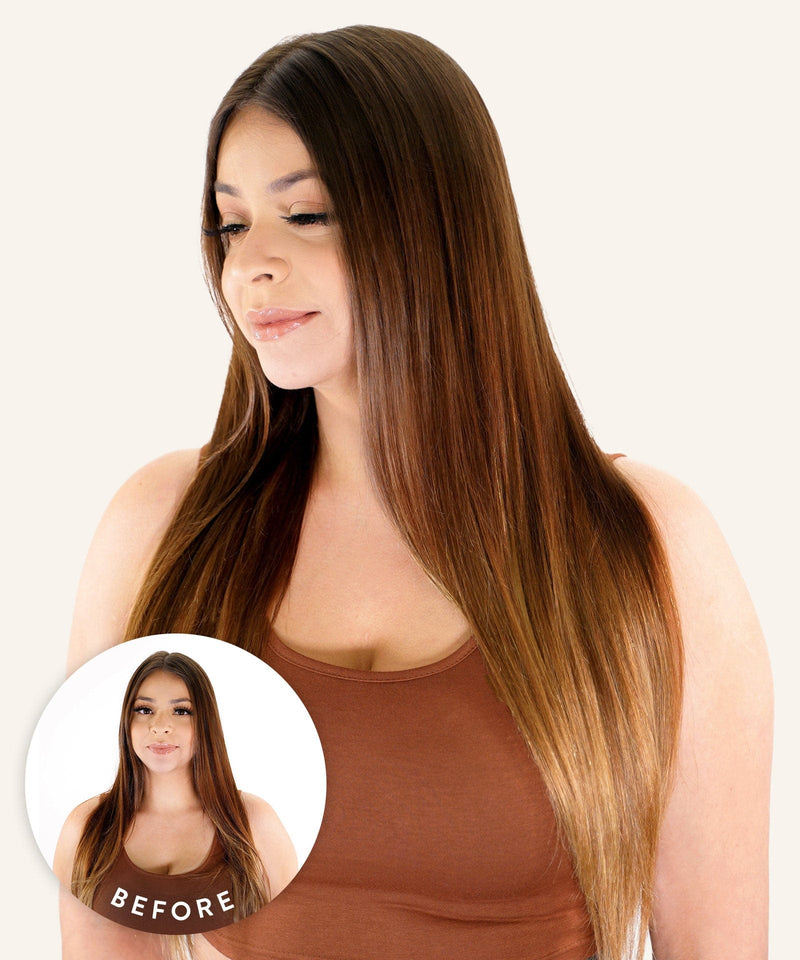
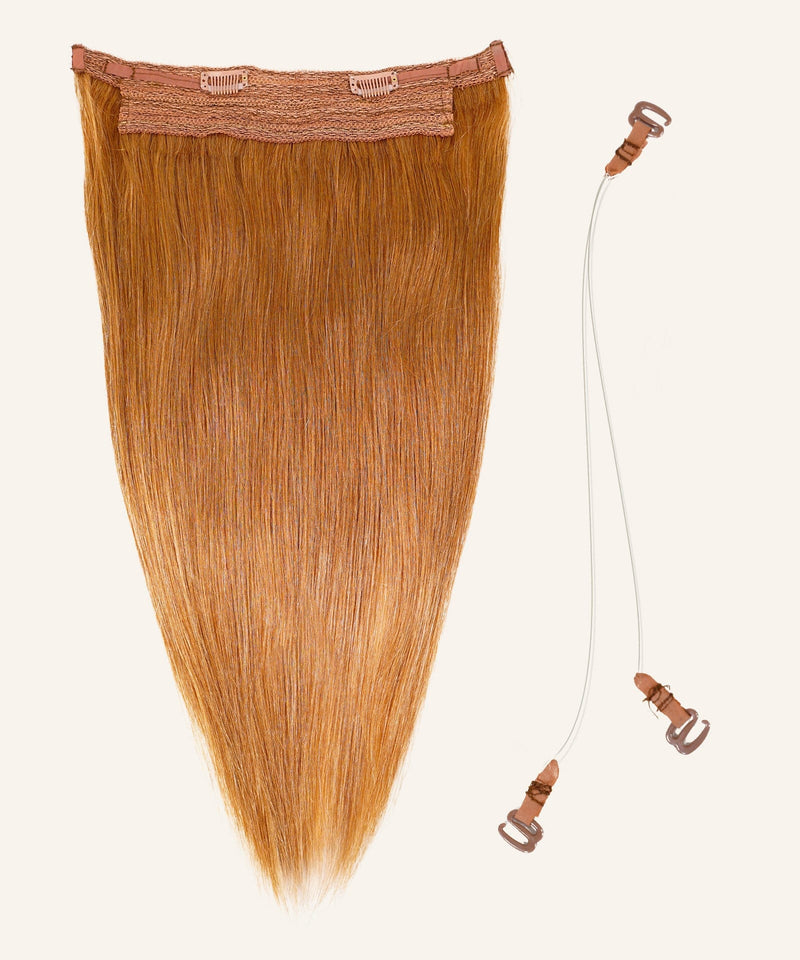
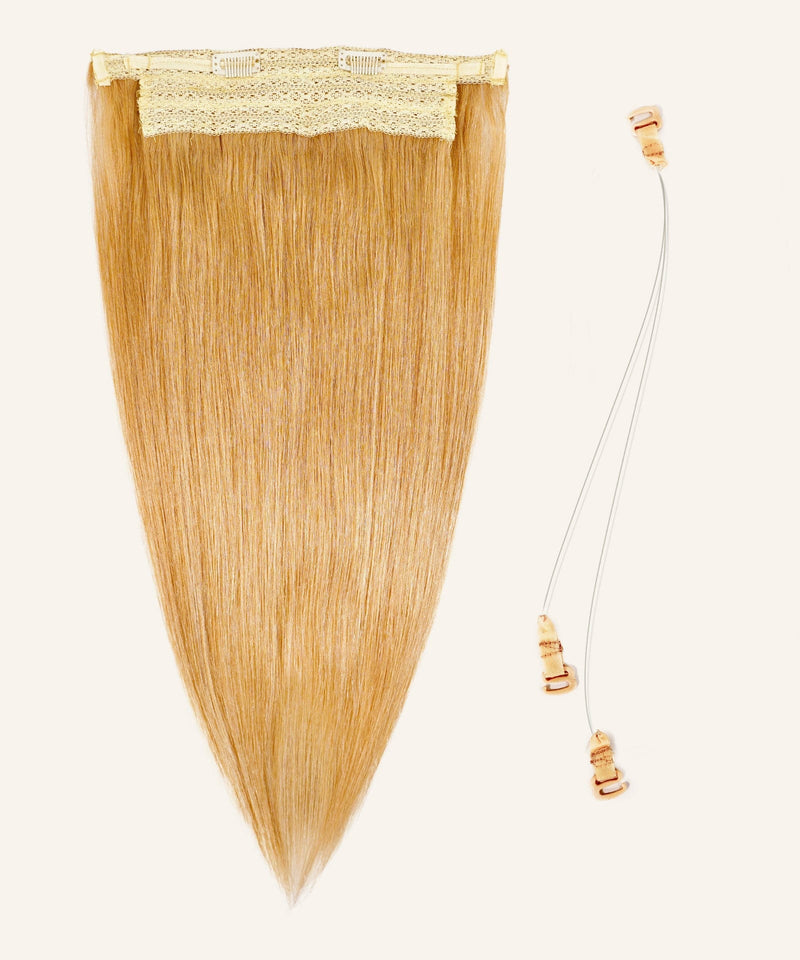
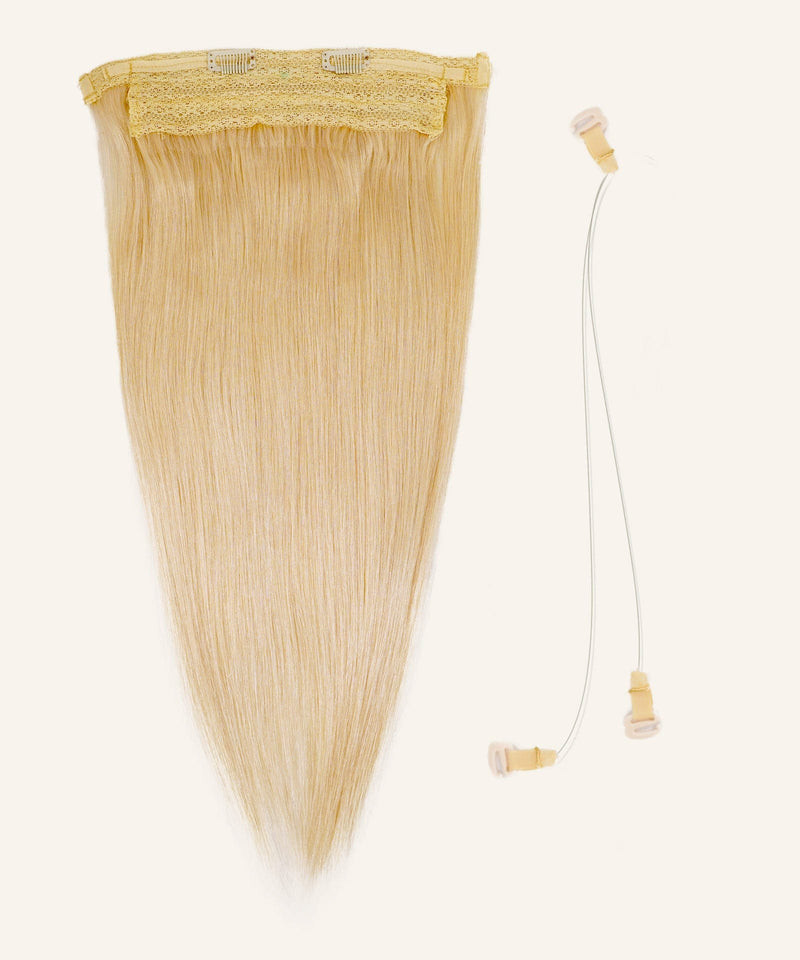
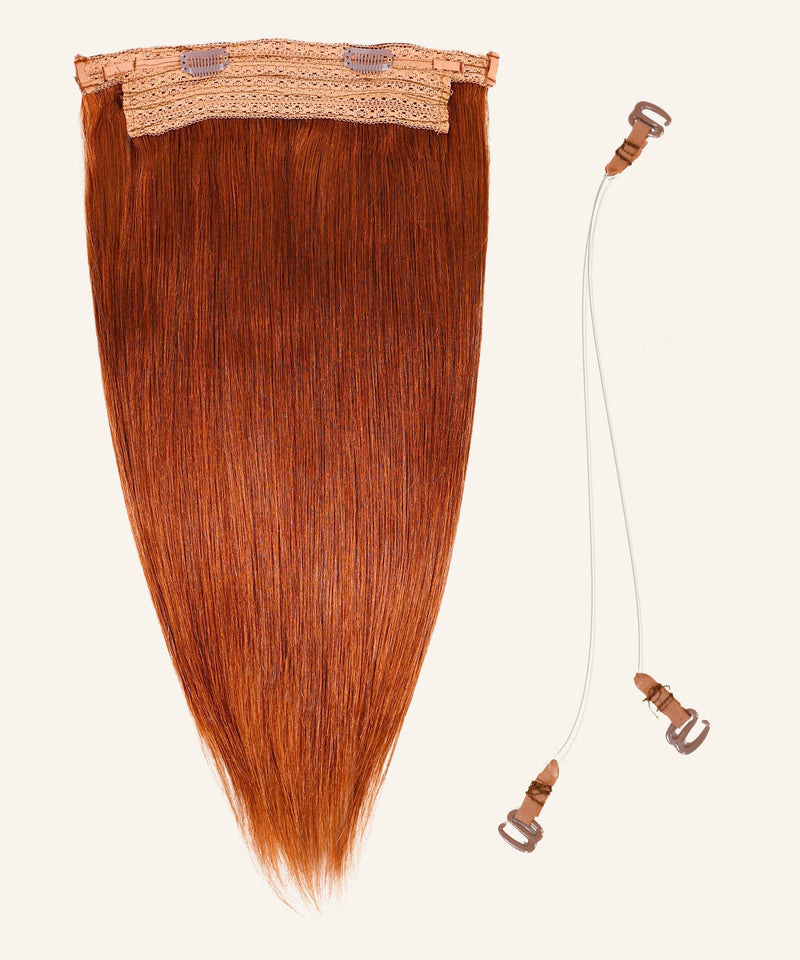
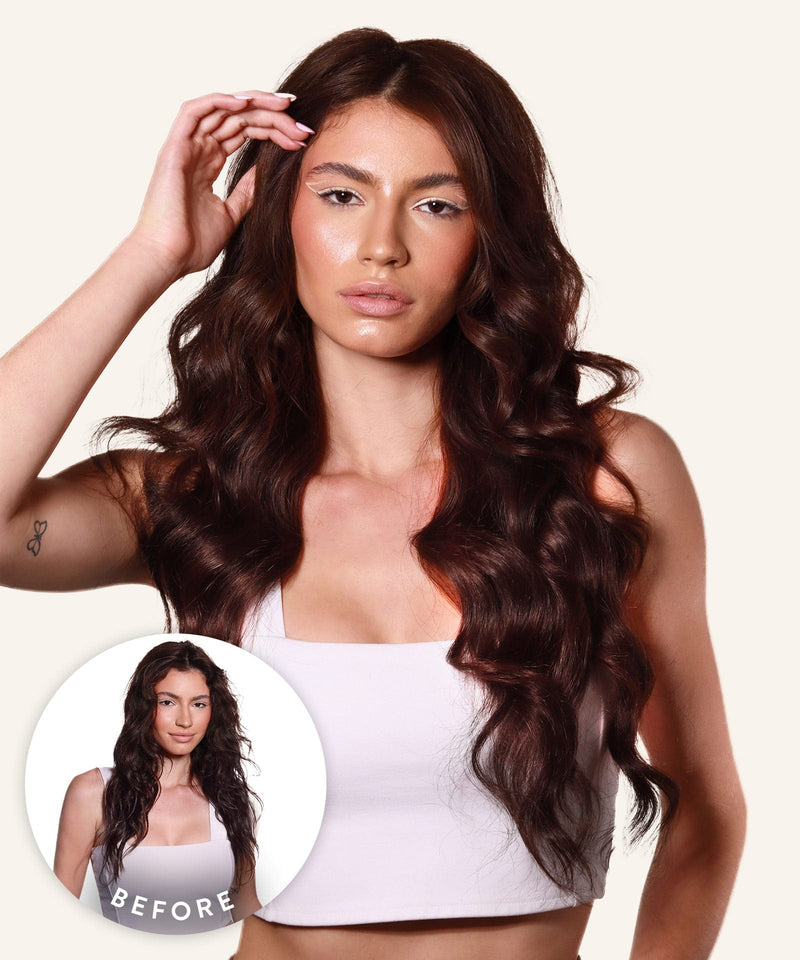
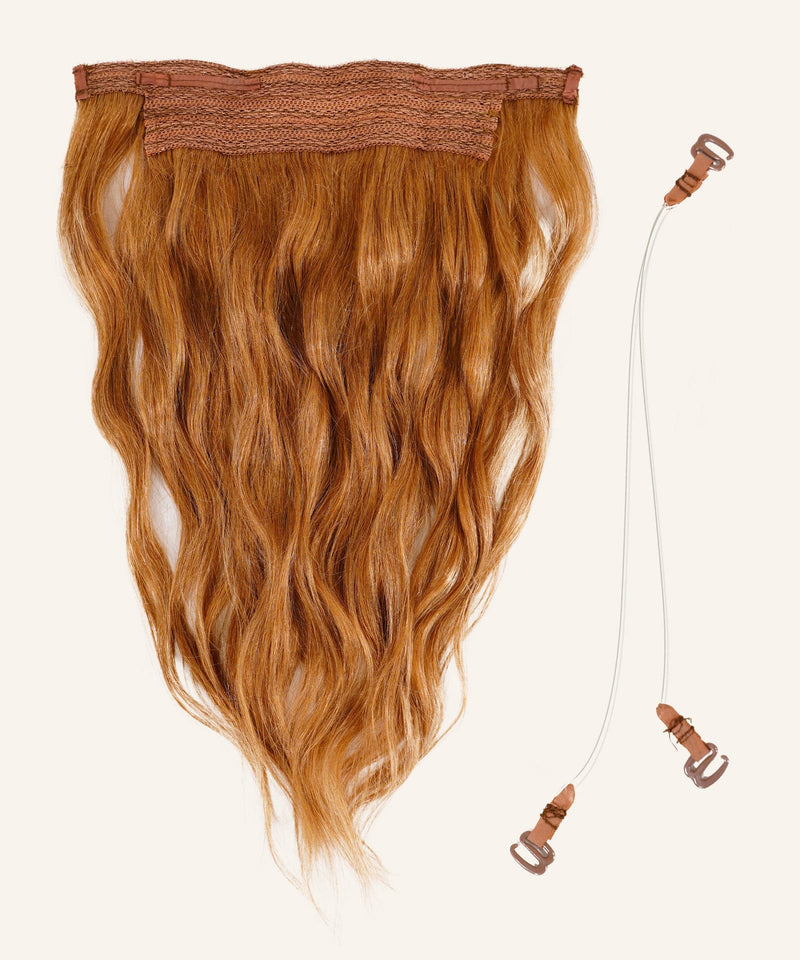
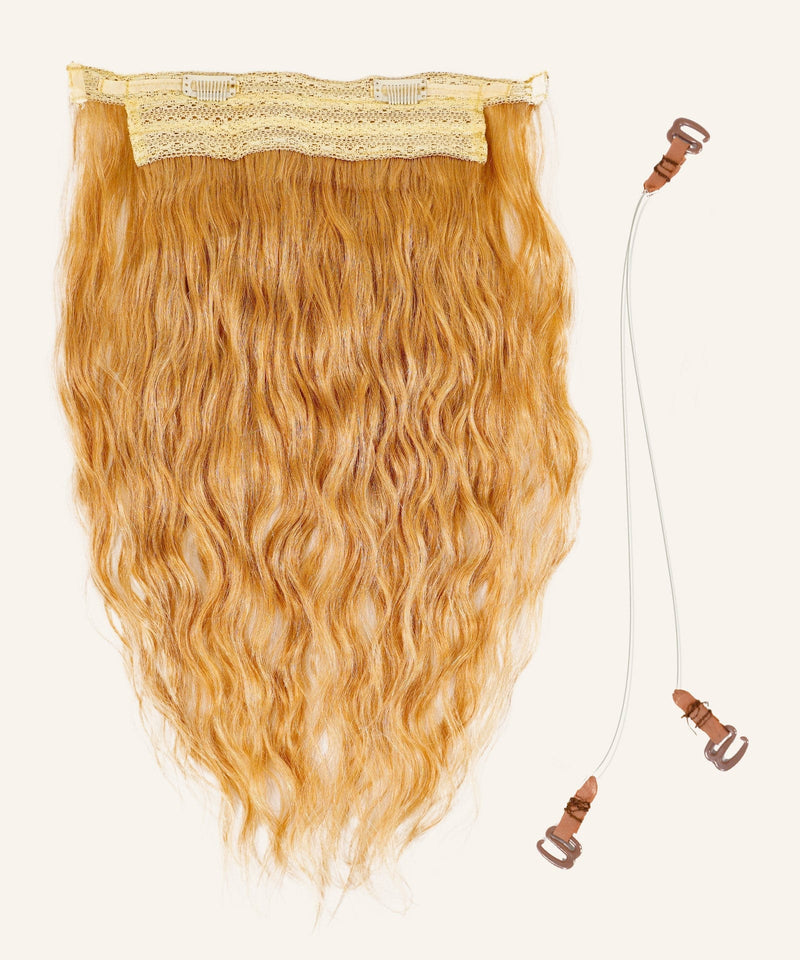
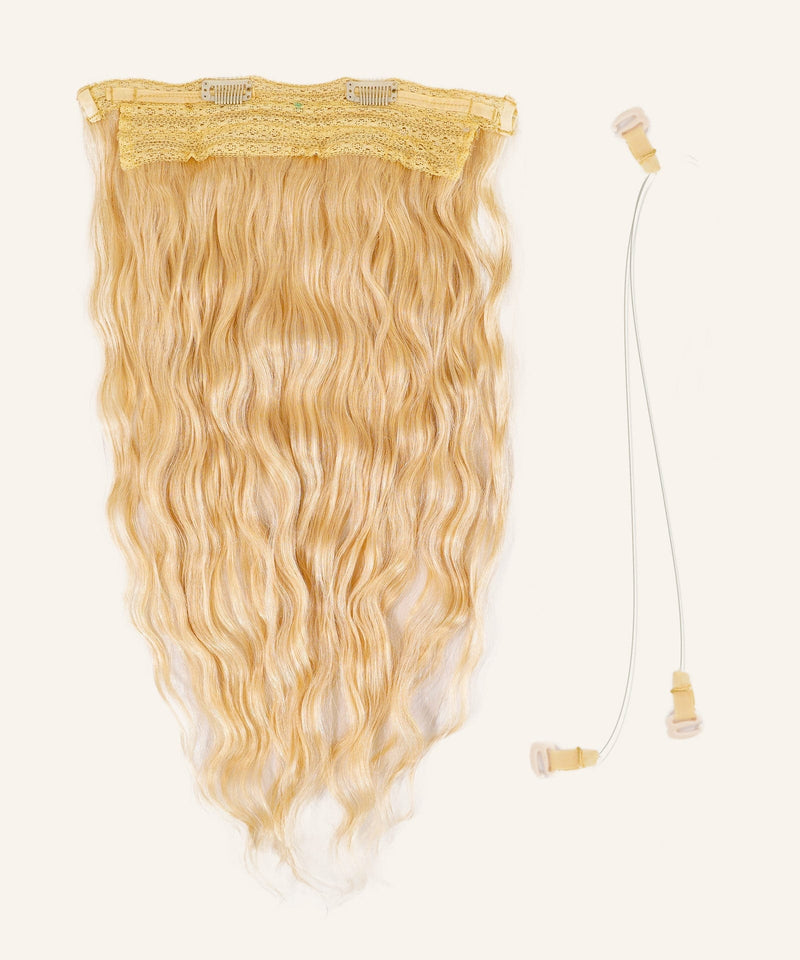
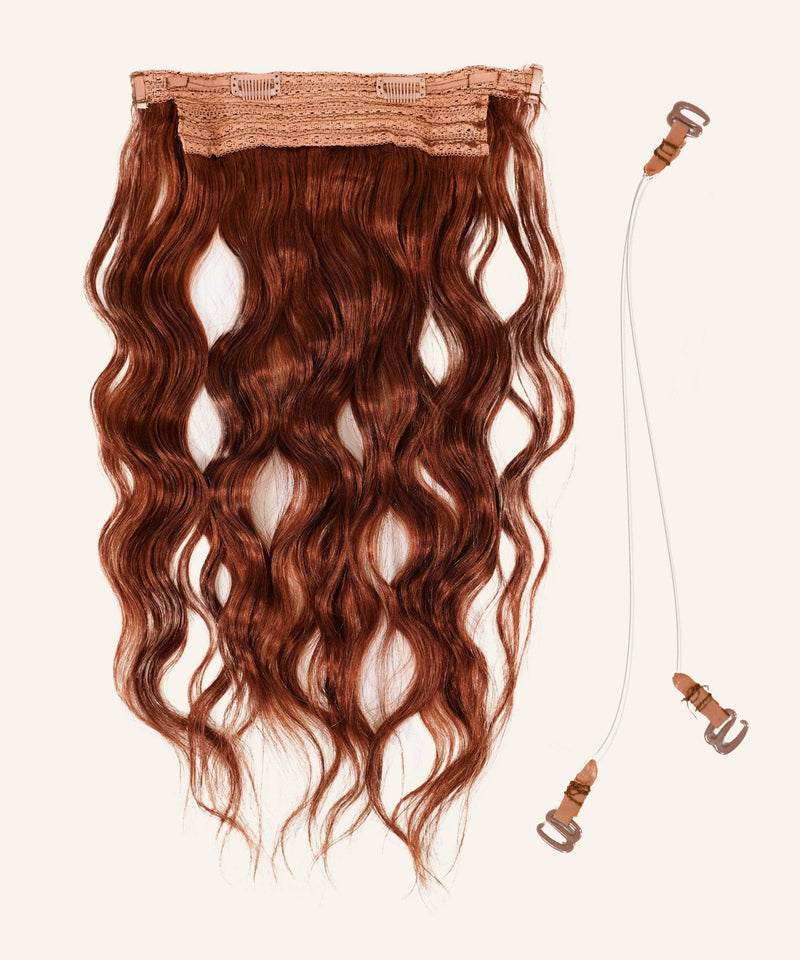
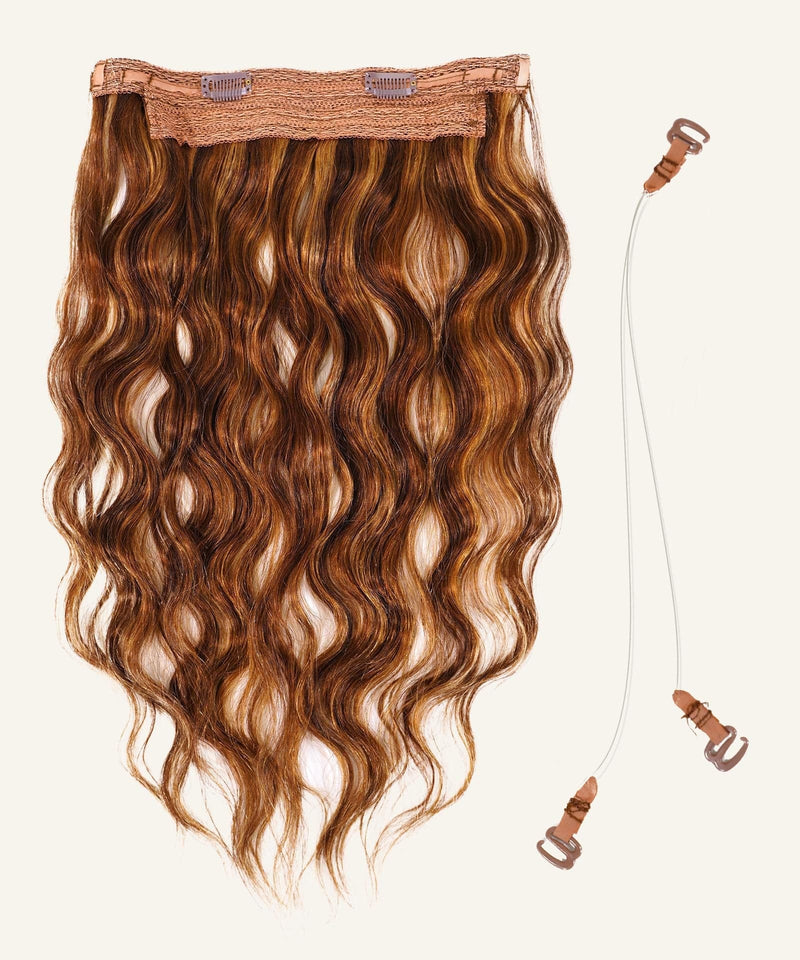
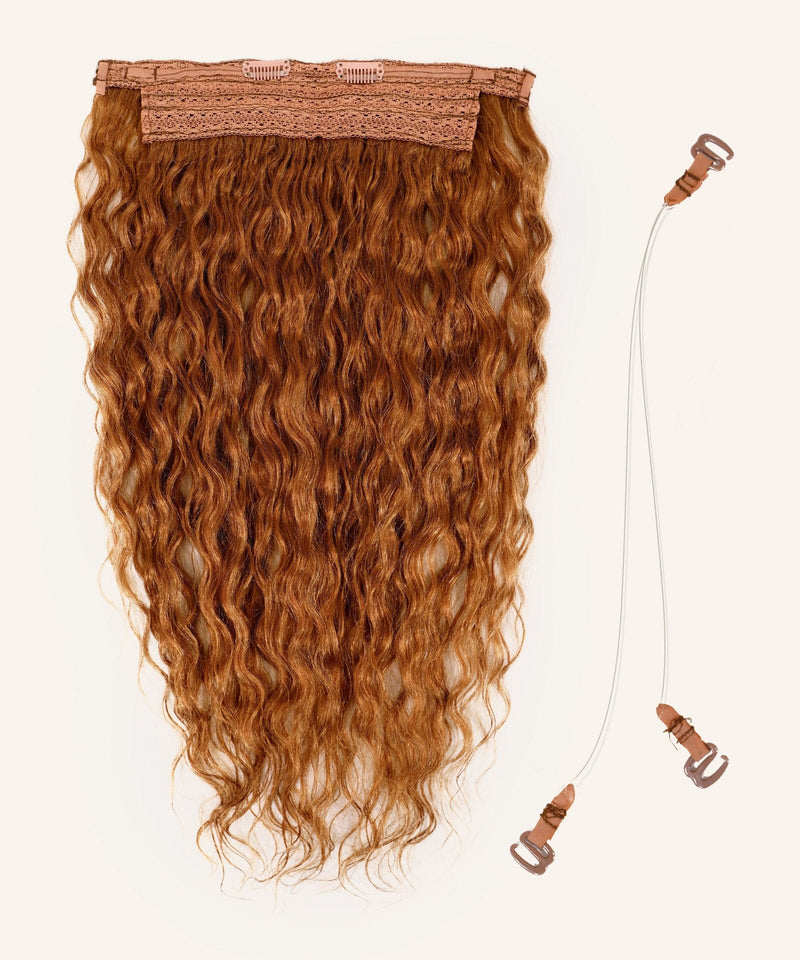
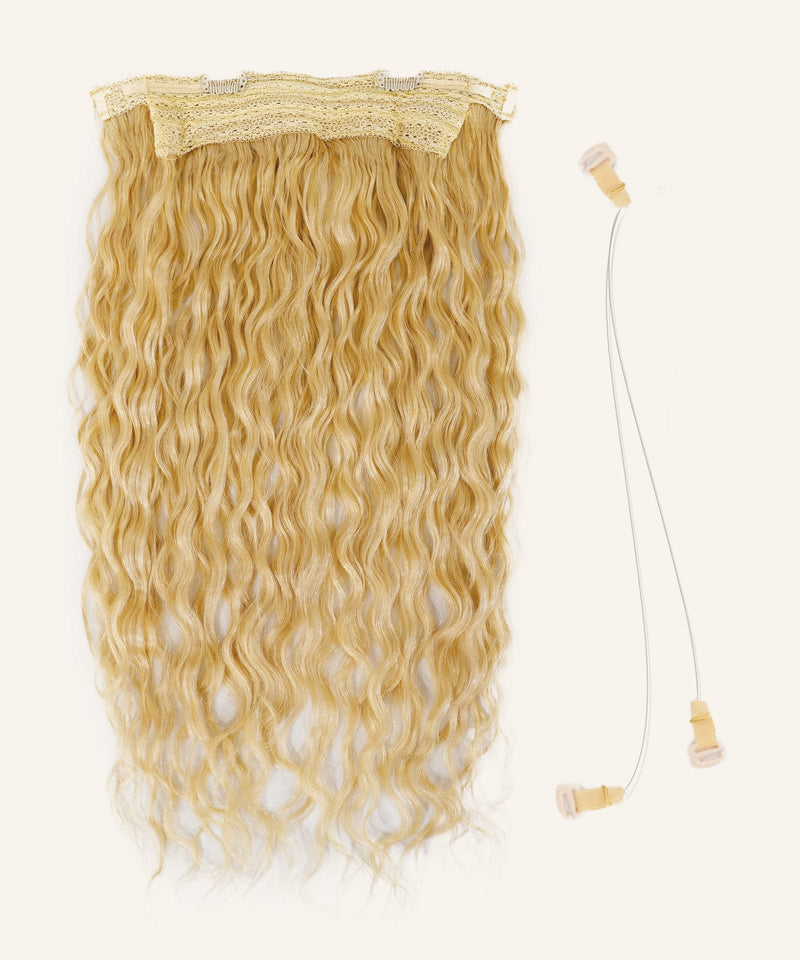
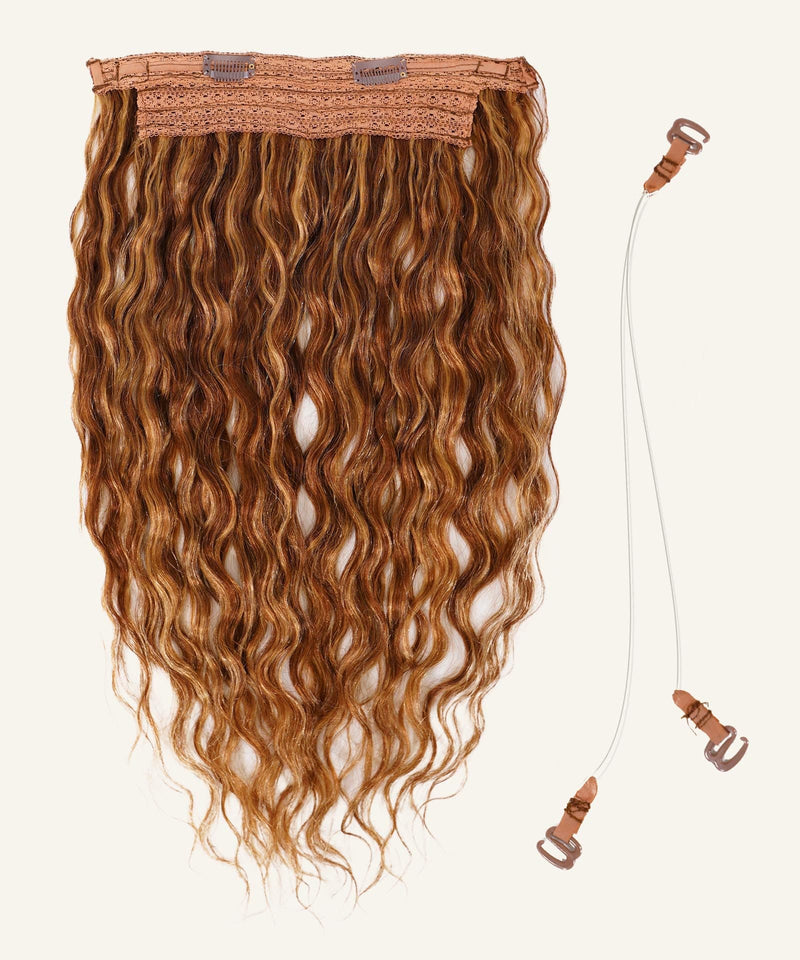
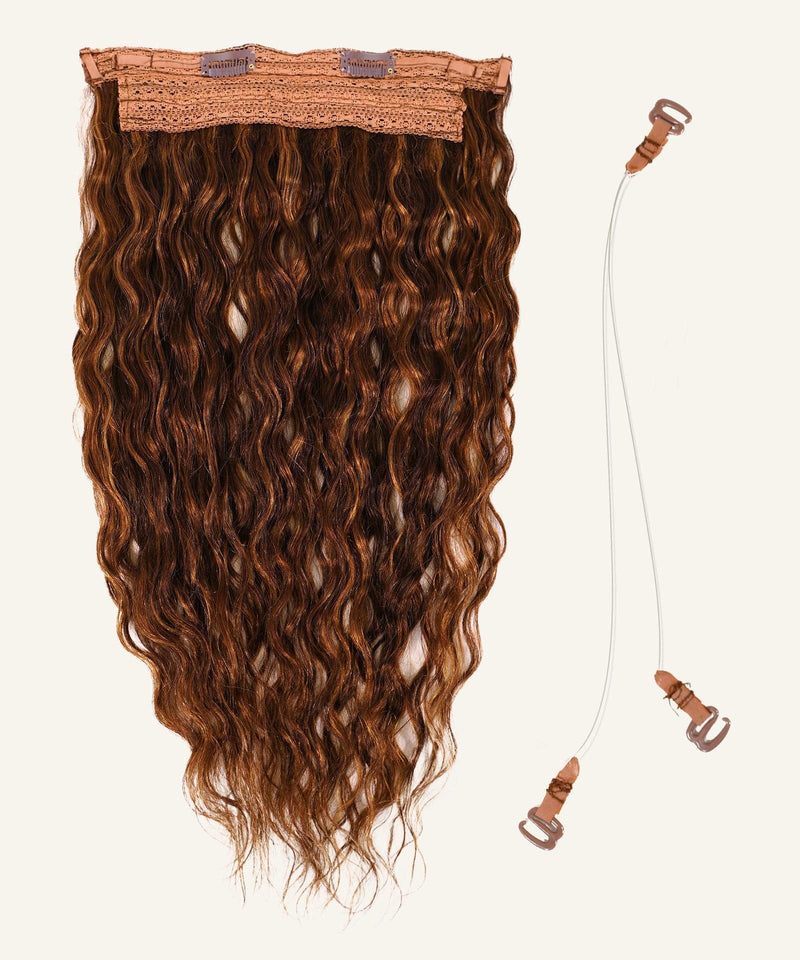
Halo extensions are often the first recommendation at this stage. The transparent wire sits on the crown and distributes weight evenly - there are no clips or adhesives pulling on individual strands, so there's zero risk of traction damage. A lighter-weight halo (80-120g) adds volume and coverage at the back and sides without looking overdone. Read more in our halo extensions guide.
Seamless clip-in extensions are another strong option for diffuse thinning. The silicone-lined clips grip gently without pulling and the flat weft lies close to the scalp. Use fewer, lighter pieces rather than a full set - the goal is blending and volume, not maximum length. Our clip-in extensions guide covers weight and placement in detail.
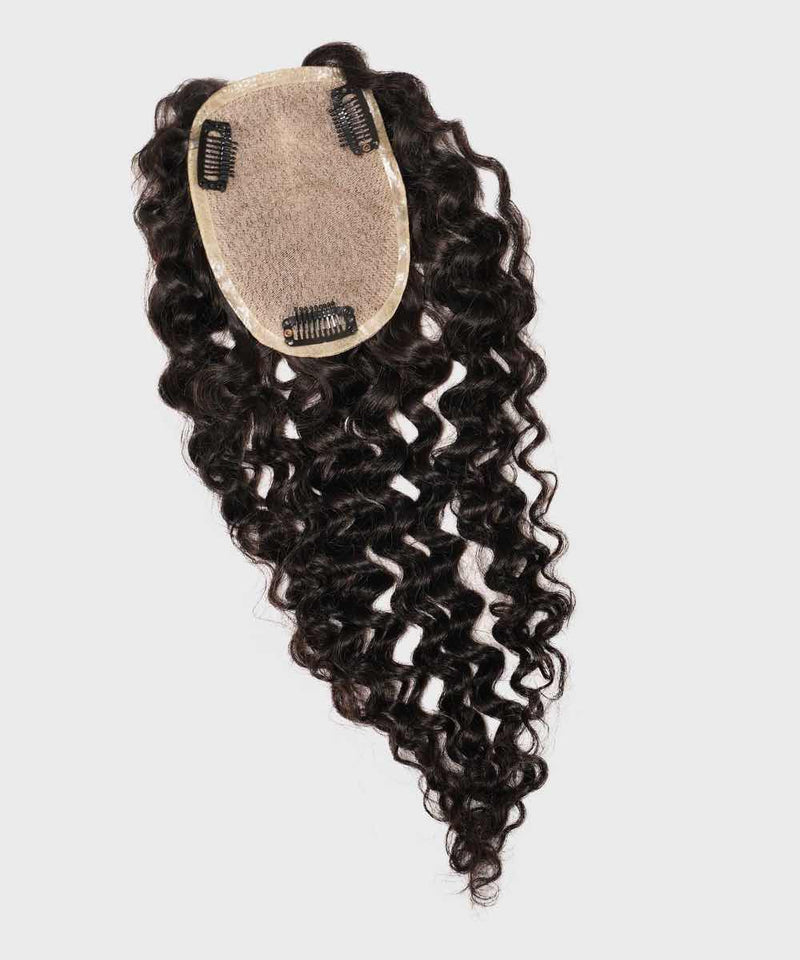
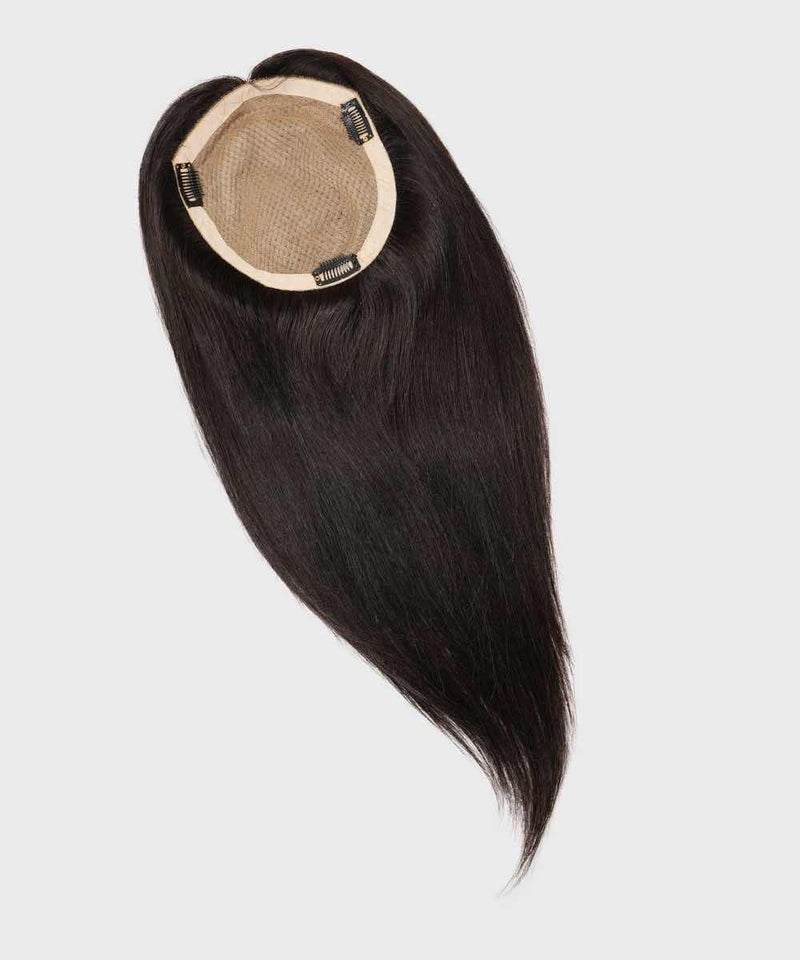
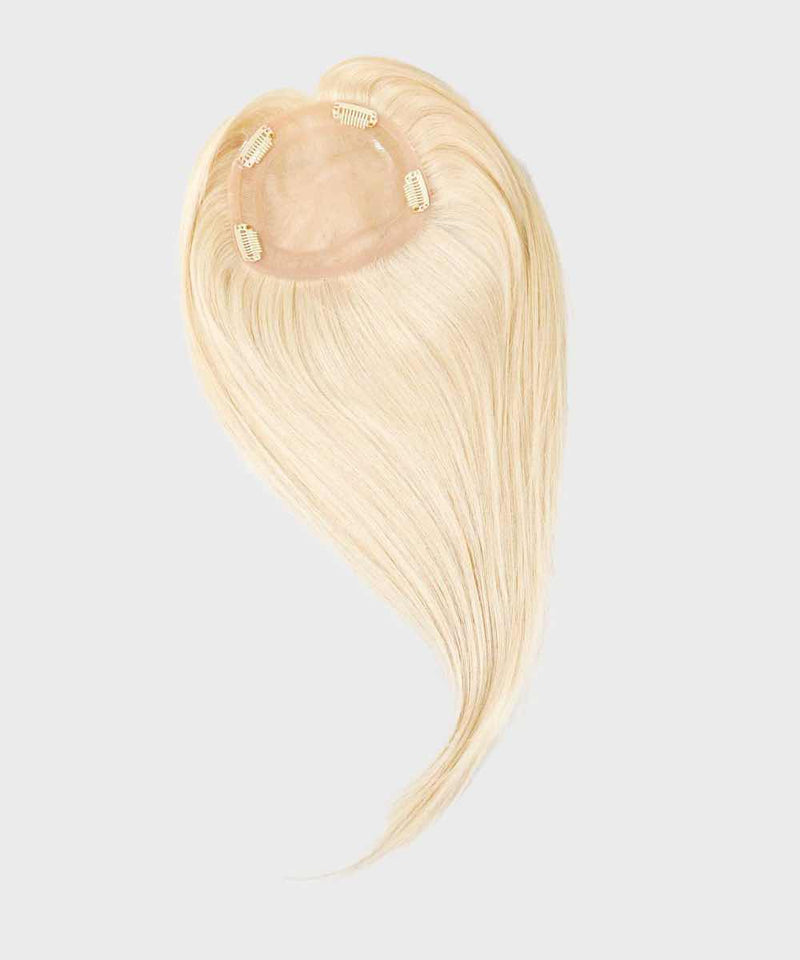
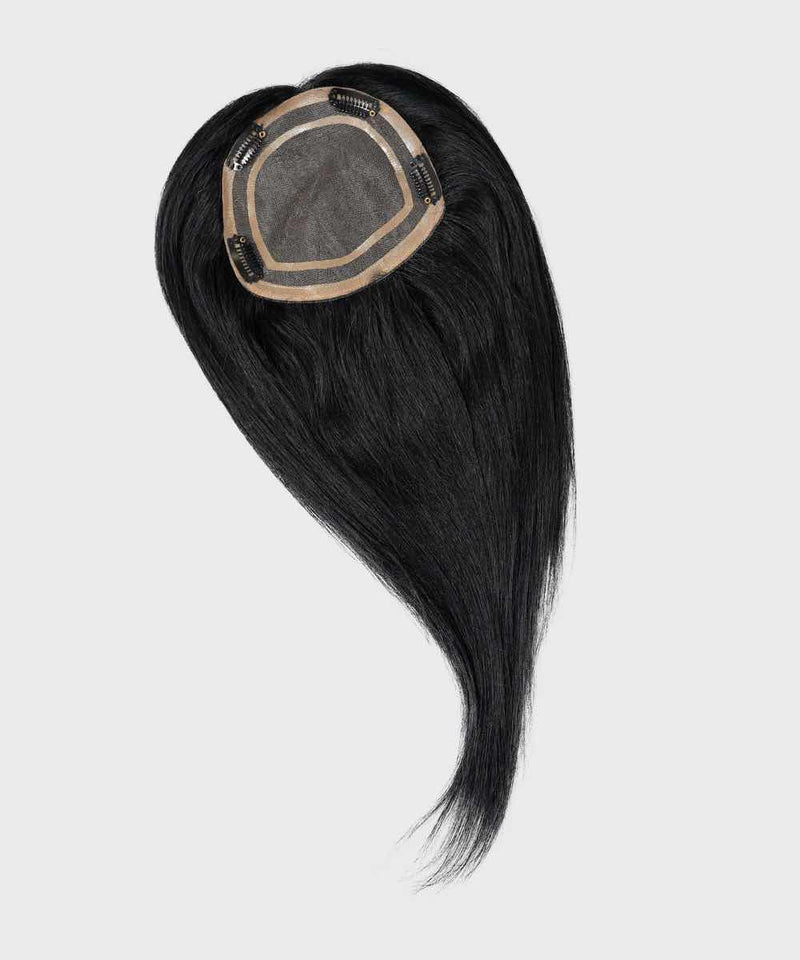
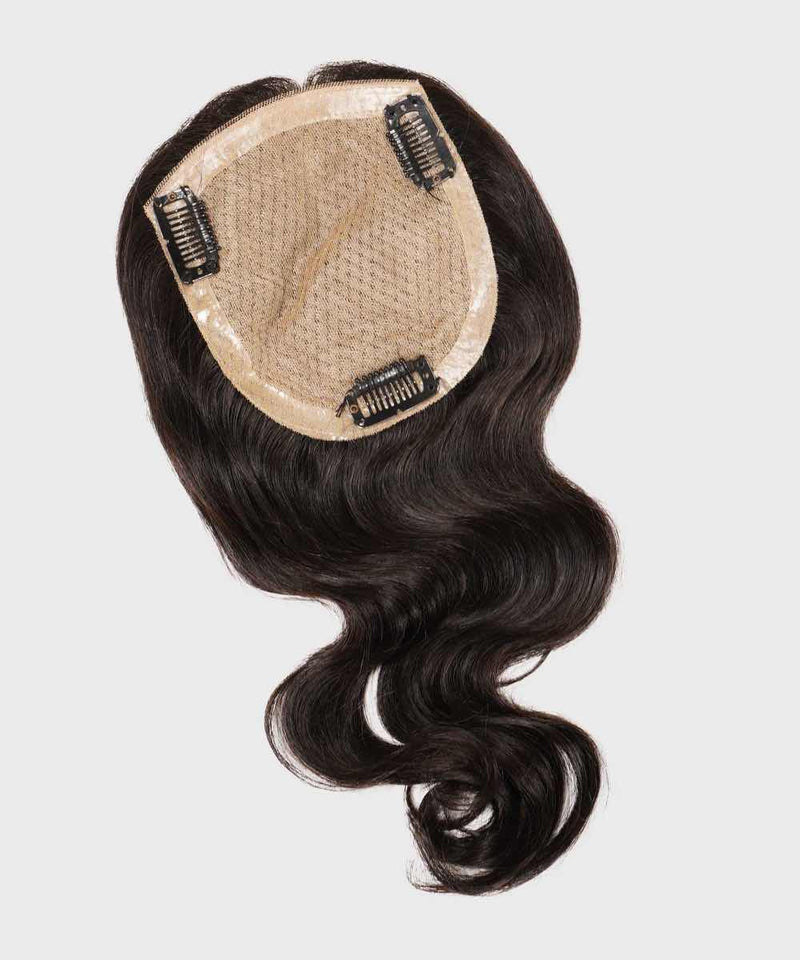
Hair toppers are specifically designed for crown and part-line thinning. They clip directly at the crown and blend with your existing hair to cover exposed scalp. If your concern is specifically a widening part or thinning at the top of your head rather than all-over volume, a topper will give you more targeted coverage than an extension.
Stage 2 - Advanced Thinning (20-50% density remaining)
At this stage, there isn't enough density to support most extension methods, and clip attachments may become visible. A topper is usually the strongest option here - it requires only a small area of hair to clip into and covers the most vulnerable area of the scalp. A larger-base topper provides more coverage with less natural hair required.
A lace front wig or U-part wig may also become the more practical choice at this stage, especially if thinning is spread across the entire scalp. A U-part wig leaves a small section of your natural hair exposed at the part, which can create a very natural look while coverage is still needed.
Stage 3 - Significant or Complete Loss (less than 20% density)
For significant or near-complete hair loss - most commonly during active chemotherapy - a full wig is the most comfortable and natural-looking solution. Extensions and toppers require hair to attach to, and when that isn't available, a well-fitted wig gives you the most control and confidence.
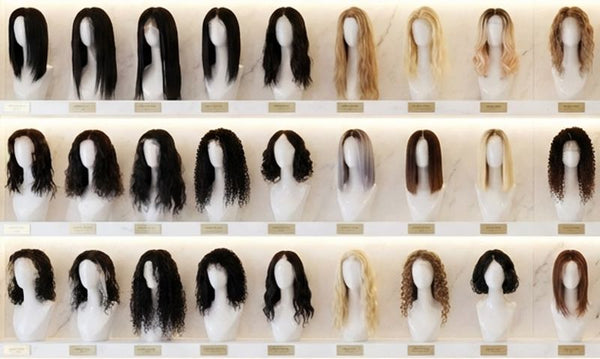
Our lace front wigs are the most popular choice for medical hair loss because the lace base creates a natural-looking hairline and the wig can be parted in multiple directions. Our full lace wigs offer the most versatility for styling - they can be pulled back into updos and ponytails, which many women find important for maintaining a sense of normalcy. All of our wigs are made from 100% ethically sourced Remy human hair and can be heat styled just like your own hair.
A note on insurance: If you are undergoing chemotherapy or have a diagnosed condition causing hair loss, your wig may qualify as a "cranial prosthesis" covered under your health insurance plan. Ask your oncologist or physician for a prescription for a cranial hair prosthesis - many insurance plans cover part or all of the cost. We're happy to provide any documentation you need to support a claim.
Shop Hair Toppers
Targeted coverage for thinning crowns and visible part lines. Lightweight clip-in toppers that blend naturally with y...
Choosing the Right Product for Your Situation
How Much Coverage Do You Need?
Be honest with yourself about coverage needs - it makes the product decision much easier. If thinning is concentrated at the crown and part line, a topper is almost always the right call. If it's diffuse across the whole scalp, a halo or clip-ins may blend more naturally. If loss is extensive, a wig gives you the most reliable result. Our guide to all extension types is a useful companion if you're still orienting yourself to the options.
Understanding Wig Cap Construction
If a full wig is right for your situation, cap construction is one of the most important decisions you'll make - it affects comfort, naturalness, and how the wig behaves day to day.
Lace front wigs feature a sheer lace panel at the hairline where individual hairs are hand-knotted. This creates a completely undetectable hairline that looks like hair growing from your scalp. The rest of the cap is a more durable wefted construction. Lace fronts are the most popular everyday option - a natural hairline with good durability and easier application than full lace.
Full lace wigs are constructed entirely of lace with individually hand-knotted hairs throughout. This gives you the freedom to part anywhere and style hair up and away from your face. Full lace wigs sit the closest to the scalp and feel the most natural, but require more time to apply and are more delicate. They're a strong choice if high ponytails and updos matter to you.
U-part wigs leave an opening at the top through which you pull out a small section of your own natural hair to blend. They're a popular transition option as hair regrows - particularly when your top hair has come back but you still want length and density throughout. They require enough natural hair at the top to blend, so they're not appropriate for complete hair loss.
Not sure which is right for you? Our human hair wigs guide covers cap types in full detail.
How Sensitive Is Your Scalp?
During and after chemotherapy, scalps are often extremely sensitive. Lace-based wigs - particularly those with adjustable caps and soft liners - tend to be the most comfortable. Avoid heavy clip attachments directly against a sensitive scalp. Some of our customers find it helpful to wear a soft wig liner or bamboo cap underneath for additional comfort.
Human Hair vs. Synthetic
We only carry human hair products, and for hair loss situations, we think that's the right call. Human hair looks and moves naturally, can be styled with heat, and lasts significantly longer than synthetic alternatives. Synthetic wigs can look artificial in certain lighting, don't hold up to heat styling, and often need to be replaced much more frequently - which adds up to more cost over time, not less.
All of our hair is 100% ethically sourced Remy human hair, which means the cuticle layer is preserved and aligned in one direction. This is what gives it that natural movement and prevents the matting and tangling that lower-quality hair is prone to.
Color and Texture Matching
If you're choosing a wig or topper to match hair you had before loss, old photos in natural lighting are your best reference. If you're adding coverage to existing hair, matching to your current mid-lengths rather than your roots will give the most seamless result.
We offer free color matching consultations - send us a photo and we'll match you to the closest shade. We look at every request personally. You can also take our quiz for an instant starting recommendation.
Extensions and toppers work well when
- You still have enough natural hair to attach to or blend with
- Hair loss is concentrated in specific areas rather than all-over
- You want a removable, low-commitment option
- You're in a recovery or regrowth phase and want a bridge solution
- Your scalp is not overly sensitive to attachment points
A wig is the better choice when
- Hair loss is extensive or near-complete
- You're in active chemotherapy treatment
- Your scalp is too sensitive for clips or adhesives
- You want full coverage without working around remaining hair
- You want maximum styling versatility and a completely natural look
Caring for Your Hair During and After Loss
Scalp Care During Treatment and Active Loss
The scalp often needs as much attention as the hair during and after medical hair loss. During chemotherapy or any period of elevated scalp sensitivity, the primary goal is gentleness. Avoid anything with adhesives that contact the scalp directly unless you've confirmed your skin can tolerate it. Wash the scalp gently with warm (not hot) water and a fragrance-free, sulfate-free shampoo even when wearing a wig regularly - scalp hygiene matters even without much hair. Apply a lightweight, fragrance-free moisturizer or scalp oil if dryness becomes uncomfortable.
If you're wearing a wig daily, consider a soft bamboo or cotton wig cap liner underneath - this creates a barrier between the wig and your scalp, reduces friction, and absorbs moisture. Avoid any product containing alcohol, fragrance, or strong preservatives directly on the scalp during sensitive periods.
Caring for Wigs and Toppers
Wash your human hair wig every 15-20 wears, or when you notice product buildup. Use a sulfate-free shampoo and a moisturizing conditioner - the same products we recommend for extensions work beautifully for wigs. Fill a sink with cool water, submerge the wig, gently work shampoo through from roots to ends (never scrub or bunch the hair), rinse thoroughly, condition, and lay flat to air dry. Never wring or twist.
Store your wig on a wig stand when not in use - this preserves the cap shape and keeps the hair from tangling. Avoid storing in plastic bags where moisture can build up.
Caring for Your Natural Hair During Regrowth
As hair begins to regrow after chemotherapy or postpartum shedding, treat it gently. Use a sulfate-free, gentle shampoo and a rich conditioner. Avoid heat styling for the first several months if possible - new growth is more fragile than established hair. Avoid tight styles, heavy products, and anything that could put tension on the scalp.
Many of our customers find that transitioning from a wig to a topper to lighter extensions as their hair comes back gives them a natural-looking result at every stage of regrowth without having to make a sudden change.
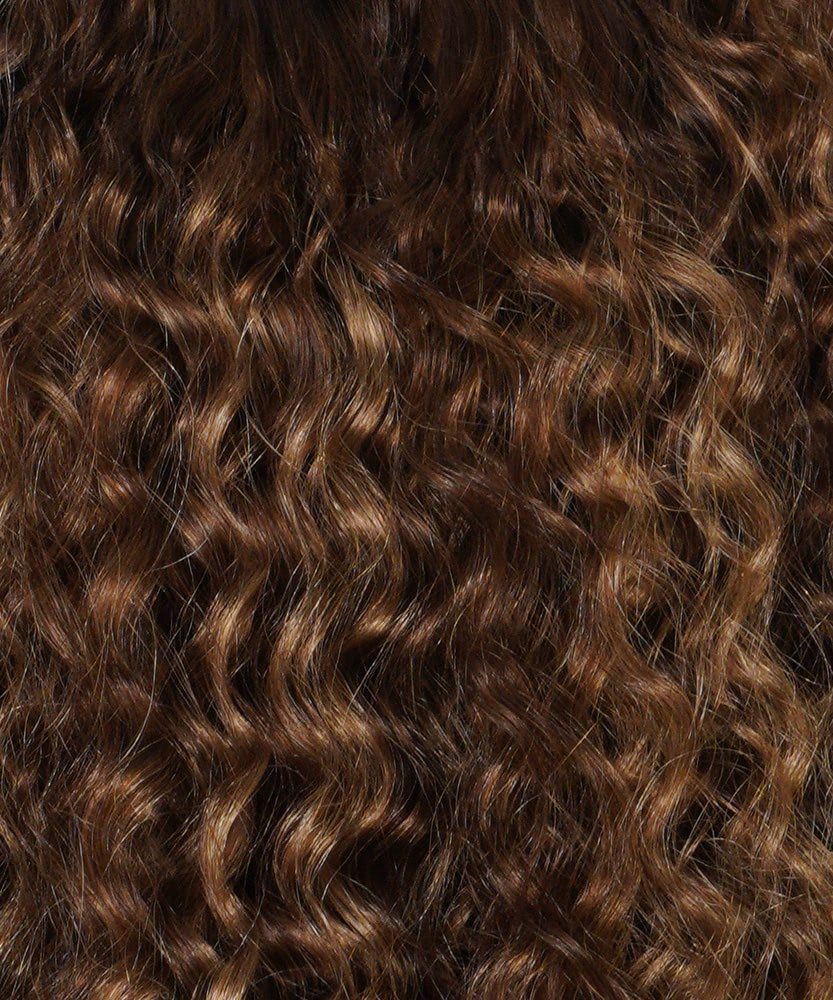
Regrowth texture note: Many people find that hair regrows with a slightly different texture after chemotherapy - sometimes curly when it was previously straight. This is a well-documented phenomenon sometimes called "chemo curls." In most cases the texture normalizes within 12-18 months. It's a sign things are moving in the right direction.
What to avoid during sensitive periods: Avoid tape-in and fusion extensions if your scalp is sensitive or if you're in active treatment - the adhesives and bonding agents can irritate sensitive skin. Clip-in extensions should be used lightly and never worn overnight. If you notice any scalp irritation, remove the product immediately and give your scalp time to recover before trying again.
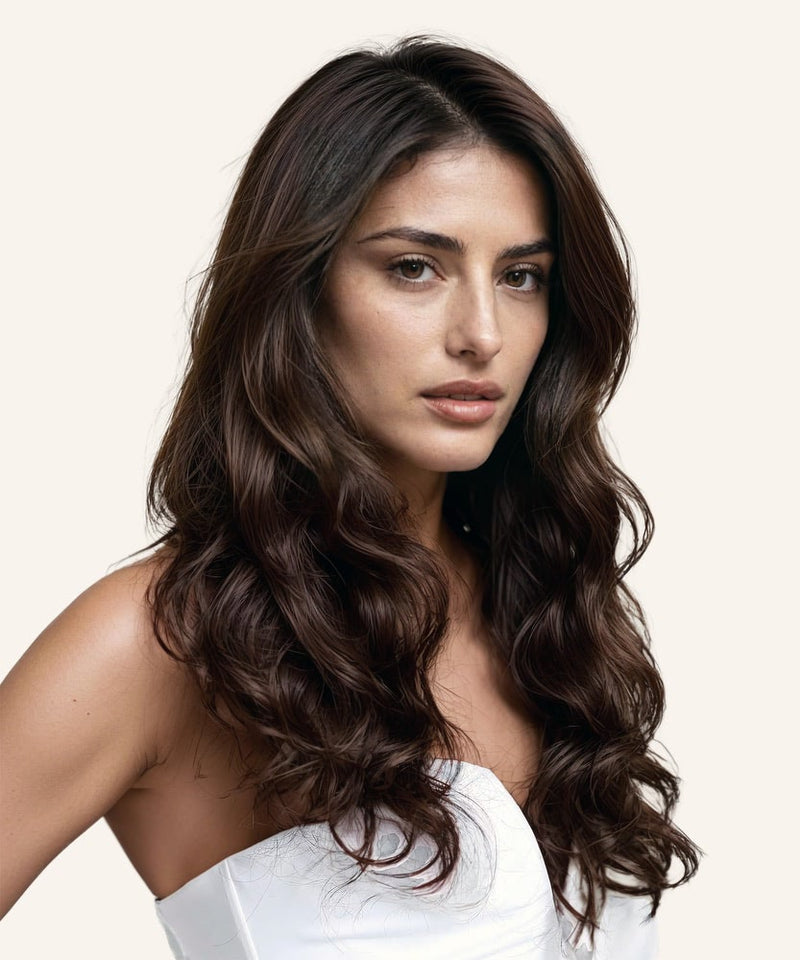
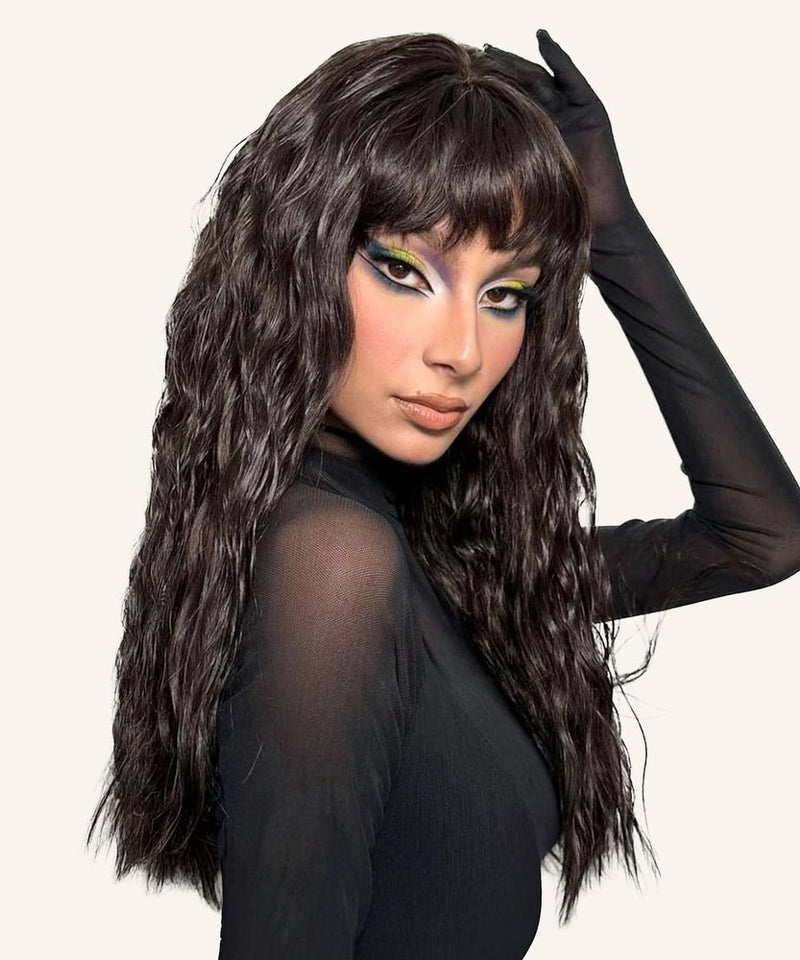
Shop Human Hair Wigs
Wigs that look, feel, and move like your own hair - because they're made from it. Our real human hair wigs are crafte...
How Long Do These Solutions Last?
A well-maintained human hair wig will typically last one to three years with regular wear, or longer with occasional use. The lifespan depends on how often you wear it, how much you heat style, and how carefully you care for it between wears. Human hair wigs last significantly longer than synthetic alternatives - often three to four times longer - which makes them the more economical choice over time.
Hair toppers generally last six months to a year with regular wear. Because they're smaller pieces, they do experience more movement and handling than a full wig, which affects longevity.
Clip-in and halo extensions used as supplemental coverage typically last three to six months with regular use. Signs it's time to replace include persistent tangling that doesn't resolve with conditioning, visible thinning of the weft, and dry or straw-like texture.
The Emotional Side of Hair Loss
We'd be doing you a disservice if we treated this purely as a practical product guide without acknowledging what's underneath the question. Hair loss from a medical condition carries weight that goes beyond aesthetics. It's often tangled up with how visible a health crisis is, with grief for a body that feels different, with the exhausting experience of looking in the mirror and not quite recognizing yourself.
We hear this all the time. And we want to say plainly: that experience is valid. The fact that hair will likely return doesn't make the present loss feel small. You're not being vain. You're being human.
What we can offer, beyond product guidance, is honesty and time. We'll always tell you what will realistically work and what won't. We'll never push something that isn't right for your stage of loss. If you want to talk through your options before buying anything, that conversation is always free - reach out anytime and a real person will respond.
Frequently Asked Questions
Can I wear hair extensions during chemotherapy?
It depends on how much natural hair you have remaining and how sensitive your scalp is. During active chemotherapy, a full wig is usually the most comfortable and practical solution. If you're in an earlier phase with significant hair remaining, a halo extension or hair topper may work well since they don't require adhesives or clips pulling on individual strands. We'd recommend reaching out to us directly so we can give you a specific recommendation based on your situation.
What is a cranial prosthesis and does insurance cover it?
A cranial prosthesis is a medical-grade wig prescribed for patients experiencing hair loss due to a medical condition such as cancer, alopecia, or chemotherapy. Many health insurance plans cover part or all of the cost with a physician's prescription. Ask your oncologist or doctor to write a prescription for a "cranial hair prosthesis" - the coverage varies by plan, but it's always worth checking. We can provide documentation to support your insurance claim.
Are your wigs comfortable for sensitive scalps?
Yes. Our lace front and full lace wigs have adjustable cap constructions that can be sized to fit comfortably without being tight. The lace base is breathable and lightweight. For extra comfort during treatment, many customers wear a soft bamboo or cotton wig liner underneath. If you have specific concerns about sensitivity, reach out to us and we'll help you find the most comfortable option.
Will wearing a wig cause further hair loss?
A properly fitted wig worn correctly should not cause hair loss. The key is making sure the cap isn't too tight, which could create friction or tension at the hairline. Avoid wearing a wig overnight. If you notice any irritation or increased shedding at the hairline, loosen the cap or take a break from wearing it for a few days.
My hair is starting to grow back after chemo. What should I use now?
This is a really common transition question. As hair regrows, many of our customers move from a full wig to a hair topper once they have about two to three inches of regrowth. The topper adds coverage and volume while the natural hair fills in. Once density recovers further, lighter extensions like a halo or seamless clip-ins can bridge the gap until your full natural hair returns. We can help you navigate each stage - just reach out.
What's the difference between a hair topper and a wig?
A hair topper is a smaller piece that clips onto the crown and top of the head to cover thinning or loss in a specific area. A wig covers the entire head. If you still have hair on the sides and back but are thinning or experiencing loss at the top, a topper is usually more natural-looking and comfortable than a full wig. Our wigs guide has a dedicated section comparing toppers and wigs in more detail.
I have alopecia areata with patchy loss. What do you recommend?
For patchy alopecia, it depends on the location and size of the patches. If patches are at the crown, a hair topper is often the most natural solution. If loss is near the hairline, a lace front wig or a carefully placed halo extension may work better. For more extensive or unpredictable alopecia, a full wig gives you the most reliable day-to-day coverage. We'd love to help you figure out which direction makes sense - send us a photo and a description of where you're seeing loss and we'll give you our honest recommendation.
What extensions are safe for traction alopecia?
Traction alopecia is caused by tension on the hairline - so the first rule is to avoid anything that adds more of it. That means no clip-in extensions near the hairline, no tape-ins, and no fusion bonds. The safest option for someone with traction alopecia is a halo extension, which rests on the head via a wire with no attachment to the hairline at all. If the hairline has receded significantly, a lace front wig provides natural-looking full coverage without creating any additional tension. Give the hairline time to recover - stopping the source of traction is the most important first step.
Do you offer returns if the product doesn't work for me?
Yes. All of our products come with a 30-day return policy. We understand that finding the right solution for hair loss involves some trial and error, and we never want you to feel stuck with something that isn't working. If you need help with a return or exchange, our team is here for you.
You Don't Have to Figure This Out Alone
We started Perfect Locks in 2007 as a family business with a simple belief: every woman deserves to feel like herself, whatever she's going through. Hair loss - whether from treatment, a medical condition, or hormonal changes - is one of the hardest things we help women navigate, and we take that seriously.
Every piece of hair we sell is 100% ethically sourced Remy human hair. Our wigs, toppers, and extensions are made to the same standard we'd hold for ourselves - because we only sell hair we'd wear ourselves. And every consultation request is reviewed personally by our team.
Browse our full wig collection, explore our hair toppers, or take our free quiz for a personalized starting point. If you'd rather talk it through first, send us a photo and a note about what you're experiencing - we'll give you our honest recommendation, from our family to yours.
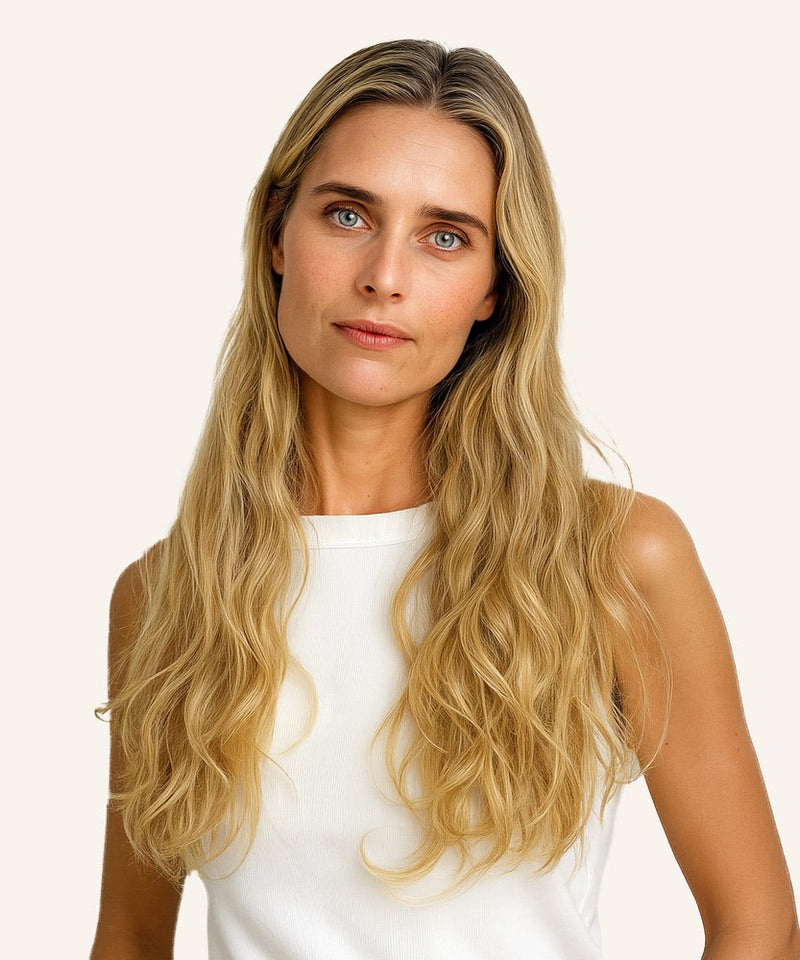
Shop Halo Extensions
The easiest transformation in hair extensions - literally seconds to put on, seconds to take off, zero damage. Our Pe...