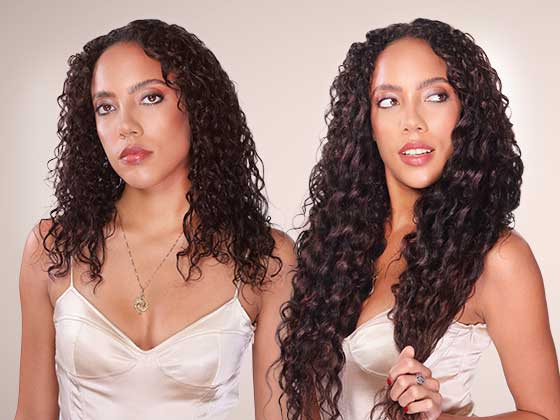
Is it just us or is this one of the coldest winters we’ve had in a while? These harsh winds can do some major damage to your hair. Many women suffer from dry, brittle and even flaky hair this time of year. Just as you should change up your skincare routine in the Winter months, it is just as important to adjust your hair care routine to protect it from the damaging weather. Here are some tips to keep your locks looking luscious.
1. Moisturize, Moisturize, Moisturize!
Moisture should be your best friend in Winter. There are several sulfate-free hair care products you can and should use to keep your hair in tip top shape. Because your hair is more prone to drying out in the Winter, try to shampoo your hair less frequently. Instead, stick to shampooing only a few days a week, and swap out your regular shampoo for one with a moisturizing formula that will clean your hair as well as lock in the moisture. It is best to deep condition your hair once a week to replenish it. For added moisture, try using a hair mask or hot oil treatment at least once a month to better protect your hair and ensure that it receives all the nutrients it needs to stay healthy. Added bonus: Be sure to seal in moisture with oils, as they will provide a protective layer and allow your hair to stay hydrated.
2. Avoid hot baths and showers.
We know, we know! This one is a major sacrifice. It’s so tempting to end the day with a nice, relaxing hot bath or shower, but going from harsh cold to significantly hotter temperatures isn’t good for your skin or hair! Extremely hot water can dry out your hair as well as your scalp, increasing flakiness. Instead, try bathing with lukewarm water instead.
3. Trim your hair regularly.
Dryness leads to breakage and split ends. If your hair is prone to either of these in the Winter, the best way to combat that is by receiving trims on a regular basis. Stay on top of your ends by scheduling a trim with your stylist every six weeks.
4. Wear protective styles.
Wearing protective styles is the simplest way to preserve healthy hair. Braids, wigs, weaves, and even Remy clip-in hair extensions allow you to style your hair how you want without exposing it to heat damage or the elements. However, wearing a protective style does not mean you can forget about your hair care routine! Be sure to take care of your hair and scalp to ensure that it will be nice and healthy when it’s time to get rid of your protective style and finally let your hair down.
5. Wear a hat or other protective headgear.
This might sound silly or seem obvious but wearing a hat is a great way to protect your hair from the elements. It’s also perfect for hiding a bad hair day! Wearing a hat protects your hair and keeps your scalp warm. However, some hats are not made of hair-friendly material so it’s best to wrap your hair in a silk scarf before putting on the hat.
Save your hair from the elements by taking advantage of our Deal of the Week. Get 15% off of all hair care products until 2/4. Save a head by sharing this post!
Winter Hair Care for Extension Wearers
"Winter is tough on extension hair for the same reason it's tough on natural hair - cold air is dry air, and dry air pulls moisture from the hair shaft. The difference is that extension hair can't draw on scalp oils for any recovery. What you add is all it gets. So we tell our customers to think of winter extension care as adding slightly more moisture to everything they already do."
- Priyanka Swamy, Founder of Perfect Locks
5 Winter Extension Care Habits That Make a Difference
1. Deep condition more frequently: During summer, weekly deep conditioning may be sufficient. In winter, move to twice weekly for extension hair. The increased frequency offsets the accelerated moisture loss from cold, dry air and indoor heating.
2. Add a leave-in to your daily routine: A lightweight leave-in conditioner spray applied each morning before styling creates a moisture barrier that reduces what cold air strips throughout the day. Apply to the lengths and ends of your clip-in extensions before installing.
3. Seal with oil: After your leave-in, a few drops of argan or jojoba oil on the lengths seals the moisture in. This sealing step is more important in winter than other seasons because the dry air is actively working against the moisture you just applied.
4. Protect from the cold before going outside: Cold air and wind cause friction and static that damages the cuticle and causes tangling. A loose braid or low bun before going outside protects extension hair from the worst of winter weather. Static is particularly problematic for extension hair - a light anti-static serum applied to the surface reduces this significantly.
5. Humidify your environment: Indoor heating during winter dramatically lowers air humidity. A bedroom humidifier (even a small one) reduces the amount of moisture the air pulls from your hair while you sleep. This is one of the most passive and effective things you can do for both natural hair and extension longevity during winter months.
Common Winter Extension Problems and Solutions
Static and flyaways: Apply a tiny amount of argan oil to your palms, then lightly run over the surface of your hair. Ionic blow dryers and boar bristle brushes also reduce static significantly. Avoid plastic combs in winter - they generate static.
Dryness and brittleness: Increase deep conditioning to twice weekly, add the sealing oil step, and consider a nourishing mask left on under a plastic cap for 30 minutes weekly.
Hat hair: Wear a silk or satin-lined hat rather than wool or cotton that creates friction against extension hair. When removing hats, smooth downward rather than pulling upward to minimize disruption to the cuticle.
Frequently Asked Questions
How do you care for hair extensions in winter?
Increase deep conditioning frequency to twice weekly, add a leave-in conditioner to your daily routine, seal with a lightweight oil, protect hair in a braid or bun before going outside in cold weather, and use a bedroom humidifier to offset indoor heating dryness. These five adjustments address the main ways winter damages extension hair.
Why does winter make hair extensions dry?
Cold outdoor air is low-humidity air, and indoor heating further reduces humidity. Both conditions pull moisture from the hair shaft. Natural hair has scalp sebum continuously replenishing moisture; extensions have no such mechanism. In winter, extensions lose moisture faster than other seasons and need additional moisture input through more frequent conditioning to compensate.
How do you fix static in hair extensions?
Apply a small amount of argan oil to your palms and lightly smooth over the hair surface. Anti-static hair serums applied as a finishing product also work well. Avoid plastic combs (use wide-tooth or boar bristle) and use a silk or satin pillowcase. An ionic blow dryer neutralizes static charge during styling. Hydrated hair has significantly less static than dry hair - consistent moisturizing is the preventive solution.